
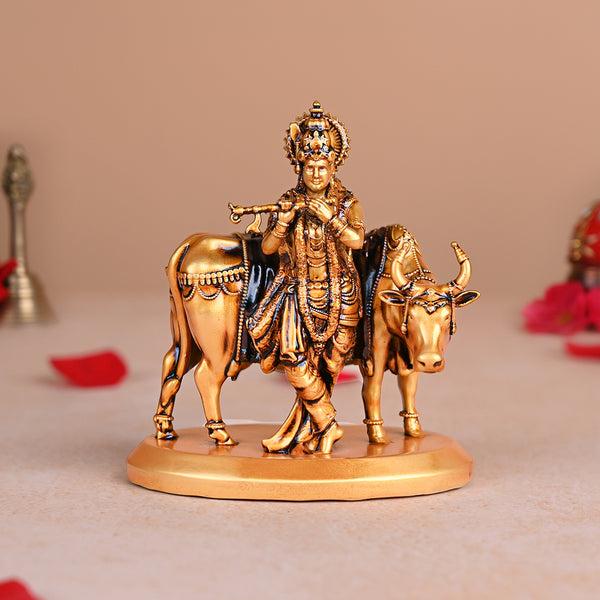
Lord Krishna idols hold a special place in Hindu spirituality, art, and devotional traditions. Revered as an incarnation of Lord Vishnu, Krishna is celebrated as the divine embodiment of love, compassion, wisdom, and righteousness. For millions of devotees, a Krishna idol is more than a beautiful religious sculpture—it is a sacred representation of the divine presence and a source of peace, inspiration, and spiritual connection.
From beautifully decorated temples to peaceful home shrines, Krishna idols can be found in many forms and styles. Each posture, expression, ornament, and accessory carries a symbolic meaning connected with stories from Krishna's life. Among the most beloved forms are Krishna playing the flute, Bal Krishna as a child, Krishna with Radha, and Krishna as the divine charioteer and guide of Arjuna.
The Spiritual Significance of Lord Krishna Idols
In Hindu worship, idols are often regarded as a means through which devotees can focus their minds and hearts on the divine. A Krishna idol provides a tangible representation of a spiritual ideal that may otherwise be difficult to visualize. Devotees may offer flowers, fruits, sweets, incense, and prayers before the idol as expressions of love and devotion.
Krishna's teachings in the Bhagavad Gita emphasize devotion, selfless action, wisdom, and surrender to the divine. His idol therefore serves as a reminder to live with compassion, perform one's responsibilities sincerely, and maintain faith even during difficult circumstances.
The presence of Krishna in a home temple can also create an atmosphere of calmness and devotion. Many families begin their day by offering prayers to Krishna and seek his blessings for happiness, prosperity, harmony, and spiritual growth.
Popular Forms of Lord Krishna Idols
Lord Krishna is represented in numerous forms, each reflecting a different aspect of his divine personality.
Krishna Playing the Flute
One of the most recognizable representations shows Krishna standing gracefully while playing his flute. Usually depicted with one leg crossed over the other, this form is associated with beauty, divine music, love, and spiritual attraction.
According to devotional traditions, Krishna's flute represents the call of the divine. Its music is said to attract the hearts of those who hear it. The image of Krishna with his flute therefore reminds devotees to listen to the inner voice of spirituality and move closer to the divine.
These idols are particularly popular for home temples, meditation spaces, living rooms, and devotional settings.
Bal Krishna
Bal Krishna, or the child form of Krishna, is another beloved representation. He is often shown as a playful young child, sometimes holding butter or sitting beside a butter pot.
Stories of Krishna's childhood describe his playful nature and his love for butter. These stories have made Bal Krishna especially popular among families and children.
A Bal Krishna idol represents innocence, joy, playfulness, and unconditional love. Devotees often feel a personal and affectionate connection with this form because Krishna appears not only as a powerful deity but also as a lovable divine child.
Radha Krishna
Radha Krishna idols represent the eternal bond of divine love between Radha and Krishna. Their relationship has been celebrated extensively in Indian devotional literature, music, dance, and art.
Radha symbolizes pure devotion, while Krishna represents the divine. Together, their image is often interpreted as a representation of spiritual love and the union between the individual soul and the Supreme.
Radha Krishna idols are frequently chosen for homes, temples, wedding gifts, and special religious occasions because they are associated with love, harmony, and devotion.
Krishna as Arjuna's Charioteer
Another important representation portrays Krishna as the charioteer of Arjuna from the Mahabharata. This form is particularly significant because it connects Krishna with the teachings of the Bhagavad Gita.
As Arjuna's guide, Krishna explains the importance of duty, courage, wisdom, and devotion. An idol or artwork depicting Krishna guiding Arjuna can therefore serve as a powerful reminder to remain calm and follow the right path when facing challenges.
Materials Used to Make Krishna Idols
Krishna idols are created using a variety of materials, depending on artistic traditions, religious practices, personal preferences, and budget.
Brass idols are among the most traditional choices. Brass has been used for centuries in Indian religious art and is valued for its durability and distinctive golden appearance. A carefully crafted brass Krishna idol can become a lasting part of a family's prayer space.
Panchaloha idols are traditionally made using a combination of five metals. They have an important place in several Indian sculptural and religious traditions and are often appreciated for their traditional character.
Marble idols are admired for their smooth surface, elegant appearance, and intricate detailing. White marble Krishna idols can create a serene and graceful appearance in a home temple.
Wooden idols offer a warm, natural aesthetic and are associated with several regional Indian artistic traditions. Skilled craftsmen can create beautifully detailed Krishna figures from different types of wood.
Clay and stone idols are also used in traditional and contemporary religious art. Their appearance can vary greatly depending on the region, craftsmanship, and style.
Krishna Idols and Indian Art
Lord Krishna has inspired generations of Indian artists. His stories appear in sculpture, painting, miniature art, textiles, classical dance, music, and temple architecture.
Traditional Krishna sculptures often feature elaborate crowns, flowing garments, jewelry, floral decorations, and the famous flute. The peacock feather in Krishna's crown is another instantly recognizable feature. Artists carefully balance facial expression, posture, clothing, and ornaments to communicate Krishna's graceful and divine personality.
Different regions of India have developed distinctive approaches to Krishna imagery. Temple sculptures, South Indian bronze traditions, North Indian devotional art, and modern decorative sculptures can all portray Krishna in unique ways while preserving his essential symbolism.
Choosing a Lord Krishna Idol for Your Home
Choosing a Krishna idol is often a personal decision based on devotion, artistic preference, available space, and the purpose of worship.
The first consideration is the form of Krishna that resonates with the devotee. Someone attracted to Krishna's teachings may prefer an image associated with the Bhagavad Gita, while a family with young children may feel especially connected to Bal Krishna. Couples and families may prefer Radha Krishna because of its association with divine love and harmony.
The size of the idol should also suit the intended location. A small idol can be ideal for a compact home shrine, while a larger sculpture may work well in a spacious prayer room or meditation area.
Quality and craftsmanship are equally important. Fine detailing in Krishna's face, hands, clothing, crown, flute, and ornaments can greatly influence the beauty of the sculpture. A well-crafted idol can remain meaningful and attractive for generations.
The Importance of Krishna's Symbols
Many elements commonly found on Krishna idols have symbolic significance.
The flute represents divine music and the ability of divine love to touch the human heart.
The peacock feather is strongly associated with Krishna and is one of the most recognizable elements of his appearance.
The crown and ornaments symbolize divine beauty and majesty.
The yellow garment, often seen in traditional depictions, is connected with Krishna's familiar iconography and devotional traditions.
The cow and calf, sometimes included in Krishna imagery, recall his childhood in Vrindavan and his close association with pastoral life.
Each element contributes to a larger visual story about Krishna's compassion, beauty, playfulness, and divine nature.
Caring for a Krishna Idol
Devotees who keep a Krishna idol at home often maintain it with care and respect. The appropriate method depends on the material and the family's religious tradition.
Dust can be removed gently with a soft, clean cloth. Metal idols may require suitable cleaning methods, while marble, painted, wooden, or decorated idols may need more delicate treatment. Strong chemicals should generally be avoided unless they are specifically suitable for the material.
For devotees who perform regular puja, the idol may be decorated with fresh flowers, clothing, garlands, sandalwood paste, or other traditional offerings according to their customs.
The most important aspect of worship is not decoration alone but the sincerity and devotion with which the idol is approached.
Krishna Idols as Gifts
A Lord Krishna idol can also be a meaningful gift for many occasions. People may present Krishna idols during weddings, housewarming ceremonies, festivals, anniversaries, birthdays, or other important milestones.
Radha Krishna is often associated with love and togetherness, making it a thoughtful gift for couples. Bal Krishna can be an affectionate gift for families, while a traditional flute-playing Krishna can suit someone who appreciates devotional art.
When gifting a religious idol, it is thoughtful to consider the recipient's beliefs, traditions, and preferences.
Lord Krishna Idols During Festivals
Krishna idols become especially prominent during festivals such as Janmashtami, which celebrates the birth of Lord Krishna. Devotees decorate temples and homes with flowers, lights, colorful fabrics, and devotional ornaments.
During Janmashtami celebrations, Bal Krishna idols may receive particular attention. Devotees may perform special prayers, devotional singing, fasting, and ceremonies at midnight, reflecting traditional accounts of Krishna's birth.
The festival transforms Krishna's image into the center of a joyful spiritual celebration, bringing families and communities together through prayer and devotion.
The Timeless Appeal of Krishna Idols
The enduring popularity of Lord Krishna idols comes from their ability to combine spiritual meaning with artistic beauty. Krishna is remembered as a divine teacher, a playful child, a compassionate friend, a beloved figure of devotion, and a guide who offers wisdom during moments of uncertainty.
A Krishna idol can therefore mean different things to different people. For one person, it may be a symbol of faith; for another, a reminder of the Bhagavad Gita; for someone else, an embodiment of love and compassion. Yet across these interpretations, Krishna continues to inspire people through his message of devotion, righteousness, and spiritual wisdom.
Conclusion
Lord Krishna idols are an important part of Hindu devotional culture and Indian artistic heritage. From the enchanting flute-playing Krishna to the lovable Bal Krishna and the divine Radha Krishna, each form expresses a different aspect of Krishna's personality and spiritual significance.
Whether placed in a temple, home shrine, meditation space, or given as a meaningful gift, a Krishna idol can serve as a lasting reminder of love, wisdom, devotion, and inner peace. Its beauty lies not only in the craftsmanship of the sculpture but also in the faith and emotions that devotees associate with it.
For generations, Krishna's image has continued to inspire prayer, music, art, literature, and everyday devotion. In this way, Lord Krishna idols remain much more than religious sculptures—they are enduring symbols of India's spiritual traditions and the timeless message of divine love.

 Arabic
 French
 Spanish
 Portuguese
 Deutsch
 Turkish
 Dutch
Dutch
 Italiano
 Russian
 Romaian
 Portuguese (Brazil)
 Greek
Greek