
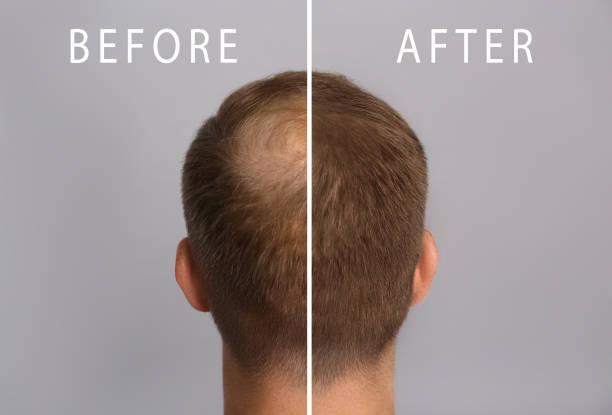
Early hair thinning can be difficult to judge because the change is often gradual. Stem Cell Hair Transplant in Dubai may be considered when existing follicles are becoming weaker or hair density is declining, but suitability depends on the cause and condition of the scalp rather than thinning alone.
The earlier stages of hair loss can involve miniaturized follicles that are still producing hair. This makes proper assessment important because the goal of a regenerative approach is generally to support the follicular environment rather than assume that every area of thinning requires transplantation.
What Early Hair Thinning Actually Means
Early thinning does not always mean the same thing clinically. Some people notice a widening part, reduced density around the temples, a finer hairline, or more visible scalp under strong lighting, while others experience increased shedding without permanent follicular miniaturization.
A consultation should distinguish between temporary shedding and progressive hair loss. Stress, nutritional deficiencies, illness, hormonal changes, scalp inflammation, medications, and genetic hair-loss patterns can all influence density.
Follicular Miniaturization and Hair Density
In androgenetic hair loss, susceptible follicles gradually become smaller and produce finer, shorter hairs. The follicle may continue functioning even though the visible hair has lost diameter and coverage.
This distinction matters when discussing regenerative treatments. Supporting an existing but weakened follicle is biologically different from replacing a follicle that has been permanently lost.
Why Early Assessment Can Matter
Waiting until significant density has disappeared can make treatment planning more complicated. Early evaluation gives the clinician an opportunity to identify the pattern of loss and determine which follicles are still producing viable hair.
It also prevents unnecessary treatment. Not every person with early thinning is an appropriate candidate for a stem-cell-related procedure, and some may benefit more from treating an underlying cause or using established medical hair-loss management.
Early Thinning Versus Advanced Hair Loss
| Feature | Early thinning | More advanced loss |
|---|---|---|
| Follicular activity | Often still present | May be substantially reduced |
| Hair diameter | Frequently becoming finer | Can be very fine or absent |
| Scalp visibility | Increasing | Often more pronounced |
| Treatment planning | Focus may include preservation and support | May require broader restoration planning |
| Importance of diagnosis | High | High |
The table illustrates why the same treatment should not automatically be recommended at every stage of hair loss.
Who May Be Considered for Stem Cell Hair Restoration
A person with early, objectively documented thinning may be considered if the clinician identifies a suitable regenerative treatment protocol and believes the existing follicles have meaningful potential for support.
The evaluation may consider age, pattern of hair loss, scalp condition, donor-area status where relevant, medications, medical history, and previous hair treatments.
Signs That Deserve a Professional Assessment
An evaluation may be worthwhile when you notice:
- Gradual reduction in overall density
- Increasing scalp visibility
- Finer hairs around the frontal or crown region
- A progressively widening part
- Receding temples
- Persistent shedding combined with reduced density
- Noticeable changes in hair calibre over several months
A clinician can also determine whether the change represents true follicular miniaturization or another form of hair shedding.
When Early Thinning May Need a Different Approach
Stem-cell-related hair treatment should not be viewed as a universal solution for every form of shedding. If thinning is associated with an underlying medical or nutritional problem, addressing that cause may be more appropriate.
Similarly, when a follicle has been absent for a long period, regenerative treatment cannot automatically be expected to recreate a fully functioning follicle. Treatment selection should therefore follow diagnosis rather than the marketing label attached to a procedure.
How the Scalp Assessment Supports Treatment Planning
A detailed assessment can examine the distribution and character of hair loss rather than relying only on photographs or a patient's perception of density.
The clinician may review the frontal hairline, temples, mid-scalp, crown, donor region, scalp skin, hair calibre, and progression pattern. Depending on the case, additional diagnostic evaluation may also be appropriate.
This information helps determine whether the objective is primarily follicular support, management of an underlying condition, restoration of lost density, or a combination of approaches.
Clinic note: Early thinning is often the stage when patients have the most uncertainty about what is actually happening. At Tajmeels Clinic, treatment planning should begin with understanding the follicle and scalp condition rather than assuming that every reduction in density requires the same procedure.
Stem Cell Hair Transplant in Dubai for Early Thinning
For suitable patients, regenerative hair treatment may be considered as part of an individualized strategy for supporting weakened follicles. The exact biological material, delivery method, number of sessions, and expected response can vary according to the treatment protocol.
Patients should also understand that regenerative treatment does not necessarily eliminate the underlying driver of progressive hair loss. Long-term planning may therefore include monitoring and, where clinically appropriate, other evidence-based hair-loss management.
For more information about the service, see Stem Cell Hair Transplant in Dubai.
Questions to Discuss Before Treatment
Before proceeding, patients can ask:
- What is causing my current thinning?
- Are my follicles still producing miniaturized hairs?
- Is regenerative treatment appropriate for my stage of hair loss?
- What biological material does the proposed treatment use?
- How will progress be assessed?
- Could another treatment or medical evaluation be more appropriate?
- What should I realistically expect from the treatment?
These questions help separate an evidence-based treatment plan from a generic hair-regrowth package.
A Personalized Approach to Early Hair Loss
Early thinning deserves attention, but it does not necessarily call for aggressive intervention. The most appropriate approach depends on whether follicles remain active, why the hair is thinning, and how quickly the condition is progressing.
A consultation at Tajmeels Clinic can help establish the underlying pattern and determine whether a regenerative hair treatment has a reasonable role in the patient's individual plan.

 Arabic
 French
 Spanish
 Portuguese
 Deutsch
 Turkish
 Dutch
Dutch
 Italiano
 Russian
 Romaian
 Portuguese (Brazil)
 Greek
Greek