
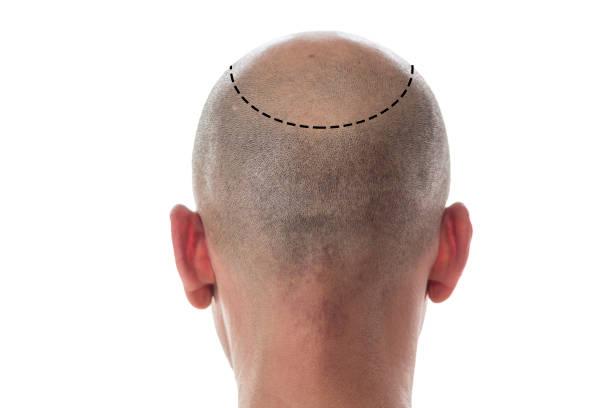
A Crown Hair Transplant in Dubai using Follicular Unit Extraction (FUE) involves removing individual follicular units from a suitable donor area and placing them into parts of the crown affected by hair loss. The objective is to improve coverage by using the patient's own hair follicles, with placement planned around the scalp's natural growth pattern.
FUE is widely used in hair restoration, but it is not automatically the best choice for every patient. The appropriate method depends on donor characteristics, the extent of thinning, scalp health, previous procedures, and the overall treatment plan.
Understanding how the technique works can help patients distinguish the surgical process from the gradual biological changes that follow it.
What Happens During FUE
Individual Follicular Unit Extraction
Hair grows in naturally occurring groups called follicular units. These units may contain one or more hairs, along with supporting structures.
During FUE, a specialised punch instrument is used to separate individual follicular units from the donor region, commonly at the back or sides of the scalp. The extracted units are collected for preparation before implantation.
Extraction requires careful spacing and distribution. Removing too many follicles from a small region can create visible thinning in the donor area, so the available supply must be assessed before surgery.
Graft Preparation and Handling
After extraction, the grafts are examined and prepared for implantation. Their condition matters because follicular units can be damaged by rough handling, drying, or other factors during the procedure.
The surgical team must manage the grafts carefully and coordinate extraction with implantation. The exact process depends on the clinical technique and the patient's treatment plan.
Placement in the Crown
The prepared grafts are placed into the recipient area according to a planned pattern. At the crown, this requires attention to changing growth directions and the relationship between the central whorl and surrounding hair.
The clinician also considers the density of existing hair and the size of the thinning region. FUE provides a way to harvest individual units; it does not remove the need for careful recipient-area design.
Why FUE May Be Considered for Crown Thinning
FUE can be useful when the treatment plan calls for individual follicular units to be harvested without removing a continuous strip of scalp. It generally avoids the linear donor incision associated with strip-based harvesting, although small extraction marks remain and healing varies.
Other considerations include the patient's hairstyle preferences, donor-area characteristics, the number of grafts required, and the experience of the clinical team. FUE is still a surgical procedure and involves risks, recovery time, and limitations.
It is also important to understand that FUE describes the harvesting method, not a guarantee of a particular density or result. The outcome depends on several factors, including graft survival, scalp healing, donor quality, and future hair loss.
FUE Compared With Strip-Based Hair Transplantation
| Consideration | FUE | Strip-based FUT |
|---|---|---|
| Harvesting method | Individual follicular units are extracted | A strip of scalp is removed and dissected into grafts |
| Donor-area marks | Multiple small extraction marks | Typically a linear scar |
| Donor-area suitability | Depends on density, scalp characteristics, and extraction capacity | Depends on scalp laxity, donor quality, and surgical assessment |
| Recovery considerations | Small extraction sites need care | The donor incision requires care and may involve additional tension or discomfort |
| Best option | Depends on individual needs and the surgeon's assessment | Depends on individual needs and the surgeon's assessment |
Neither method is universally superior. The choice should be made after a clinical assessment that considers the patient's priorities and long-term donor management.
What to Expect After FUE Crown Restoration
Early Healing
In the first days after surgery, the recipient and donor areas may show redness, tenderness, mild swelling, or small crusts. Patients should follow their clinic's instructions for washing and protecting the scalp.
Avoid scratching, rubbing, or disturbing the grafts. Activities that may cause friction, heavy sweating, or direct impact should be resumed according to the treating clinician's guidance.
Temporary Shedding and New Growth
Transplanted hair shafts commonly shed during the early weeks after surgery. This can be unsettling, but it does not necessarily mean that the follicles have been lost.
New growth generally takes several months to become visible. Improvement often develops over six to twelve months, with additional maturation possible beyond that period. The crown may take time to assess because the area is broad and hair direction affects how much scalp remains visible.
Long-Term Hair Management
A transplant relocates follicles; it does not cure the underlying causes of pattern hair loss or prevent all surrounding hair from thinning. Depending on the patient's needs, a clinician may discuss medical management or other supportive treatments to help address ongoing hair loss.
Not every patient needs the same combination of treatments. Recommendations should follow an individual assessment rather than a standard package.
Common Questions About FUE for the Crown
“Does FUE leave no scars?” FUE avoids a single linear donor scar, but it does leave small extraction marks that may be visible depending on healing, hair length, skin characteristics, and harvesting technique.
“Will FUE create a full crown in one session?” That cannot be guaranteed. The achievable coverage depends on the size of the area, donor supply, graft allocation, and individual healing.
“Can FUE stop my hair loss?” No. It relocates follicles to selected areas, but native hair may continue to thin over time.
Is FUE Suitable for Your Crown?
FUE may be considered for patients with crown thinning who have an adequate donor supply and realistic expectations. However, active or unexplained hair loss, certain scalp conditions, limited donor density, and previous procedures may change the recommendation or require further evaluation.
The Crown Hair Transplant in Dubai service page provides a starting point for learning about treatment options. A consultation is needed to determine whether FUE is appropriate for your specific circumstances.
Discuss Your Options at Tajmeels Clinic
Choosing a crown restoration method requires more than comparing procedure names. The decision should reflect the patient's donor capacity, hair-loss pattern, scalp condition, desired coverage, and long-term priorities.
At Tajmeels Clinic, a personalised consultation can help you understand the potential role of FUE, the expected recovery process, and the limitations of crown transplantation. A clear treatment plan should explain what may be achievable, how the donor area will be managed, and what follow-up care may be appropriate.

 English
 Arabic
 French
 Spanish
 Deutsch
 Turkish
 Dutch
Dutch
 Italiano
 Russian
 Romaian
 Portuguese (Brazil)
 Greek
Greek