
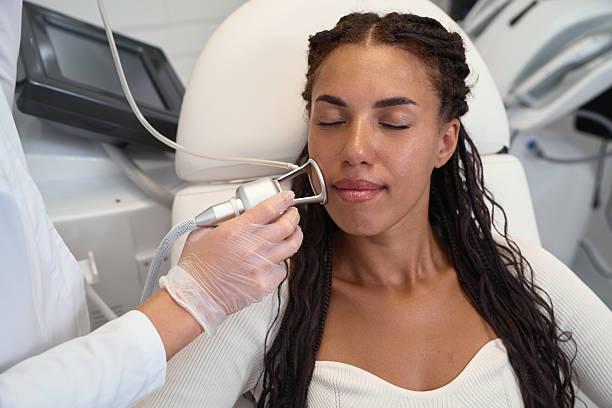
Fractional CO2 Laser Treatment in Dubai works by delivering controlled laser energy into tiny, separate columns of skin. This creates microscopic areas of thermal injury that trigger the body's natural healing response. As the skin repairs itself, collagen remodelling may help improve selected scars, fine lines, rough texture, and signs of sun damage.
Unlike treatments that focus mainly on the skin's surface, fractional CO2 resurfacing can affect both the outer skin layer and targeted areas beneath it. The depth and intensity depend on the device, treatment settings, and individual skin assessment.
At Tajmeels Clinic, understanding the treatment mechanism can help patients make informed decisions about suitability, expected results, and recovery.
The Science Behind Fractional CO2 Laser Treatment in Dubai
CO2 lasers use a specific wavelength of light that is strongly absorbed by water in the skin. Because skin tissue contains water, the laser energy can be used to remove very small amounts of tissue and create controlled thermal effects.
The fractional approach treats microscopic zones rather than removing the entire surface uniformly. Untreated surrounding tissue helps support the healing process, although recovery time and risks still depend on the treatment intensity.
How Collagen Remodelling Supports Skin Improvement
Collagen is a structural protein that helps provide strength and support to the skin. With age, sun exposure, and certain forms of skin damage, its structure and distribution can change.
Fractional CO2 laser treatment stimulates a wound-healing response that may lead to collagen remodelling over time. This process can gradually soften the appearance of selected scars and improve uneven texture.
It is important to understand that collagen remodelling is gradual. The extent of improvement varies, and not every skin concern responds equally well.
What Happens During a Fractional CO2 Laser Session?
The exact procedure depends on the treatment area, skin concern, and clinical plan. A typical session may involve the following stages.
-
Consultation and assessment: The clinician reviews your skin, medical history, current medicines, previous treatments, and desired outcomes.
-
Skin preparation: The treatment area is cleansed, and suitable anaesthesia may be used to manage discomfort.
-
Laser application: The clinician applies laser energy using settings selected for your skin and treatment goals.
-
Immediate review: The treated area is examined, and you receive instructions for managing redness, sensitivity, and healing.
-
Follow-up planning: The clinician explains when progress should be reviewed and whether additional treatment may be appropriate.
The length of the appointment varies according to the area and the treatment approach.
Which Skin Concerns Can the Technology Address?
Fractional CO2 laser resurfacing may be considered for selected concerns, including:
-
Certain depressed acne scars.
-
Rough or uneven skin texture.
-
Some fine lines.
-
Selected signs of sun damage.
-
Certain superficial textural irregularities.
It is not the best solution for every skin condition. Active acne, raised scars, melasma, and some pigmentation concerns may require a different treatment plan. Assessment is especially important for people who are prone to dark marks after skin inflammation.
What Influences the Treatment Response?
Results depend on several factors, and no single laser setting is suitable for everyone.
Treatment depth and intensity: More intensive settings may produce stronger resurfacing effects but can also increase recovery demands and complication risks.
Skin characteristics: Skin tone, sensitivity, healing patterns, and pigmentation history influence treatment planning.
Type of concern: Acne scars, fine lines, and sun-related texture changes differ in structure and may respond differently.
Aftercare: Gentle skincare and appropriate sun protection help support recovery.
Individual healing: The skin's response to treatment varies, so the outcome cannot be predicted precisely.
A qualified clinician should explain the likely benefits and limitations before the procedure.
Recovery After Fractional CO2 Laser Treatment in Dubai
After treatment, the skin may become red, swollen, warm, or tender. Peeling and small crusts can develop as the treated areas heal. Recovery varies with the treatment intensity and the individual.
Follow your clinician's instructions for cleansing and moisturising. Avoid picking the skin, and do not restart retinoids, exfoliating acids, or other irritating products until you are advised to do so. Protect the healing area from sunlight according to the recommended aftercare plan.
Seek medical advice if pain worsens, redness spreads, pus develops, or you experience fever or other concerning symptoms.
Frequently Asked Questions
Does fractional CO2 laser remove the entire skin surface?
No. The fractional approach creates microscopic treatment zones separated by areas of untreated skin. It is still an ablative procedure, so controlled tissue injury and careful aftercare are required.
When does collagen remodelling begin?
The healing response starts after treatment, but visible changes develop gradually over the following weeks and months. Timing and degree of improvement vary.
Is the treatment suitable for every skin type?
No. Skin tone, pigmentary history, medical factors, and the concern being treated affect suitability. Some patients may benefit more from an alternative approach.
Can one session improve skin texture?
One session may produce a noticeable improvement for some people, but others may need multiple treatments. The recommendation depends on clinical assessment and the response to treatment.
Understand Your Options at Tajmeels Clinic
Fractional laser technology can offer a targeted approach to selected skin concerns, but good outcomes depend on appropriate patient selection and realistic expectations. Tajmeels Clinic can assess your skin and explain whether Fractional CO2 Laser Treatment in Dubai fits your goals, including its potential benefits, recovery requirements, and risks.
Arrange a personalised consultation to discuss the most appropriate options for your skin.
Medical disclaimer: This content is for educational purposes and does not replace a consultation with a qualified healthcare professional. Individual outcomes and risks vary.

 Arabic
 French
 Spanish
 Portuguese
 Deutsch
 Turkish
 Dutch
 Italiano
 Russian
 Romaian
 Portuguese (Brazil)
 Greek