
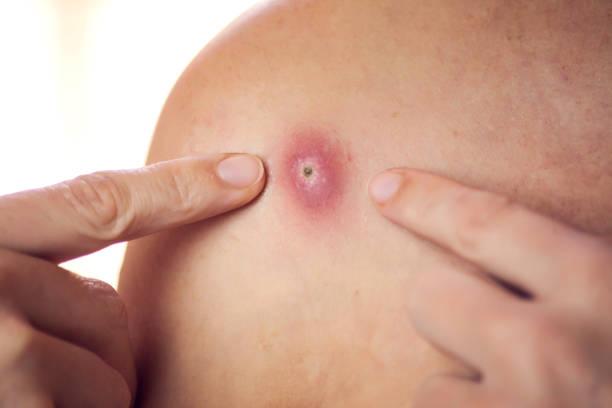
A lump beneath the skin may be small and barely noticeable or large enough to cause discomfort and affect daily activities. Although both types of cysts may require similar treatment principles, their size, depth, and condition can influence the removal technique. Understanding these differences helps patients know what to expect before considering Sebaceous cyst removal in Riyadh (إزالة الكيس الدهني في الرياض). A qualified clinician examines the cyst to determine the most appropriate approach based on its characteristics and the patient's individual needs.
Small cysts are often easier to access, while larger cysts may require a wider incision and more careful separation from surrounding tissue. However, size alone does not determine treatment complexity. A small cyst that is deeply positioned or inflamed may be more challenging to remove than a larger, uncomplicated one. When exploring Sebaceous cyst removal in Riyadh, patients should understand how clinical assessment, removal techniques, and recovery can differ between small and large cysts.
What Determines the Size and Complexity of a Sebaceous Cyst?
Cysts can develop when skin cells become trapped beneath the surface and form a sac containing keratin. Although commonly called sebaceous cysts, many of these lumps are actually epidermoid cysts. They may gradually enlarge as material accumulates inside the sac.
The clinician considers several factors when planning treatment, including the cyst's diameter, depth, location, previous inflammation, and whether it has been treated before. These details help determine the incision required, the likelihood of complete capsule removal, and the expected healing process.
How Is Removal Different for Small Cysts?
Small cysts that are superficial and uncomplicated may be suitable for a relatively straightforward removal procedure. Depending on the clinical assessment, a clinician may recommend observation or removal through a limited incision.
Smaller Incisions
A small cyst may be removed through a smaller opening when there is enough access to separate it safely from the surrounding tissue. Minimal excision may be an option for selected cysts, although it is not appropriate for every case.
Simpler Access to the Cyst
When a cyst is close to the skin's surface and has not been inflamed, its capsule may be easier to identify and remove. The clinician still needs to take care to remove the capsule as completely as possible to reduce the risk of recurrence.
Recovery Considerations
A smaller incision may require less wound care and can sometimes heal more quickly than a larger surgical wound. However, healing varies by location, technique, and individual health. Even a small incision can leave a scar.
How Is Removal Different for Large Cysts?
Large cysts may need a more extensive surgical approach because they can occupy more space beneath the skin or extend deeper into surrounding tissue. The aim remains to remove the cyst safely and completely while protecting nearby structures.
A Wider Incision May Be Necessary
A larger opening may provide better access to the cyst and allow the clinician to separate its capsule from the surrounding tissue. The incision is planned according to the cyst's size, depth, and location rather than size alone.
More Careful Tissue Separation
Large cysts may be attached to surrounding tissue, particularly if they have been inflamed or ruptured. The clinician may need to work carefully to remove the capsule and avoid unnecessary damage to nearby structures.
Wound Closure and Follow-Up
A larger incision may require stitches and more detailed wound-care instructions. Depending on the location and complexity, follow-up may be recommended to check healing and remove stitches when appropriate.
Does Cyst Size Affect the Risk of Recurrence?
The risk of recurrence is influenced more by whether the cyst capsule is completely removed and by the cyst's condition than by size alone. If part of the capsule remains, the cyst may develop again.
Small cysts can recur if removal is incomplete, while large cysts may be more difficult to remove when they are deeply attached, inflamed, or surrounded by scar tissue. Simply draining the contents generally does not remove the entire capsule.
For patients considering Sebaceous cyst removal in Riyadh, a professional assessment helps determine which technique offers a suitable balance between complete removal, wound healing, and cosmetic considerations.
What Happens if a Cyst Is Inflamed or Infected?
Inflammation can make both small and large cysts more difficult to remove. Symptoms may include redness, swelling, warmth, tenderness, or drainage. When an infection or abscess is present, treatment may focus on managing the acute problem before definitive cyst removal is considered.
Once the inflammation has settled, the clinician can reassess the area and decide whether surgical excision is appropriate. Increasing pain, spreading redness, fever, or rapidly worsening swelling should be assessed promptly by a healthcare professional.
How Does Recovery Compare Between Small and Large Cysts?
Recovery depends on the procedure, incision size, location, and individual healing rather than cyst size alone. Small cyst removal may involve a limited wound, while a larger cyst can leave an incision that needs more care and monitoring.
Patients should follow the clinician's instructions for cleaning and protecting the wound, avoid unnecessary friction, and attend follow-up appointments when advised. Contact a healthcare professional if pain worsens, redness spreads, pus develops, or the wound opens.
Scarring is possible after either procedure. A larger incision may leave a more noticeable scar, but the final appearance also depends on the location, surgical technique, and the person's healing response.
When Should You Consider Professional Cyst Removal?
A cyst may not need removal if it is small, stable, and causing no symptoms. A clinician may recommend treatment if it grows, becomes painful, repeatedly returns, interferes with daily activities, or raises concerns about the diagnosis.
Avoid squeezing, cutting, or attempting to drain a cyst at home, as these actions can cause infection, bleeding, and incomplete removal. If a lump is growing rapidly, feels unusually firm or fixed, or changes in appearance, seek medical evaluation.
Book an Appointment at Royal Clinic Saudia
Whether a cyst is small or large, the right treatment depends on its condition, location, and individual characteristics. Royal Clinic Saudia (عيادات رويال كلينك) can help you discuss your skin concern, understand available removal techniques, and learn what to expect during recovery. Contact the clinic to arrange an appointment and receive guidance based on a professional assessment.
FAQs:
Are small sebaceous cysts easier to remove than large ones?
Small, superficial cysts may be easier to access, but size is not the only factor. Depth, inflammation, location, and previous treatment can make a small cyst more complex to remove.
Do large sebaceous cysts always require traditional surgery?
No. The appropriate technique depends on the cyst's characteristics. Some may be suitable for limited-incision techniques, while others require a wider surgical incision for adequate access and capsule removal.
Will a large cyst leave a bigger scar?
A larger incision can result in a more noticeable scar, but the final appearance varies according to the location, technique, and individual healing. No procedure can guarantee a scar-free result.
Can I leave a small sebaceous cyst untreated?
A small cyst that is stable and causes no symptoms may not require removal. However, a clinician should assess a changing, painful, inflamed, or uncertain lump to determine whether treatment is needed.

 Arabic
 French
 Spanish
 Portuguese
 Deutsch
 Turkish
 Dutch
 Italiano
 Russian
 Romaian
 Portuguese (Brazil)
 Greek