
The Checkout Moment: Packaging Pouches and Carry Bags That Make Small Shops Look Big
Think about the last time you left a small shop with a purchase in a bag you actually liked. Chances are you kept it, or at least noticed the logo before tossing it. That tiny moment is the final touchpoint of a store visit, and it works harder than most owners realize. Boutique owners and independent makers can build real recognition through what they hand over at checkout. Custom Packaging Pouches protect and present the product, while a good carry bag makes the whole purchase feel like a gift. This guide shows how to choose both.
Why the Last Touchpoint Matters
Shoppers walk through town carrying your bag, and everyone who sees it gets a free impression. Inside, the pouch is what they touch and open at home. Together, they extend your brand beyond the till. A flimsy or plain bag can undermine even a beautiful product, while a thoughtful set makes a modest price tag feel more premium.
Pouch Market Momentum
Meticulous Research projects that the global pouches market will reach USD 72.8 billion by 2032, growing at 5.6% a year from 2025, and it highlights resealable formats and customized stand-up designs among the key trends. For small brands, that means more supplier options and more shoppers used to pouches with polished printing. Forecasts differ between research firms, so treat the number as a trend.
Choosing Pouch Types for Boutique Goods
Flat Pouches
Flat pouches suit samples, jewelry, powders, and light items. They are economical, ship flat, and print well. Add a tear notch or a zipper if the product is used more than once, and a clear window if shoppers like to see the contents.
Self-Standing Pouches
Pouches with a gusseted base stand upright on shelves and hold more volume. They work for snacks, teas, bath salts, and pet treats, and they present a large front panel for branding. Request filled samples to see how they sit and how the seals hold up.
Specialty Finishes
Matte films feel calm, metallics feel premium, and kraft with a clear window feels natural. Choose the finish that fits your brand and barrier needs. Many brands find that Custom Packaging Pouches in matte with a single foil accent feel upscale without a huge cost.
Bags That Customers Reuse
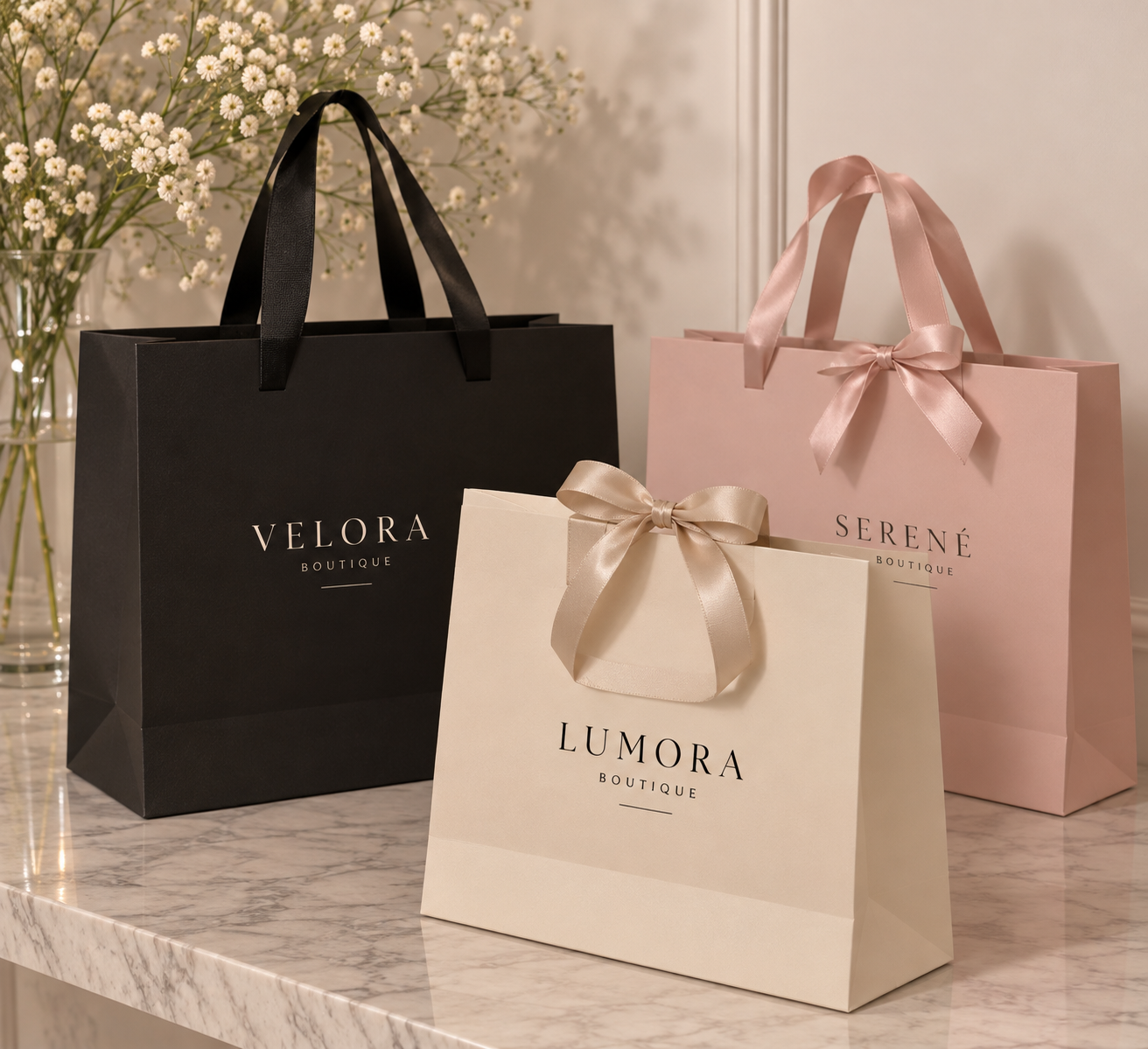
A good bag gets a second life as a lunch carrier, gift bag, or storage. Sturdy paper with rope or ribbon handles feels upscale, while cotton and kraft suit casual brands. Custom Boutique Bags with reinforced handles and a firm base survive more trips, which means more exposure for your logo. Test handle strength with the heaviest item you sell.
Matching Sizes and Handles to Your Range
Offer two or three sizes to cover most purchases: a small gift bag, a medium for typical orders, and a larger tote. Stock sizes that fit your most common items so staff does not have to squeeze or stuff.
Choose handles that are comfortable and secure. Twisted paper handles are economical, rope and ribbon feel premium, and die-cut handles save assembly cost. Many shops find that a small range of Custom Boutique Bags in coordinated sizes keeps checkout quick and tidy.
Building a Consistent Look Across Formats
Pick two or three brand colors and use them across pouch, bag, tissue, and stickers. Keep logo placement consistent, and use a simple pattern or icon to unify the formats. Leave white space so the design does not feel busy. A pouch with a bold front panel and a bag with a smaller logo can look like they belong together without being identical. Well-planned Custom Packaging Pouches should echo the bag’s palette so the set feels intentional.
Smarter Ordering for Small Businesses
Start with a brief covering product dimensions, fill weight, quantities, finishes, and deadlines. Request samples in the actual materials, test seals and closures, and review printed proofs in daylight. Compare quotes on plates or setup, minimum orders, and shipping.
Printing methods affect minimums, so ask whether digital printing suits small runs. Allow several weeks, longer for imports and peak season. Begin with a modest order of Custom Packaging Pouches and bags, learn what sells, and reorder with refinements.
Lower-Impact Materials
Customers increasingly check packaging. Recyclable mono-material films, paper-based pouches, FSC-certified paper bags, and water-based inks are all good steps. Check local recycling rules, since access to flexible film recycling varies. Print simple disposal guidance, and make honest, specific claims.
Many suppliers of Custom Packaging Pouches now list recyclable options, so ask for documentation. Right-size bags and pouches to cut waste and postage.
Frequently Asked Questions
Should the bag and pouch match exactly?
Not exactly. Match colors and tone, but adapt layouts to each shape so nothing looks stretched or cramped.
What minimum order should I expect?
It varies by printing method and supplier. Digital printing often allows smaller runs, so ask for quotes at several quantities.
Are paper bags strong enough for heavy items?
With reinforced handles and thicker stock, yes. Test with your heaviest product, and consider Custom Boutique Bags with a bottom board for books or jars.
Final Thought
Pouches and bags are small tools with outsized influence. Keep your materials honest, your design consistent, and your sizes practical. Test samples with real products and listen to what customers say. When Custom Packaging Pouches and bags work as a pair, even a small shop looks like a brand worth remembering.

 English
 Arabic
 French
 Spanish
 Portuguese
 Deutsch
 Turkish
 Dutch
 Russian
 Romaian
 Portuguese (Brazil)
 Greek