
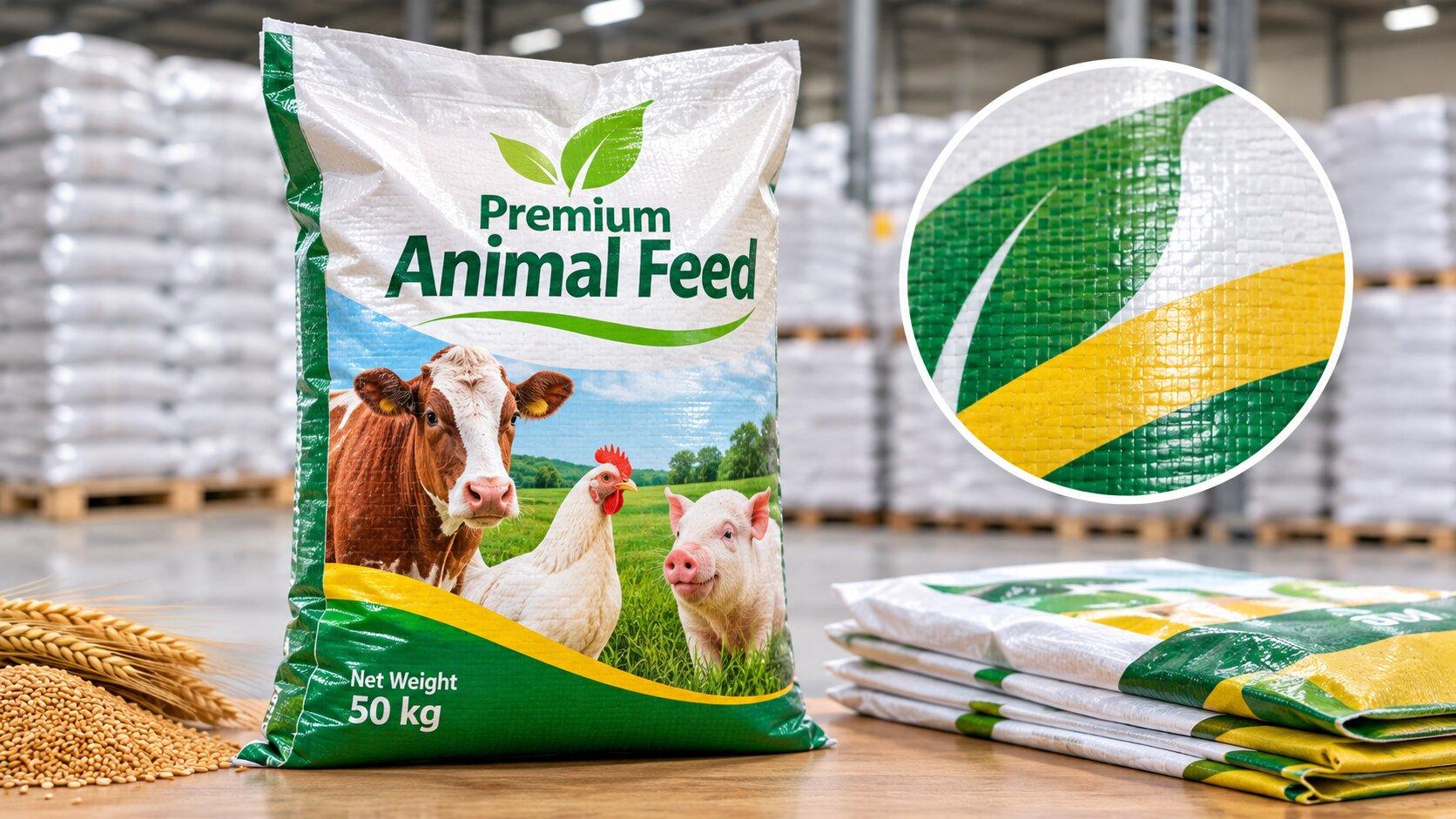
Packaging does more than protect a product during storage and transportation. It also affects how customers recognise a brand, assess product quality and make purchasing decisions. For businesses selling agricultural products, animal feed, pet food, seeds and other dry goods, packaging needs to perform well while presenting the product clearly.
BOPP woven bags offer a practical way to meet these requirements. They combine the strength of woven polypropylene fabric with the visual quality of printed BOPP film. This combination gives manufacturers and brands more control over packaging appearance, product information and handling performance.
Understanding how packaging design influences product value can help businesses make better decisions when selecting bag materials, printing methods and construction details.
What Are BOPP Woven Bags?
BOPP stands for biaxially oriented polypropylene. It is a polypropylene film stretched in two directions to improve its strength, clarity and print performance.
In a woven BOPP bag, the printed BOPP film is laminated onto woven polypropylene fabric. The woven fabric provides structural strength, while the outer film creates a smooth surface for high-quality graphics and product information.
This combination offers several benefits:
-
Strong construction: Woven polypropylene fabric helps the bag withstand normal handling, stacking and transportation.
-
High-quality printing: The BOPP film supports detailed graphics, sharp images and multiple colours.
-
Brand presentation: A smooth printed surface gives businesses more room to communicate product information and brand identity.
-
Packaging protection: Lamination helps reduce direct exposure of the woven fabric to moisture and dirt. Actual protection depends on the bag construction and sealing.
-
Flexible designs: Bags can be produced in different sizes, capacities, colours and finishing styles.
These features make BOPP woven bags suitable for businesses that need both functional packaging and a consistent brand presentation.
How Packaging Design Influences Product Value
Packaging design can affect how customers perceive a product before they even use it. A well-designed bag communicates product information, supports brand recognition and helps products stand out in competitive markets.
Here are some important ways packaging design can influence product value.
1. Creates a Strong First Impression
Customers often see the packaging before they see the product itself. The colours, graphics, layout and overall finish can influence their initial impression.
A clear and well-organised design helps a product look professional. In retail environments, attractive packaging can also help products gain attention among similar items.
BOPP woven bags support detailed printing, allowing brands to use product images, colour combinations, logos and other visual elements to create a consistent appearance.
For example, an animal feed manufacturer may use images of livestock, product-specific colours and clear feed information to distinguish different feed varieties. A grain brand may use agricultural imagery and simple design elements to communicate product type and quality.
2. Improves Brand Recognition
Consistent packaging helps customers identify a brand across different products and sales locations.
Businesses can use the same logo placement, colour scheme, typography and visual style across their packaging range. Over time, these repeated elements make products easier to recognise.
BOPP printing supports detailed brand graphics and colour reproduction. This gives businesses more flexibility when creating packaging for multiple product lines.
For companies supplying distributors and retailers, consistent packaging also helps maintain a recognisable appearance across different markets.
3. Communicates Product Information Clearly
Packaging needs to do more than look attractive. It must also communicate important information accurately.
Depending on the product and applicable regulations, a BOPP woven bag may display:
-
Product name and description
-
Net weight
-
Ingredients or material composition
-
Usage instructions
-
Storage recommendations
-
Manufacturer details
-
Batch or lot information
-
Handling and safety instructions
-
Required regulatory information
A well-planned layout makes this information easier to read. Important details should be visible without overcrowding the design.
For products such as animal feed, fertiliser and agricultural seeds, clear product identification is particularly important. It helps buyers distinguish between product types and check the information they need before purchase.
4. Supports Premium Product Positioning
Packaging contributes to how customers judge a product's overall quality. A poorly printed or inconsistent bag can make a product appear less professional, even when the product itself meets high standards.
BOPP laminated packaging offers a smooth surface that supports detailed graphics and a polished finish. This can help brands present products in a way that matches their market positioning.
For example, a premium pet food brand may use high-resolution product images, carefully selected colours and organised nutritional information. A fertiliser manufacturer may prefer a clear technical layout that highlights product specifications and usage details.
The packaging should reflect the product and the expectations of its target customers rather than relying on visual effects alone.
5. Helps Maintain Product Presentation During Distribution
Packaging passes through several stages before reaching the end customer. It may be filled, stitched or sealed, stacked, transported, stored and handled multiple times.
The bag's construction plays an important role in maintaining its appearance throughout this process.
Woven polypropylene fabric provides the supporting structure, while the laminated film adds a printed outer layer. The right combination of fabric strength, lamination, stitching and bag dimensions can help the packaging maintain its form during normal handling.
Businesses should select specifications based on product weight, filling equipment, stacking conditions and transportation requirements.
Key Design Elements to Consider in BOPP Woven Bags
Good packaging design requires more than selecting colours and adding a logo. Businesses should consider how the visual design and physical construction work together.
Printing Quality and Colour Selection
Printing quality directly affects how a brand appears on the finished bag.
BOPP film supports detailed printing, including product images, logos, patterns and multiple colours. Rotogravure printing is commonly used for BOPP packaging where consistent, high-quality graphics are required across production runs.
When planning artwork, businesses should consider:
-
Brand colours and logo placement
-
Image resolution and clarity
-
Text size and readability
-
Colour consistency across product ranges
-
Space for product and regulatory information
The final design should remain easy to read and visually consistent across different bag sizes.
Bag Size and Capacity
The bag dimensions should match the product weight, bulk density and filling requirements.
A bag designed for a lightweight product may not perform well when used for a heavier material. Similarly, an unsuitable bag size can affect filling efficiency, storage and pallet arrangement.
Before confirming dimensions, buyers should consider:
-
Product weight and density
-
Required bag capacity
-
Filling and discharge methods
-
Storage and stacking conditions
-
Transportation requirements
Correct sizing helps businesses manage packaging use and maintain a consistent finished product.
Fabric Strength and Lamination
The woven polypropylene base provides the bag's structural support. Its specifications should match the intended application and handling conditions.
Important factors include fabric GSM, weave construction, lamination quality and stitching strength.
Lamination also needs to be suitable for the intended product and storage environment. It can improve the bag's surface protection and provide a suitable base for printing, but it should not be treated as a guarantee of complete moisture resistance.
Businesses should discuss their product requirements with the manufacturer before selecting the final construction.
Finishing and Closure Options
The closure design affects how the bag is filled, handled and stored.
Depending on the application, BOPP woven bags may be manufactured with different finishing options, such as:
-
Open-mouth construction
-
Hemmed or folded top edges
-
Sewn bottom construction
-
Different stitching arrangements
-
Gusseted sides
-
Suitable liners where additional product protection is required
The right choice depends on filling equipment, product characteristics and distribution conditions.
Where Are BOPP Woven Bags Commonly Used?
BOPP woven bags are used across several industries where packaging needs to combine strength with a clear printed appearance.
Animal Feed and Pet Food
Animal feed and pet food brands use printed woven bags to display product names, animal images, nutritional details and feeding information.
Different colours and graphics can help distinguish product varieties, such as poultry feed, cattle feed, horse feed and pet food.
The bag construction should also suit the product's weight, filling process and storage requirements.
Agriculture and Seeds
Seed manufacturers and agricultural suppliers need packaging that identifies different seed varieties and communicates important product details.
BOPP woven bags provide a printed surface for crop images, product descriptions, seed information and brand elements.
Bag size and construction should be selected according to the seed type, weight and expected storage conditions.
Fertiliser and Agricultural Inputs
Fertiliser packaging often needs to display product grades, composition, application instructions and handling information.
BOPP woven bags offer a durable woven structure and a printable outer surface. The final bag specifications should account for the product's weight, handling process and moisture sensitivity.
Flour, Grains and Other Food Products
Businesses packaging flour, grains and other dry food products may use BOPP woven bags to support product identification and brand presentation.
The material structure, liner requirements and closure method should be selected according to the product's characteristics and applicable food-contact requirements.
BOPP Woven Bags vs. Standard PP Woven Bags
Both BOPP woven bags and standard PP woven bags use woven polypropylene fabric as their supporting material. The main difference is the outer finish.
| Feature | BOPP Woven Bags | Standard PP Woven Bags |
| Outer surface | BOPP film laminated onto woven fabric | Woven polypropylene surface |
| Printing | Supports detailed, high-quality graphics | Commonly uses simpler printing methods |
| Appearance | Smooth, printed finish | Textured woven appearance |
| Branding | Suitable for detailed product and brand designs | Suitable for simpler branding |
| Applications | Retail-facing and branded product packaging | General agricultural and industrial packaging |
| Construction | Woven fabric with laminated film | Woven polypropylene fabric |
The right option depends on the product, budget, printing requirements and intended market. Businesses that prioritise detailed graphics may prefer BOPP packaging, while standard PP woven bags can suit applications where simpler printing is sufficient.
What Buyers Should Check Before Ordering BOPP Woven Bags
Selecting a packaging supplier involves more than comparing prices. Buyers should assess whether the manufacturer can meet the required specifications and maintain consistent production quality.
Here are some important points to review before placing an order.
1. Manufacturing Experience
Check whether the manufacturer has experience producing BOPP woven bags for your industry. Different products can require different fabric strengths, lamination structures and finishing options.
2. Printing Capabilities
Ask about available printing methods, colour options and artwork requirements. Confirm that the manufacturer can reproduce your design accurately and maintain consistency across production batches.
3. Material Specifications
Discuss fabric GSM, weave construction, lamination, dimensions and stitching. These specifications should match the product's weight and handling requirements.
4. Quality Control
Ask how the manufacturer checks raw materials, printing, lamination, dimensions and finished bags. Consistent quality checks help reduce defects and packaging-related problems.
5. Production Capacity and Lead Times
Confirm whether the supplier can manage your required order volumes and delivery schedule. Production capacity becomes particularly important when packaging is needed regularly or across multiple product lines.
6. Certifications and Compliance
For food and feed packaging, review the certifications and documentation relevant to the product and its intended use. Confirm that the manufacturer's certification scope covers the required packaging materials and processes.
BOPP Woven Bag Manufacturing at Anita Plastics
Anita Plastics supplies woven polypropylene packaging solutions for businesses across agricultural, food and industrial markets. With more than 46 years of industry experience, 14 manufacturing facilities and a product capacity exceeding 8,000 metric tons per month, the company serves customers across 25 countries.
Its packaging range includes BOPP woven bags designed to combine material strength with high-quality printed presentation.
Manufacturing considerations include:
-
BOPP printing with rotogravure capabilities of up to 9 colours plus 1 additional colour
-
Woven polypropylene fabric construction
-
Lamination options based on packaging requirements
-
Different bag sizes and specifications
-
Printing and design options for product branding
-
Quality control throughout production
Businesses looking for suitable bopp bags can discuss their product type, required capacity, artwork and packaging specifications with Anita Plastics.
The company also holds FSSC and BRC certifications for its relevant packaging operations. Buyers should confirm the applicable certification scope and product requirements when evaluating packaging for food-related applications.
Conclusion
BOPP woven bags combine the strength of woven polypropylene fabric with the visual flexibility of printed BOPP film. This makes them a useful packaging option for businesses that need reliable bag construction and consistent brand presentation.
The right design can improve product identification, communicate important information and help maintain a professional appearance across distribution channels. However, packaging performance still depends on choosing suitable fabric, lamination, dimensions, stitching and closure specifications.
By working with an experienced manufacturer and defining these requirements before production, businesses can select BOPP woven bags that support both their packaging operations and brand objectives.
Frequently Asked Questions
1. What is the main purpose of BOPP woven bags?
BOPP woven bags are used to package dry products such as animal feed, pet food, seeds, grains and fertilisers. They combine woven polypropylene strength with a printed outer film for product information and branding.
2. What is the difference between BOPP bags and PP woven bags?
BOPP bags have a printed biaxially oriented polypropylene film laminated onto woven polypropylene fabric. Standard PP woven bags generally have an exposed woven surface and may use simpler printing methods.
3. Are BOPP woven bags suitable for food packaging?
They can be used for suitable food packaging applications, depending on the materials, manufacturing process, product requirements and applicable food-contact regulations. Buyers should confirm the relevant compliance documentation with the manufacturer.
4. Can BOPP woven bags be customised?
Yes. Manufacturers can offer different sizes, capacities, colours, printed designs, gussets and closure options. Customisation depends on the manufacturing capabilities and order requirements.
5. What printing method is used for BOPP woven bags?
Rotogravure printing is commonly used because it supports detailed graphics and consistent colour reproduction. The number of colours and final print specifications depend on the manufacturer's capabilities and artwork.
6. Are BOPP woven bags moisture-resistant?
The laminated film can help reduce moisture exposure compared with an unlaminated woven surface. However, moisture resistance depends on the complete bag construction, seams, closure and any additional liner. Standard laminated bags should not automatically be considered waterproof.
7. How do I choose the right BOPP woven bag manufacturer?
Evaluate the manufacturer's production experience, printing capabilities, material specifications, quality control systems, certifications, production capacity and ability to meet your delivery requirements. Always share your product and handling details before confirming the bag specifications.

 English
 Arabic
 French
 Spanish
 Portuguese
 Turkish
 Dutch
 Italiano
 Russian
 Romaian
 Portuguese (Brazil)
 Greek