
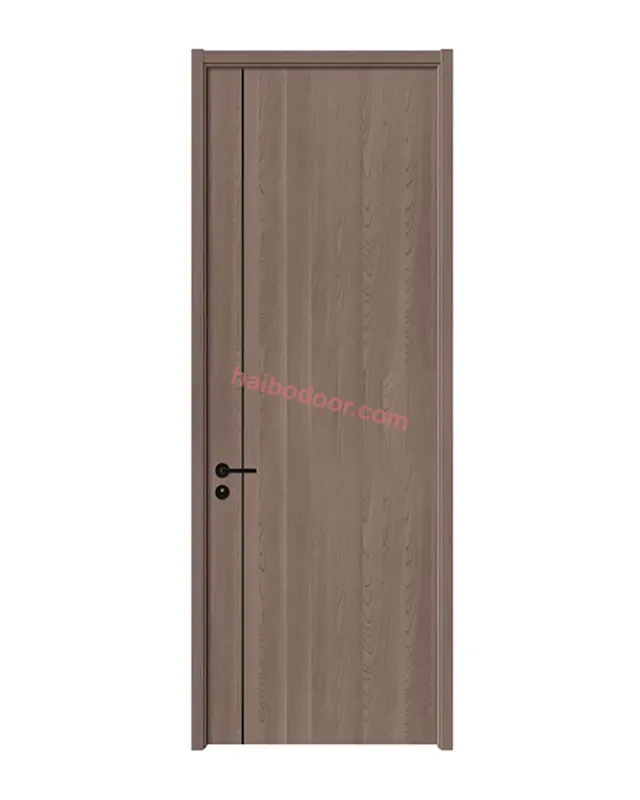
Last winter I stood in an unfinished apartment with the doors already hung, and the only sound in the corridor was a joiner tapping each leaf with his knuckles, working his way down the row and pausing at the bottom edges. He was listening for the hollow note that tells you the core is not what the seller claimed. Buyers who deal with a Wooden Door Factory learn the same habit sooner or later, because a door is a stack of materials and each layer decides how long the whole thing lasts in a hallway that sees foot traffic every day and a shoulder against it now and then.
Start with the stiles and rails, the frame that gives a door its shape. Timber is usually chosen for how it moves as humidity shifts, and a wood that twists easily will pull the joints apart even when the panel itself is sound. I have seen doors where the stiles had been joined with dowels and glue, and others where the joinery looked rushed, and the difference shows up after a heating season when the door starts to catch along one edge and needs a plane taken to it.
The core comes next, and it is where a lot of doors are quietly cheaper than they look. A solid or semi-solid core feels heavier when you swing it and holds screws at the hinge with less movement, while a honeycomb or hollow center can sound thin under a knock and may sag over years of use. Weight is not proof of anything on its own, but it is a quick check you can do with your hands before you trust a label, and it costs nothing but a moment in the aisle.
Surface layers decide how the door looks and how it takes a knock. Veneer is a thin slice of timber glued over the core, and the grain has to be matched across leaves in a run so a hallway does not look patchy. A lacquered or laminated face handles cleaning differently, and some surfaces mark from a chair back while others shrug it off. In one workshop I walked through, a Haibo worker was sorting veneer sheets by grain pattern on a long table, holding each one up to the window before setting it down and moving to the next stack.
Finish and edge treatment tie it together. Edges that are lipped with matching timber wear quietly, while a thin paper edge can fray where a hand grabs the door. The finish itself matters for moisture, since a door in a bathroom faces wet air that a bedroom door never sees, and a properly sealed face keeps that air out of the core for years, though no coating makes a door waterproof.
Hardware is part of the material story too. Hinge plates need enough solid timber behind them to hold screws, and a lock body needs a block in the core to sit in. When a hinge starts to wobble, it is often because the wood behind it was too soft rather than because the hinge failed, and swapping the hinge will not fix that.
The frame around the door belongs here as well, since a door only works if the jamb is straight and dry. A jamb that has taken on moisture will bind against the leaf, and people blame the door when the frame is the thing that moved. I have watched a fitter slide a level along a jamb and sigh before touching the door at all, which is usually the right order of things.
I still find myself knocking on a door before I open it, out of habit, listening for that dense answer instead of a hollow one, and the sound from usually settles the question before the paperwork does, with the tone carrying through the leaf in a way a label cannot show. Once the samples are back on the shelf, https://www.haibodoor.com/product/ is the tab that stays open for whoever asks about the range.

 English
 Arabic
 French
 Spanish
 Portuguese
 Deutsch
 Turkish
 Dutch
 Italiano
 Russian
 Romaian
 Portuguese (Brazil)