
Introduction
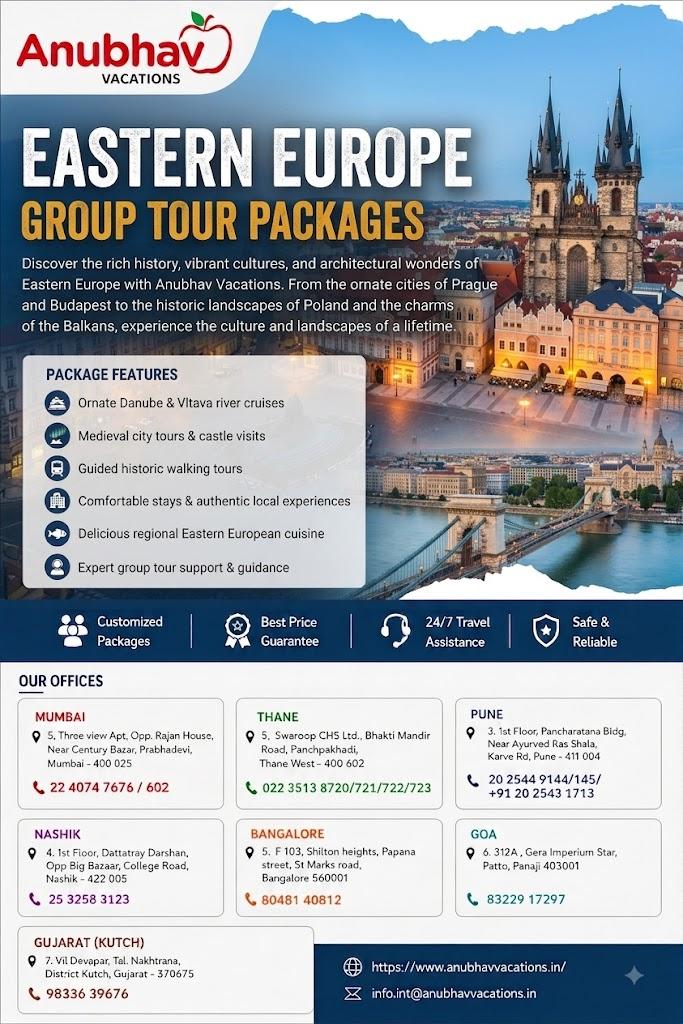
Eastern Europe offers a fascinating combination of historic cities, impressive architecture, cultural traditions, scenic landscapes, and welcoming local experiences. From the charming streets of Prague to the historic attractions of Budapest and the beautiful old towns of Kraków, the region has plenty to offer curious travellers. Choosing Eastern Europe group tours can make exploring these destinations more convenient while allowing you to share memorable experiences with fellow travellers.
Group travel is especially appealing for people who want an organised itinerary without managing every transportation and accommodation detail independently. With planned sightseeing, coordinated transfers, and opportunities to discover different cultures, a group holiday can make a European adventure enjoyable and less complicated.
Explore Multiple Destinations in One Journey
One of the biggest advantages of group travel is the opportunity to visit several destinations within a single holiday. Eastern Europe has many fascinating countries and cities, each offering its own architectural style, traditions, cuisine, and history.
Depending on the itinerary, travellers may explore Prague in the Czech Republic, Budapest in Hungary, Vienna in Austria, Kraków in Poland, or other popular destinations. Visiting multiple places allows you to experience different aspects of European culture without organising every connection independently.
A carefully planned route also helps make better use of your available holiday time. Instead of spending hours researching transport options and accommodation, you can focus on enjoying the destinations.
Enjoy Convenient Travel Planning
Planning an international holiday can involve several tasks, including selecting hotels, arranging transfers, booking sightseeing activities, and understanding local transportation. Group tours can simplify many of these arrangements through a coordinated travel schedule.
Accommodation and transportation are often organised in advance, making it easier to move between destinations. Travellers can also benefit from a structured itinerary that outlines major sightseeing opportunities and travel arrangements.
Before booking, review the inclusions carefully. Check the hotel categories, meals, transfers, guided excursions, and any additional costs so you understand what to expect throughout the journey.
Experience the Region's Rich History and Architecture
Eastern Europe is filled with historical landmarks that reflect centuries of cultural and architectural development. Its cities feature medieval squares, impressive castles, grand churches, historic bridges, and elegant palaces.
Prague is known for its Old Town Square, Charles Bridge, and Prague Castle. Budapest offers attractions such as the Hungarian Parliament Building and Buda Castle. Kraków is famous for its historic market square and Wawel Royal Castle.
Exploring these destinations as part of an organised itinerary can help travellers discover important landmarks while gaining a better understanding of the region's history and traditions.
Meet Fellow Travellers and Share Memorable Experiences
Group holidays create opportunities to connect with people who share an interest in exploring new destinations. Travelling with others can make sightseeing, cultural activities, and long journeys more enjoyable.
You can exchange travel experiences, discover different perspectives, and create memories with fellow group members. It may also provide reassurance for people who are visiting Eastern Europe for the first time.
For solo travellers, group arrangements can offer a comfortable way to explore international destinations while enjoying the company of others. However, it is worth checking the group size and room-sharing policies before confirming your booking.
Discover Local Cuisine and Cultural Traditions
Food is an important part of understanding a destination, and Eastern Europe offers a wide variety of regional specialities. Travellers can enjoy traditional dishes, local desserts, fresh bakery products, and distinctive beverages across different countries.
You may discover Hungarian goulash, Polish pierogi, Czech specialities, and traditional Austrian cuisine during your journey. Local markets, cafés, and restaurants also provide opportunities to experience everyday culture.
When comparing Eastern Europe holiday packages, look for itineraries that include enough free time to explore local food, shopping areas, and cultural attractions. These experiences can make your holiday more meaningful than simply visiting popular landmarks.
Enjoy a Balance of Guided Sightseeing and Free Time
A good group itinerary should offer a balance between organised activities and personal exploration. Guided sightseeing helps you understand major attractions, while free time allows you to discover places according to your interests.
You may want to spend additional time exploring a historic neighbourhood, visiting a museum, shopping for local souvenirs, or relaxing at a traditional café. Having some flexibility in the schedule makes the experience more comfortable.
Before booking, check how much free time is included and whether optional excursions are available at additional costs. This helps you select a tour that matches your preferred travel pace.
Make Your European Holiday More Organised
Group tours can be useful for travellers who prefer having major travel arrangements coordinated before departure. A structured schedule can reduce the uncertainty associated with navigating unfamiliar destinations and arranging transport between countries.
It is still important to compare itineraries, travel durations, accommodation standards, and included services. Consider the season, expected weather, visa requirements, and travel insurance before confirming your holiday.
An organised journey can provide a convenient way to discover several destinations while leaving you more time to appreciate the architecture, food, history, and atmosphere of Eastern Europe.
Conclusion
Eastern Europe is an excellent choice for travellers seeking history, culture, architecture, local cuisine, and scenic experiences. Exploring the region with a group can make travel planning easier, provide opportunities to meet fellow explorers, and help you discover several destinations in one journey. Choosing suitable Eastern Europe group tours allows you to enjoy a more organised European adventure while experiencing the region's distinctive character. With a well-planned itinerary and the right travel arrangements, your next holiday can become a memorable cultural journey.
Frequently Asked Questions (FAQs)
1. Which countries can be included in Eastern Europe group tours?
Depending on the itinerary, tours may include countries such as Hungary, Poland, the Czech Republic, Austria, Slovakia, Romania, and other destinations in the region.
2. Are group tours suitable for first-time visitors to Eastern Europe?
Yes. Group tours can simplify transportation, accommodation, and sightseeing arrangements, making them a convenient option for first-time visitors.
3. What are the benefits of travelling in a group?
Group travel offers organised arrangements, opportunities to meet fellow travellers, shared experiences, and a structured sightseeing schedule.
4. How many days are needed to explore Eastern Europe?
A trip of around 7 to 14 days can cover several popular destinations. The ideal duration depends on the countries included and your preferred travel pace.
5. What should I check before booking an Eastern Europe group tour?
Review the itinerary, hotel arrangements, transportation, meals, sightseeing inclusions, group size, visa requirements, cancellation policies, and additional expenses.
Read Our Previous Blog: Which Experiences Make Patagonia Holiday Packages Worth Booking?

 English
 Arabic
 Spanish
 Portuguese
 Deutsch
 Turkish
 Dutch
 Italiano
 Russian
 Romaian
 Portuguese (Brazil)
 Greek