
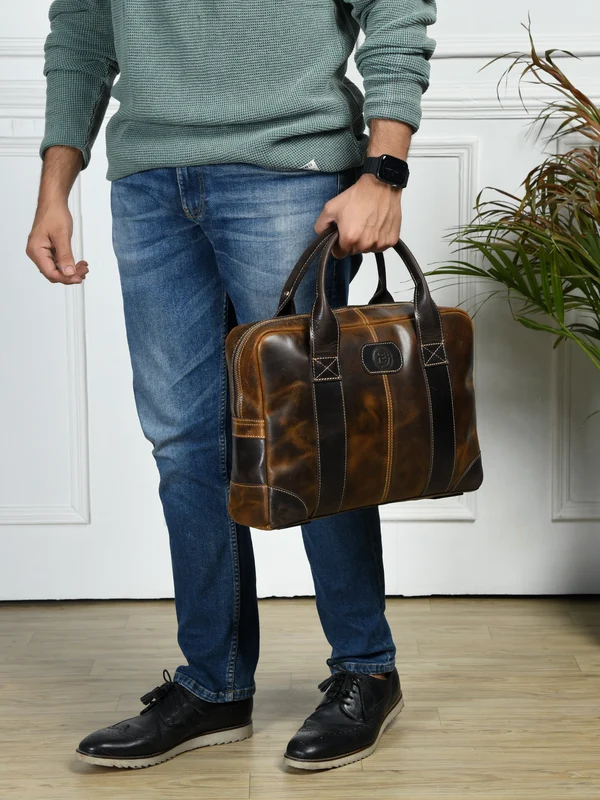
Buying a leather bag is more than choosing an attractive design. A good bag should suit your daily routine, carry your essentials comfortably and maintain its appearance with regular use. If you are considering a full grain leather bag, understanding what makes one worth buying can help you make a better decision.
Full-grain leather is valued for retaining the natural grain of the hide. Unlike heavily corrected leather, it generally preserves more of the original surface characteristics, including natural markings and texture. Over time, it can also develop a distinctive patina.
However, the leather grade alone does not determine the quality of a finished bag. Stitching, construction, hardware, lining and practical design all matter.
This buying guide explains what to check before purchasing a full grain leather bag, how to choose the right style and which details can make a difference in long-term use.
1. Understand What Full-Grain Leather Means
Before comparing designs and prices, understand the material.
Full-grain leather is made from the outer layer of the hide, with its natural grain surface retained. This surface may show subtle variations, marks or differences in texture. These characteristics are not necessarily defects; they can be part of the leather's natural appearance.
Some buyers prefer full-grain leather because:
-
It retains the natural grain and character of the hide.
-
It can develop a rich patina with use.
-
It offers a distinctive appearance rather than a perfectly uniform surface.
-
Its performance can be excellent when paired with good construction and proper care.
Remember that the term describes the leather's grain layer, not the complete quality of the bag. Always evaluate the material alongside the workmanship.
2. Check the Leather Quality Before Buying
A premium-looking bag should also have material quality that matches its price.
Here are a few details to examine:
Natural texture
Full-grain leather may have slight variations in texture, grain and colour. A completely uniform appearance is not essential for quality leather.
Surface finish
Look for a finish that appears consistent with the product description. Some full-grain bags have a natural finish, while others may be treated or coated to achieve a particular colour or appearance.
Thickness and flexibility
The leather should feel appropriate for the bag's intended use. A work bag may require a more structured construction, while a casual everyday bag may benefit from some flexibility.
Product transparency
Check whether the seller clearly explains the leather type, finish and care requirements. Avoid relying on labels such as premium or luxury without supporting product details.
3. Examine Stitching, Construction and Hardware
Even good leather cannot compensate for weak construction. The bag's stitching and hardware influence how well it performs over time.
Use this checklist when evaluating a bag:
| Feature | What to check |
|---|---|
| Stitching | Straight, even and secure stitches |
| Handles | Strong attachment points and comfortable grip |
| Zippers | Smooth movement without catching |
| Buckles | Secure fastening and solid fitting |
| Edges | Neatly finished edges |
| Base | Supportive construction that suits the bag's weight |
| Straps | Secure adjustment and attachment points |
Pay particular attention to handle attachments, strap joints and corners. These areas often experience repeated pulling and friction.
4. Choose a Bag Style That Matches Your Lifestyle
The right full grain leather bag depends on how you plan to use it. A stylish design may look attractive, but it should also work with your daily routine.
For office and professional use
A structured laptop bag, briefcase or messenger bag can be suitable for carrying work essentials. Look for organised compartments, a comfortable handle and enough space for documents or a laptop.
For everyday use
A sling bag or compact shoulder bag can be practical when you carry only a few essentials. Consider easy-access pockets, comfortable straps and a manageable size.
For travel
A leather duffle bag can be useful for short trips and weekend travel. Check the main compartment, handles, shoulder strap and overall carrying comfort.
For casual outings
A compact crossbody or sling style can provide convenient storage without requiring a large bag.
The best choice is the one that fits your routine rather than simply following a trend.
5. Select the Right Size and Storage Capacity
A bag should have enough room for your essentials without becoming unnecessarily bulky.
Before purchasing, list the items you regularly carry:
-
Laptop or tablet
-
Documents and notebooks
-
Wallet and phone
-
Charger and cables
-
Water bottle
-
Keys and small personal items
Then compare those requirements with the product's listed dimensions and compartment details.
| Bag type | Suitable use | What to consider |
|---|---|---|
| Laptop bag | Office and work | Laptop compartment and document space |
| Messenger bag | Daily commuting | Easy access and shoulder comfort |
| Sling bag | Everyday essentials | Compact size and adjustable strap |
| Duffle bag | Weekend travel | Main capacity and carrying options |
| Briefcase | Formal professional use | Structure and organised storage |
Do not judge capacity only by product photographs. Check the actual dimensions before ordering.
6. Compare Price with Overall Value
A higher price does not automatically guarantee a better bag. Similarly, an unusually low price may require closer inspection of the material and construction.
Compare these factors before making a decision:
-
Leather type: Is the product clearly described as full-grain leather?
-
Construction: Are stitching and handle attachments properly finished?
-
Hardware: Are the zippers, buckles and fittings suitable for regular use?
-
Design: Does the bag meet your storage and comfort requirements?
-
Care: Are maintenance instructions provided?
-
After-sales support: Are return, exchange and warranty policies clearly explained?
A bag that suits your needs and is made with careful workmanship may offer better long-term value than one chosen only for its appearance.
7. Match the Colour with Your Wardrobe
Colour affects how often you can use a bag. Choose a shade that works with your usual clothing and occasions.
-
Black: A versatile choice for formal and professional outfits.
-
Brown: Works well with casual, smart-casual and traditional styles.
-
Tan: Offers a lighter, relaxed appearance.
-
Dark brown: A practical option for buyers who prefer a rich, understated look.
Consider your existing footwear, belts and clothing colours. A versatile shade can make the bag easier to use across different occasions.
8. Read Online Product Descriptions Carefully
When buying a full grain leather bag online, photographs are only one part of the decision. The product description should provide enough information to understand what you are purchasing.
Check for:
-
Clearly stated leather type
-
Product dimensions
-
Compartment details
-
Strap and handle information
-
Hardware and closure details
-
Product photographs from multiple angles
-
Care and maintenance guidance
-
Shipping and return policies
If the description uses broad terms such as

 English
 Arabic
 French
 Spanish
 Portuguese
 Deutsch
 Turkish
 Dutch
 Italiano
 Romaian
 Portuguese (Brazil)
 Greek