
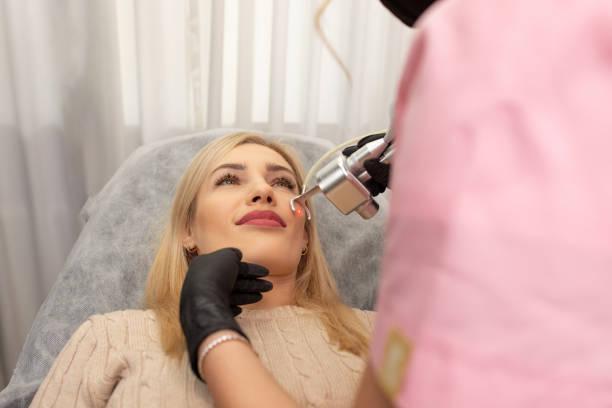
Acne scars can remain long after active breakouts have settled. Some create broad depressions with sloping edges, while others form more defined indentations with sharper borders. These differences matter when selecting a resurfacing procedure. Fractional CO2 Laser Treatment in Dubai may help improve selected rolling and boxcar scars by creating controlled microscopic areas of injury that encourage skin repair and collagen remodelling.
Although fractional CO2 resurfacing can improve certain types of atrophic acne scarring, it does not eliminate every scar or restore the skin to its original condition. A careful assessment is needed to understand scar depth, tethering, skin type and whether additional procedures may be appropriate.
Understanding Rolling and Boxcar Acne Scars
Atrophic acne scars develop when inflammation associated with acne damages the skin's supporting structures. During healing, collagen production and tissue repair may be insufficient or uneven, leaving depressed areas.
Rolling and boxcar scars are both depressed scars, but their shapes and underlying structures differ.
What Are Rolling Acne Scars?
Rolling scars create broad, wave-like depressions across the skin. Their edges tend to slope gradually rather than forming sharply defined borders.
Some rolling scars are tethered to deeper tissue by fibrous bands. These attachments pull the surface downwards, creating an uneven appearance that may become more noticeable under certain lighting conditions.
Because tethering can contribute to the depression, resurfacing alone may not adequately address every rolling scar.
What Are Boxcar Acne Scars?
Boxcar scars are usually round or oval depressions with more clearly defined edges. They can be shallow or deep and may have vertical sides that create a sharper transition between the scar and surrounding skin.
Shallow boxcar scars may respond to resurfacing in selected patients. Deeper boxcar scars can be more difficult to improve with laser treatment alone and may require a combination approach.
How Fractional CO2 Laser Treatment in Dubai Targets Acne Scars
Fractional CO2 laser resurfacing delivers energy into microscopic columns within the skin. The laser energy is absorbed by tissue water, creating controlled thermal effects and, depending on the settings, vaporisation of targeted tissue.
The resulting repair response may encourage collagen remodelling and improve the appearance of selected depressions. The treatment also addresses some surface irregularities by resurfacing portions of the skin.
The Role of Dermal Collagen
Collagen is a structural protein that helps maintain the strength and organisation of the dermis. Acne-related inflammation can disrupt the normal collagen structure, leaving areas of reduced support.
Fractional laser treatment creates controlled injury that activates the body's wound-healing response. During repair, collagen production and remodelling may contribute to a smoother appearance.
This is a gradual process. It does not mean that the laser simply fills a scar or guarantees complete restoration of the original skin structure.
Why Fractional Delivery Is Used
Fractional delivery treats microscopic columns rather than the entire surface. Untreated tissue remains between the columns and helps support the healing process.
The practitioner can adjust treatment density and energy according to the scar pattern, skin characteristics and desired degree of resurfacing. More intensive settings may also mean greater downtime and a higher risk of complications.
Treating Rolling Scars and Tethered Tissue
Rolling scars require particular attention because their appearance may be influenced by deeper fibrous attachments.
If a scar is tethered, the skin may remain pulled down even when the surface has been resurfaced. In these cases, a clinician may consider whether a procedure such as subcision is appropriate before or alongside laser treatment.
Subcision uses a specialised technique to release selected fibrous bands beneath the scar. It is not suitable for every scar and carries its own risks, including bruising, swelling and possible changes in contour.
Why Laser Resurfacing Alone May Not Be Enough
Fractional CO2 resurfacing primarily addresses the skin surface and selected dermal tissue. It does not reliably release all deeper attachments responsible for tethered scars.
A combined approach may be discussed when both surface irregularity and deeper tethering are present. The sequence and timing depend on the patient's anatomy, scar characteristics and healing response.
Improving Boxcar Scar Texture
The response of boxcar scars depends partly on their depth and edge definition.
Shallow boxcar scars may benefit from fractional resurfacing because treatment can improve the surrounding texture and encourage dermal remodelling. Deep scars with steep walls may be less responsive and could need additional techniques.
Shallow Versus Deep Boxcar Scars
| Scar feature | Potential treatment consideration |
|---|---|
| Shallow boxcar scars | May be considered for fractional resurfacing |
| Deep boxcar scars | May require a combination approach |
| Sharply defined edges | Need assessment of scar depth and surrounding tissue |
| Multiple scar types | May need different techniques across the same face |
The clinician should assess scars individually rather than assume that one laser setting will work equally well across the entire treatment area.
Candidacy and Skin Type Assessment
Fractional CO2 resurfacing may be considered for patients with selected atrophic scars who have suitable skin health and can follow the recovery plan.
Skin tone is an important factor. Patients with darker skin types may have a greater risk of post-inflammatory hyperpigmentation following ablative resurfacing. This does not automatically rule out treatment, but it requires careful risk assessment and appropriate alternatives where necessary.
The practitioner should also review active acne, infection, previous procedures, medications and any history of abnormal scarring or delayed healing.
When Treatment May Need to Be Postponed
Treatment may be delayed or reconsidered when a patient has:
-
Active inflammatory acne in the planned area.
-
A current skin infection.
-
Open or irritated skin.
-
Recent significant sun exposure or tanning.
-
A history of problematic wound healing.
-
Pigmentation conditions that may worsen after inflammation.
A clinician should also discuss any relevant medication history, including previous isotretinoin use, rather than applying a universal waiting period.
What to Expect During Treatment and Recovery
Before treatment, the skin is assessed and prepared according to the selected protocol. Anaesthesia may be used to improve comfort.
The practitioner then delivers fractional laser energy to the selected areas. Patients may experience warmth, stinging or discomfort, depending on the intensity and treatment coverage.
Afterward, redness, swelling, sensitivity and small crusts may appear. The surface may peel as healing progresses. Redness can continue beyond the initial recovery period, and collagen-related changes develop gradually.
Aftercare for Acne Scar Resurfacing
Patients may be advised to:
-
Cleanse gently using recommended products.
-
Apply suitable moisturising or protective preparations.
-
Avoid picking or rubbing treated skin.
-
Pause retinoids and exfoliating acids until cleared.
-
Protect the healing skin from sunlight.
-
Attend follow-up appointments.
-
Report signs of infection or worsening inflammation.
The treating clinician should explain when skincare products and other procedures can safely be resumed.
Read More: Defining the Jawline and Reducing Early Jowls with a Thread Lift in Dubai
Risks and Realistic Expectations
Fractional CO2 resurfacing can cause temporary redness, swelling, peeling and sensitivity. Possible complications include infection, prolonged redness, post-inflammatory hyperpigmentation, hypopigmentation and scarring.
The likelihood of pigmentation changes may be higher in darker skin tones. Treatment intensity and aftercare also influence risk.
Patients should understand that acne scar improvement is usually gradual and may be partial. Deep scars can remain visible even after treatment, and several procedures may be needed to address different scar structures.
Clinic Note: Rolling and boxcar scars are not interchangeable. Rolling scars may involve deeper tethering, while boxcar scars have more defined depressions. Identifying the scar structure helps determine whether fractional resurfacing alone is appropriate or whether a combined treatment plan should be considered.
Frequently Asked Questions
Can fractional CO2 laser remove deep rolling acne scars?
It may improve selected rolling scars, particularly surface irregularities. When deep fibrous tethering is present, a procedure such as subcision may need to be considered.
Does fractional CO2 laser work for boxcar scars?
Shallow boxcar scars may improve with resurfacing. Deep boxcar scars can be more resistant and may require additional treatment techniques.
How many sessions are needed for acne scars?
The number varies according to scar type, depth, treatment settings and individual response. A clinician should establish a plan after assessing the skin.
Will the skin become completely smooth?
Complete scar removal cannot be guaranteed. The aim is generally to improve texture and reduce the visibility of selected depressions.
Can active acne be treated with fractional CO2 laser?
Active inflammatory acne should usually be assessed and controlled before ablative resurfacing is considered. Treating active breakouts and treating established scars are different clinical goals.
Planning Treatment Around Scar Structure
Improving acne scars requires an understanding of the tissue changes beneath the visible surface. Fractional CO2 laser resurfacing may help selected rolling and boxcar scars through controlled resurfacing and collagen remodelling, but deeper tethering or sharply defined depressions may need other techniques.
At Tajmeels Clinic, patients can discuss their scar patterns, skin type and treatment expectations during a professional assessment. A personalised plan for Fractional CO2 Laser Treatment in Dubai should explain the likely benefits, limitations, recovery and risks before treatment begins.

 English
 Arabic
 French
 Spanish
 Portuguese
 Deutsch
 Turkish
 Dutch
 Russian
 Romaian
 Portuguese (Brazil)
 Greek