
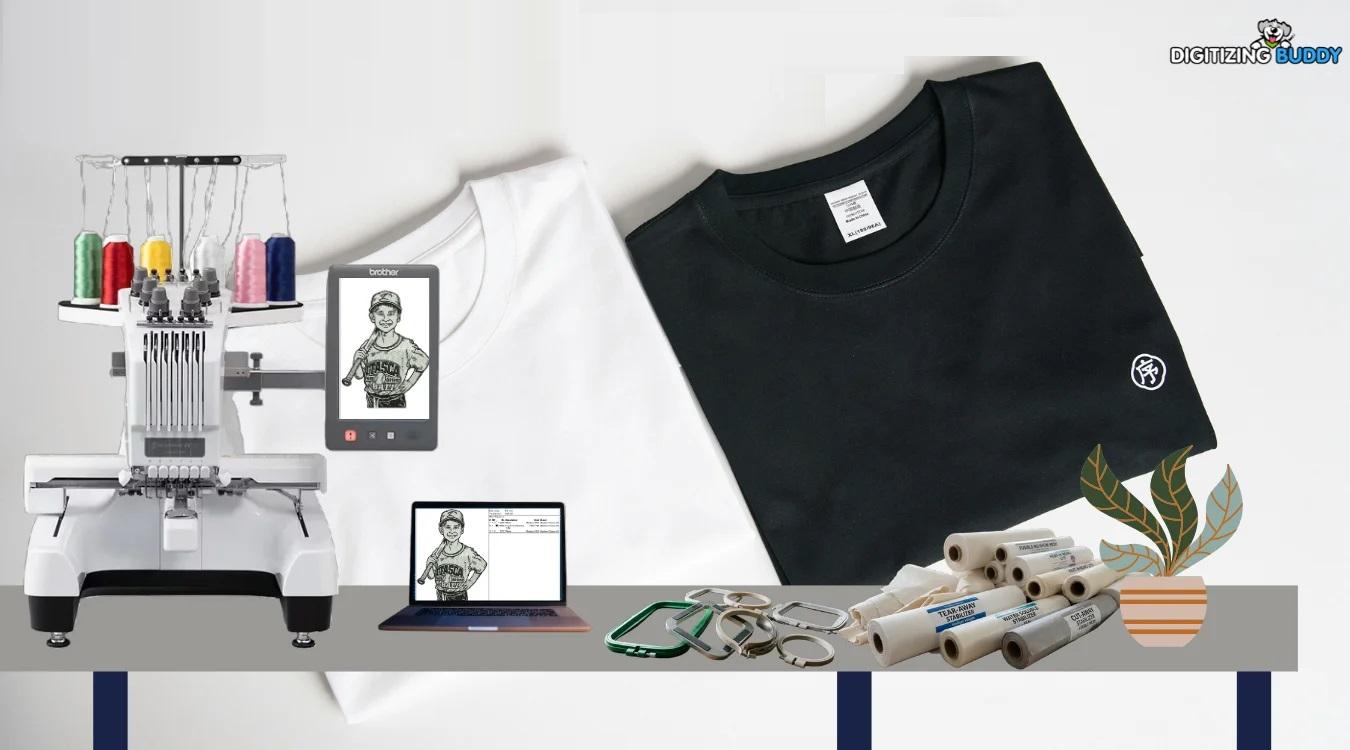
Starting a business from home sounds exciting, but it can also feel overwhelming. What equipment do you need? How much should you charge? Where will your first customers come from?
The good news is that you don't need a huge workshop or a massive budget to get started. With the right embroidery machine, basic supplies, useful software, and a clear business plan, you can start an embroidery business at home and gradually turn it into a reliable source of income.
Whether you want to personalize shirts, create embroidered hats, make custom patches, or produce branded workwear, there are plenty of opportunities in the custom embroidery market.
Why Start an Embroidery Business at Home?
Embroidery is more than a craft. It can become a practical home-based business because personalized products have a strong appeal.
People want unique items for birthdays, weddings, sports teams, businesses, schools, clubs, and special events. Small businesses also need embroidered logos for uniforms, caps, jackets, and promotional clothing.
Running your operation from home can also help you keep overhead costs manageable. You can begin with a small selection of services and expand as your customer base grows.
Benefits of a Home Embroidery Business
Some of the biggest advantages include:
- Lower startup costs than opening a physical shop
- Flexible working hours
- Ability to work with local and online customers
- Opportunities to sell personalized products
- Potential for repeat business
- Room to expand into bulk embroidery orders
- Ability to start small and reinvest profits
The key is not trying to sell everything at once. Start with a few profitable products and become really good at them.
Decide What Embroidery Products You Will Sell
Before buying equipment, decide what you actually want to make.
Your product selection will influence your embroidery machine, hoops, supplies, pricing, and marketing strategy.
Popular options include:
- Custom embroidered T-shirts
- Polo shirts
- Embroidered hats and caps
- Jackets and hoodies
- Work uniforms
- Monogrammed towels
- Baby and children's clothing
- Embroidered bags and totes
- Custom patches
- Corporate apparel
- Personalized gifts
For example, if you want to serve local companies, logo embroidery and workwear may be your main focus. If you prefer individual customers, personalized gifts and clothing may be a better starting point.
Choose the Right Embroidery Machine
Your embroidery machine will be one of your biggest investments, so don't choose one simply because it has the most features.
Think about your expected workload.
A single-needle machine may work well for someone starting with occasional orders. If you expect frequent business orders, multiple needles can make color changes and production much faster.
Consider These Machine Features
When comparing embroidery machines, look at:
- Maximum embroidery area
- Number of needles
- Hoop sizes
- Stitching speed
- Built-in designs
- File format compatibility
- Ease of use
- Maintenance requirements
- Availability of support
- Upgrade options
You don't necessarily need an expensive commercial machine on day one. A good strategy is to choose equipment that meets your current needs while leaving room for future growth.
Learn Embroidery Digitizing
One of the most important skills in an embroidery business is understanding embroidery digitizing.
An embroidery machine cannot simply stitch an ordinary JPG, PNG, or logo image. Artwork needs to be converted into a machine-readable embroidery file.
The digitizing process determines things such as:
- Stitch types
- Stitch direction
- Stitch density
- Underlay
- Thread changes
- Pull compensation
- Sewing sequence
- Trims and jumps
Poor digitizing can cause thread breaks, puckering, gaps, distorted shapes, or messy lettering.
If you're new to digitizing, you can learn embroidery software or outsource digitizing to a professional service. For businesses that want reliable production without spending hours preparing every design, outsourcing can be a practical option.
Digitizing Buddy can also be useful when you need professionally prepared embroidery designs for different projects.
Get Basic Embroidery Supplies
The machine is only part of your setup. You'll also need everyday embroidery supplies.
A basic home embroidery setup may include:
- Embroidery thread
- Bobbin thread
- Needles
- Stabilizers
- Embroidery hoops
- Scissors
- Thread snips
- Design software
- Garment samples
- Storage containers
- Cleaning supplies
Don't buy huge quantities of everything immediately.
Start with commonly used colors, stabilizers, and garment types. As you learn what your customers request most often, you can expand your inventory.
Set Up a Small Home Embroidery Workspace
You don't need an entire room to start an embroidery business.
A clean, organized workspace can be enough.
Your machine should sit on a stable surface with enough room around it for hoops, garments, thread, and other supplies. Good lighting is also important because you'll often need to inspect stitches closely.
Try to create separate areas for:
- Artwork and digitizing
- Embroidery production
- Thread and supply storage
- Finished orders
- Packaging and shipping
Keeping these areas organized saves time and makes your work feel more professional.
Learn How to Price Embroidery Services
Pricing is one of the biggest challenges for new embroidery businesses.
Many beginners make the mistake of charging only for thread and materials. Your price should also account for your time, machine usage, digitizing, garment costs, setup, finishing, packaging, and other business expenses.
A simple pricing formula is:
Product Cost + Digitizing + Embroidery Labor + Machine Cost + Finishing + Packaging + Profit = Selling Price
For example, an embroidered polo shirt involves more than the cost of the shirt and thread. You also spend time preparing the design, hooping the garment, running the machine, checking the result, and finishing the order.
Consider Tiered Pricing
You can create different prices based on order size.
For example:
- 1–5 pieces: Standard price
- 6–20 pieces: Small bulk discount
- 21–50 pieces: Better per-piece rate
- 50+ pieces: Custom quotation
This approach can encourage larger orders without reducing your profit too much.
Create Sample Products
Customers often want to see your work before placing an order.
Create a small portfolio showing different embroidery styles and products.
Consider making samples such as:
- A company-style logo on a polo
- A name on a cap
- A monogram on a towel
- A small design on a hoodie
- A detailed patch
- A jacket-back design
Take clear photos in good lighting. Close-up images are especially useful because embroidery customers want to see stitch quality.
Build Your Embroidery Brand
Your business needs an identity that customers can remember.
Choose a simple business name, logo, and visual style. Your branding doesn't need to be complicated.
Make sure your business information is consistent across your website, social media profiles, invoices, packaging, and promotional materials.
If you are building an online presence, create a simple website that explains:
- What you offer
- Who you serve
- Your embroidery services
- Product options
- How customers can request a quote
- How to contact you
Find Your First Embroidery Customers
You don't need thousands of followers to get your first orders.
Start close to home.
Potential customers include:
- Local businesses
- Restaurants
- Construction companies
- Sports teams
- Schools
- Gyms
- Event planners
- Clubs
- Churches and community groups
- Clothing brands
- Small online businesses
Reach out with a simple message explaining what you offer.
Instead of saying, "I have an embroidery business," make the offer specific.
For example, you could tell a local company that you create custom embroidered uniforms and branded workwear.
Specific offers are easier for potential customers to understand.
Use Social Media to Show Your Work
Embroidery is highly visual, which makes social media a useful marketing tool.
Post photos and short videos showing your work from start to finish.
You can share:
- Machine embroidery videos
- Before-and-after artwork
- Close-ups of finished stitches
- New products
- Customer orders
- Behind-the-scenes clips
- Packaging videos
- Custom design examples
Don't only post finished products. Show the process too.
People enjoy watching a blank garment turn into a personalized product.
Build Relationships With Local Businesses
Business-to-business embroidery can become a valuable source of repeat orders.
A company may need 10 shirts today and another 30 shirts next month. If you provide consistent quality and dependable service, you have a chance to turn one order into a long-term relationship.
Create a simple business sample package.
You could include a few embroidered samples, a price sheet, your contact information, and examples of available products.
Then approach businesses that are likely to need uniforms or branded clothing.
Consider Custom Embroidery Online
Your local market isn't your only option.
Once your production process is reliable, you can accept orders online.
You can sell through your own website or other suitable online channels. Personalized products can attract customers from outside your local area when your photos, descriptions, pricing, and customer service are strong.
However, don't expand too quickly.
First make sure you can consistently produce quality work and meet promised deadlines.
Keep Quality Consistent
A customer may forgive a small delay, but poor embroidery can damage trust quickly.
Before delivering an order, inspect:
- Thread tension
- Stitch coverage
- Lettering
- Thread colors
- Placement
- Backing
- Loose threads
- Trims
- Garment condition
A simple quality-control checklist can prevent many customer complaints.
Remember, your finished product is also your advertisement. A customer wearing your embroidery is essentially showing your work to other potential customers.
Track Your Business Expenses
Even a small home operation should keep proper financial records.
Track expenses such as:
- Embroidery equipment
- Thread
- Stabilizer
- Garments
- Digitizing
- Packaging
- Website costs
- Advertising
- Maintenance
- Shipping
Keep business and personal expenses organized separately where possible.
This makes it easier to understand whether your embroidery business is actually profitable.
Reinvest Your Early Profits
You don't have to buy every piece of equipment immediately.
When your business begins generating consistent income, consider reinvesting some profits into improvements.
You might invest in:
- Additional hoops
- More thread colors
- Better digitizing software
- Faster equipment
- Larger embroidery capacity
- Packaging materials
- Professional photography
- Marketing
- A better workspace
Think of growth as building one layer at a time.
Common Mistakes to Avoid
Starting an embroidery business can be rewarding, but beginners often make avoidable mistakes.
Buying Too Much Equipment
Don't spend your entire budget before you have customers.
Start with what you need and upgrade when your workload justifies it.
Underpricing Your Work
Cheap prices may attract customers, but they can make it difficult to cover your real costs.
Know your numbers before setting your prices.
Accepting Every Type of Order
It can be tempting to say yes to everything.
However, complicated materials, oversized designs, extremely small lettering, or difficult placements can create problems if you're not prepared.
Know your capabilities.
Ignoring Digitizing Quality
A beautiful logo can look terrible when converted poorly for embroidery.
Good digitizing is essential for professional results.
Missing Deadlines
Customers value reliability.
If an order will take longer than expected, communicate early rather than waiting until the deadline has passed.
A Simple Plan to Start Your Embroidery Business
If you're wondering where to begin, follow this basic roadmap:
Step 1: Choose your target customers.
Step 2: Decide which embroidery products you'll offer.
Step 3: Set a realistic startup budget.
Step 4: Choose an embroidery machine based on your expected workload.
Step 5: Purchase essential supplies.
Step 6: Learn embroidery digitizing or find a reliable digitizing partner.
Step 7: Create several high-quality samples.
Step 8: Set profitable prices.
Step 9: Build a simple website and social media presence.
Step 10: Contact local businesses and promote your services.
Step 11: Deliver excellent quality and customer service.
Step 12: Reinvest profits as your order volume grows.
The goal isn't to become a large embroidery company overnight. The goal is to create a repeatable system that works.
How Much Can a Home Embroidery Business Make?
Income varies widely because it depends on pricing, order volume, production speed, expenses, product types, and customer demand.
Someone handling occasional personalized orders will have a very different income level from someone producing hundreds of corporate garments each month.
Instead of focusing only on a specific income number, focus on three things:
Profit per order × Number of orders × Repeat customers
Improving any of these can help strengthen your business.
Final Thoughts
Learning how to start an embroidery business at home doesn't require you to have everything figured out on day one.
Start with a clear niche, suitable equipment, quality supplies, and a practical pricing strategy. Learn the basics of embroidery digitizing, create impressive samples, and actively promote your services to potential customers.
Most importantly, focus on quality and reliability.
Your first few orders may be small, but every successful order can help you build experience, reviews, referrals, and repeat business. With patience and consistent effort, a home embroidery setup can grow from a small side project into a serious business.
FAQs About Starting an Embroidery Business at Home
1. Is it profitable to start an embroidery business at home?
Yes, a home embroidery business can be profitable when products are priced correctly and operating costs are controlled. Repeat orders from businesses, teams, and organizations can provide valuable ongoing revenue.
2. How much money do I need to start an embroidery business at home?
The required budget depends on the machine, supplies, software, workspace, and products you choose. Starting small can reduce your initial investment and allow you to upgrade as your customer base grows.
3. What can I sell with a home embroidery business?
You can sell embroidered shirts, hats, jackets, uniforms, bags, towels, patches, monogrammed gifts, and other personalized products.
4. Do I need embroidery digitizing software?
Not necessarily. You can learn to use digitizing software yourself or outsource design preparation to a professional embroidery digitizing service. The best choice depends on your skills, budget, and workload.
5. How do I get customers for my embroidery business?
Start by contacting local businesses, sports teams, schools, clubs, and organizations. Use social media to showcase your work and create a simple online portfolio so potential customers can easily see your embroidery quality.

 English
 Arabic
 French
 Portuguese
 Deutsch
 Turkish
 Dutch
Dutch
 Italiano
 Russian
 Romaian
 Portuguese (Brazil)
 Greek
Greek