
Planning a trip has become much easier for travelers, but the booking process behind the scenes can be surprisingly complex. Customers expect to search flights, compare hotels, check availability, review prices, make payments, and receive confirmations without unnecessary delays. At the same time, travel businesses need reliable technology to manage bookings, customer information, suppliers, payments, and daily operations.
This is where a B2C Travel Portal can make a meaningful difference. Instead of relying on disconnected systems and manual processes, travel agencies can provide customers with a centralized online platform where they can explore and book travel services independently.
For modern travel companies, the goal is not simply to put a booking website online. It is to create a convenient digital experience that helps customers make confident decisions while giving the business better control over its operations.
What Is a B2C Travel Portal?
A B2C, or business-to-consumer, travel portal is an online booking platform through which a travel company sells travel products and services directly to individual customers.
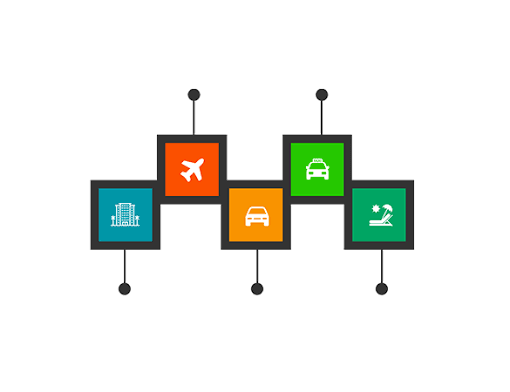
Depending on the business model, the portal may allow travelers to search and book:
-
Flights
-
Hotels
-
Transfers
-
Tours and activities
-
Holiday packages
-
Car rentals
-
Travel insurance or related services
The main advantage is convenience. A traveler does not necessarily need to call an agent or wait for a manual response just to find available options. Instead, they can search according to their destination, dates, budget, and preferences and complete much of the process online.
For the travel company, the portal can become more than a storefront. When connected with appropriate booking systems, supplier platforms, payment gateways, and APIs, it can also support many of the processes required to operate an online travel business.
Why Travelers Expect More From Online Booking
Travelers today are accustomed to digital services that respond quickly and provide information clearly. When someone is booking a flight or hotel, even small points of friction can affect the overall experience.
For example, customers may become frustrated when:
-
Search results take too long to load
-
Prices are unclear
-
Important booking conditions are difficult to find
-
The checkout process requires too many steps
-
Confirmation details are not provided promptly
-
They cannot easily manage an existing booking
A well-designed portal addresses these issues by putting the customer's journey at the center of the booking process.
The objective is not to add every possible feature. It is to make the important actions simple: search, compare, select, pay, and receive confirmation.
How a B2C Portal Can Improve the Booking Journey
A strong travel portal should guide customers naturally from their first search to the final confirmation.
1. Simple Search and Filtering
Travelers should be able to enter basic information such as destination, travel dates, number of passengers, and preferred service. Relevant filters can then help narrow down the available choices.
For hotels, for instance, customers may want to filter by price range, location, rating, amenities, or property type. For flights, they may care about departure time, airline, duration, number of stops, or baggage conditions.
Useful filters reduce the amount of information customers need to process and help them reach a decision faster.
2. Clear Pricing and Booking Information
Price transparency is an important part of building trust. Customers should be able to understand what they are paying for before reaching the payment stage.
A good booking interface can clearly present the base price, applicable fees, taxes, discounts, and final amount where relevant. Cancellation rules, inclusions, exclusions, and other conditions should also be easy to locate.
This approach reduces confusion and gives customers a clearer understanding of their purchase.
3. Smooth Online Checkout
A complicated checkout can turn an interested visitor into an abandoned booking. Travel businesses should therefore keep the payment journey focused and straightforward.
A practical checkout experience may include customer details, traveler information, payment options, booking terms, and a final review before confirmation.
Security is equally important. Travel companies should work with appropriate payment providers and follow relevant security and data-protection requirements rather than treating payment as an afterthought.
The Role of APIs and Travel Technology
A modern travel portal often depends on integrations. Travel businesses may need access to flight inventory, hotel availability, pricing, customer data, payment services, and other external systems.
APIs can help connect these services with the booking platform. Instead of manually entering every available travel product, a connected system can retrieve relevant information from integrated suppliers and display it to customers.
However, integration should be approached carefully. Different suppliers may have different data formats, booking rules, cancellation policies, and response times. A travel business needs technology that can handle these differences without making the customer experience unnecessarily complicated.
This is one reason travel technology is increasingly important for agencies that want to expand their online operations.
Automation Can Reduce Everyday Work
A travel portal can also support automation beyond customer-facing bookings.
Consider what happens after a customer completes a reservation. Traditionally, an employee might need to check the booking, update internal records, send confirmation, notify another department, and maintain customer information.
When suitable automation is available, some of these repetitive tasks can be handled by the system.
Automation may assist with:
-
Booking confirmations
-
Customer notifications
-
Record updates
-
Payment status tracking
-
Follow-up communication
-
Booking management
-
Internal workflow organization
This does not mean removing people from the travel business. Instead, it can give staff more time to handle situations where human judgment and customer service are genuinely valuable.
Connecting the Portal With a Travel CRM
A booking platform becomes even more useful when customer and booking information can be managed alongside sales and relationship activities.
This is where a travel CRM can play an important role. Rather than keeping customer details in separate spreadsheets, emails, and booking records, travel businesses can use centralized information to understand customer interactions and manage follow-ups.
For agencies evaluating their technology stack, it can be useful to book travel crm demo sessions before choosing a solution. A demonstration allows teams to see how customer records, bookings, communication, sales processes, and internal workflows may work together in practice.
The right system should fit the agency's actual workflow rather than forcing employees to adopt unnecessary complexity.
Where Synch Travel Fits Into the Picture
Travel businesses often need more than a simple website. They need technology that connects the customer-facing booking experience with the operational side of the company.
Solutions such as Synch Travel can be relevant for agencies looking at ways to organize travel sales, customer management, and digital booking processes in a more connected environment.
The important consideration is not the software name itself, but whether the platform supports the agency's business model, integrations, workflows, and growth plans. Before adopting any travel technology, businesses should examine how easily it can fit into their existing operations.
What Makes a Travel Portal Trustworthy?
Features alone do not create a reliable booking experience. Trust is built through consistency and transparency.
A professional portal should provide accurate information, straightforward policies, dependable communication, and accessible customer support. Travelers should know what they are purchasing and what to expect after payment.
Businesses should also pay attention to website performance, mobile usability, account security, and the protection of customer information. These areas can influence how comfortable customers feel when entering personal and payment details.
A portal that looks attractive but performs poorly can quickly damage confidence. Functionality and reliability should therefore receive as much attention as visual design.
Mobile Experience Should Not Be an Afterthought
Many travelers research and manage trips from smartphones. A portal that works well only on a desktop can create unnecessary friction.
A mobile-friendly experience should make essential actions easy to complete on a smaller screen. Search forms, filters, hotel or flight details, payment fields, and booking confirmations should remain readable and simple to navigate.
Responsive design is particularly important for travel businesses because customers may interact with a booking platform while commuting, traveling, or making last-minute arrangements.
Choosing the Right Approach for Your Travel Business
Not every agency needs the same type of portal. A small agency with a specialized customer base may have different requirements from a large travel company handling multiple destinations and suppliers.
Before investing in a B2C platform, businesses should consider several practical questions:
-
Which travel products will customers book online?
-
Which suppliers or APIs need to be connected?
-
How will payments be handled?
-
What booking and cancellation workflows are required?
-
How will customer information be managed?
-
What level of automation would actually save staff time?
-
Will the platform support future expansion?
Answering these questions first can help businesses avoid paying for features they do not need while identifying the capabilities that are genuinely important.
The Future of Online Travel Booking Is About Convenience
Online travel booking will continue to evolve, but the basic expectation is unlikely to change: customers want the process to be clear, convenient, and dependable.
For travel agencies, a B2C Travel Portal can provide a practical foundation for meeting those expectations. When combined with suitable APIs, automation, CRM capabilities, secure payments, and thoughtful user experience design, it can connect customer needs with the operational requirements of the business.
The strongest travel technology is not necessarily the platform with the longest feature list. It is the one that solves real problems without making the booking journey harder.
For agencies planning their next stage of digital growth, the focus should therefore remain simple: understand what customers need, identify where internal processes create friction, and choose technology that brings those two sides together. A well-planned travel portal can turn online booking from a basic website function into a more organized and useful part of the entire travel business.

 English
 French
 Spanish
 Portuguese
 Deutsch
 Turkish
 Dutch
Dutch
 Italiano
 Russian
 Romaian
 Portuguese (Brazil)
 Greek
Greek