
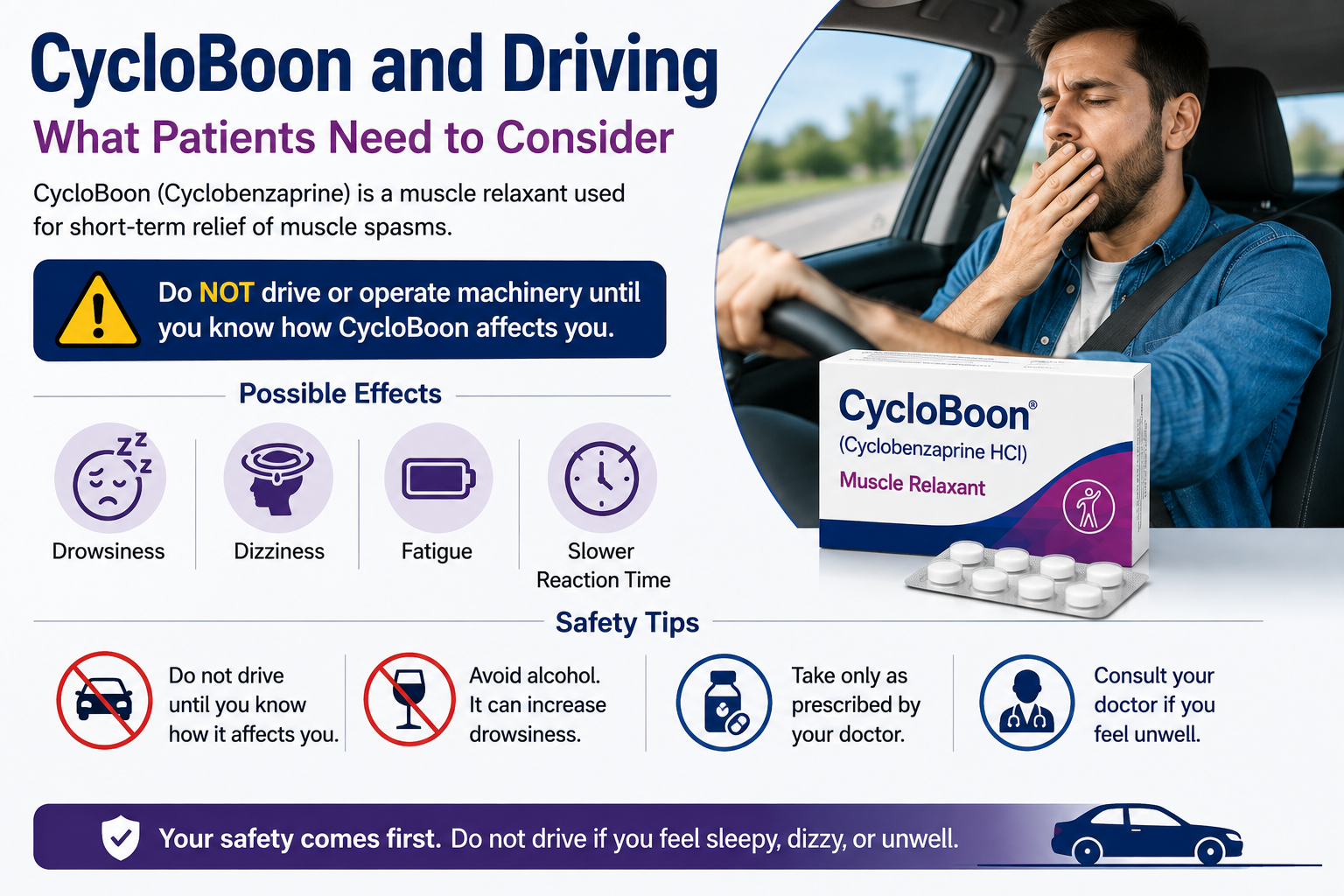
CycloBoon and driving are important safety considerations because CycloBoon contains cyclobenzaprine, a centrally acting skeletal muscle relaxant that may cause drowsiness, dizziness, and reduced alertness. Official patient information advises people not to drive or operate machinery until they know how cyclobenzaprine affects them.
For patients taking CycloBoon for acute muscle spasms, understanding how the medicine can affect concentration, reaction time, coordination, and alertness is essential before getting behind the wheel.
What Is CycloBoon?
CycloBoon contains cyclobenzaprine, a skeletal muscle relaxant used for muscle spasms associated with acute, painful musculoskeletal conditions.
Cyclobenzaprine works mainly through the brain and nervous system to help muscles relax. It is generally used as part of a broader treatment plan that may include rest and physical therapy.
Muscle spasms can cause:
- Muscle tightness
- Stiffness
- Discomfort
- Tenderness
- Restricted movement
- Difficulty performing normal activities
While CycloBoon may help reduce muscle spasms, it can also affect the central nervous system and cause effects that are important for driving safety.
Why Can CycloBoon Affect Driving?
Driving requires continuous attention, good coordination, quick reactions, and sound judgment.
Cyclobenzaprine may cause drowsiness, dizziness, and tiredness. These effects can interfere with some of the abilities needed to drive safely. Official prescribing information warns that cyclobenzaprine, particularly when combined with alcohol or other central nervous system depressants, may impair the mental and physical abilities required for hazardous activities such as driving.
The effect is not identical for everyone. Some people may experience significant sleepiness, while others may notice little or no noticeable sedation.
Can CycloBoon Make You Sleepy?
Yes. Drowsiness is a recognized and common effect of cyclobenzaprine.
Other possible effects include:
- Dizziness
- Fatigue
- Dry mouth
- Nausea
- Constipation
- Headache
MedlinePlus specifically advises patients not to drive a car or operate machinery until they know how cyclobenzaprine affects them.
Even mild sleepiness can become a safety concern when driving because it can reduce alertness and make it harder to respond quickly to changing road conditions.
CycloBoon and Reaction Time
Safe driving depends on being able to respond quickly to unexpected situations.
For example, a driver may suddenly need to:
- Brake for another vehicle
- Avoid an obstacle
- Respond to a pedestrian
- Change lanes
- React to changing traffic signals
If CycloBoon makes you drowsy, dizzy, or less alert, your ability to respond appropriately may be affected.
If you notice these symptoms after taking CycloBoon, do not drive.
CycloBoon and Dizziness
Dizziness is another possible side effect of cyclobenzaprine.
Dizziness can affect:
- Balance
- Coordination
- Spatial awareness
- Concentration
- Confidence while driving
Driving while dizzy can be particularly risky because operating a vehicle requires consistent visual and physical coordination.
If you feel dizzy after taking CycloBoon, wait until the effect has passed and follow your healthcare professional's advice before driving.
How Long Should You Wait Before Driving?
There is no universal number of hours that is safe for every person after taking cyclobenzaprine.
The medication's effects can vary depending on:
- Individual sensitivity
- Dose and formulation
- Other medicines being taken
- Alcohol consumption
- Age
- Liver function
- Overall health
Therefore, patients should not rely on a general “safe waiting time” found online.
Instead, do not drive until you know how CycloBoon affects you and you are fully alert. If you are uncertain, ask your doctor or pharmacist for individualized advice. MedlinePlus specifically recommends avoiding driving until you know your response to the medication.
What If You Take CycloBoon for the First Time?
Extra caution is appropriate when taking CycloBoon for the first time because you may not yet know whether it causes drowsiness or dizziness.
A practical approach is to plan ahead so you do not need to drive until you understand how the medicine affects you.
Avoid testing your reaction to the medicine by driving in traffic.
CycloBoon and Alcohol
Alcohol can make the effects of cyclobenzaprine worse. MedlinePlus recommends discussing the safe use of alcoholic beverages with a healthcare professional while taking cyclobenzaprine.
Combining CycloBoon and alcohol may increase:
- Drowsiness
- Dizziness
- Reduced alertness
- Impaired coordination
- Difficulty concentrating
Because driving already requires a high level of alertness, combining alcohol with CycloBoon can create an additional safety concern.
If you have consumed alcohol while taking CycloBoon, do not drive if you feel impaired or sleepy.
CycloBoon and Other Medicines
Other medicines can also contribute to drowsiness or affect coordination.
Before taking CycloBoon, tell your healthcare professional about:
- Prescription medicines
- Over-the-counter medicines
- Sleep aids
- Anxiety medicines
- Pain medicines
- Allergy medicines
- Antidepressants
- Vitamins
- Herbal supplements
Cyclobenzaprine can interact with certain medicines, and some combinations may increase central nervous system effects. Your doctor or pharmacist can review your medication list to identify potential concerns.
Driving During Physical Recovery
CycloBoon may be prescribed when muscle spasms occur during recovery from an acute musculoskeletal condition.
The underlying muscle problem itself may also affect driving.
For example, pain or restricted movement may make it difficult to:
- Turn your head
- Sit comfortably
- Move your arms
- Operate pedals
- Rotate your body
- Respond quickly
Therefore, driving safety should consider both the medical condition and the medication.
Even if CycloBoon does not make you sleepy, severe pain or restricted mobility may still make driving unsafe.
CycloBoon and Operating Machinery
The same precautions that apply to driving also apply to machinery and equipment.
Avoid operating machinery if you experience:
- Drowsiness
- Dizziness
- Confusion
- Reduced coordination
- Unusual fatigue
- Difficulty concentrating
Cyclobenzaprine labeling specifically warns about impaired mental and physical abilities needed for hazardous activities such as operating machinery or driving.
What Should You Do If You Become Drowsy While Driving?
If you become sleepy or dizzy while driving:
- Safely pull over as soon as possible.
- Stop the vehicle in a safe location.
- Do not continue driving while impaired.
- Arrange for someone else to drive if necessary.
- Contact your healthcare professional if the effect is severe or repeatedly interferes with normal activities.
Do not attempt to overcome medication-related drowsiness simply with coffee, loud music, or opening a window.
CycloBoon Treatment Duration
Cyclobenzaprine is generally intended for short-term treatment of acute muscle spasms. MedlinePlus advises patients not to take cyclobenzaprine for more than three weeks without talking to their doctor.
The exact treatment duration should follow your healthcare professional's instructions.
If muscle spasms continue after the prescribed treatment period, do not extend treatment yourself. Speak with your doctor about whether your condition needs reassessment.
Tips for Safer Use of CycloBoon
Follow Your Prescription
Take CycloBoon exactly as prescribed. Do not take more or take it more frequently than directed.
Know How It Affects You
Before driving, understand whether the medicine causes you to feel sleepy, dizzy, or less alert.
Avoid Alcohol
Discuss alcohol use with your healthcare professional because alcohol can worsen cyclobenzaprine's effects.
Review Other Medicines
Tell your doctor or pharmacist about everything you take.
Don't Drive When Impaired
If you feel sleepy, dizzy, confused, or otherwise impaired, do not drive.
Follow Your Recovery Plan
Rest, physical therapy, and gradual return to activity may be important parts of recovery from an acute musculoskeletal condition.
When Should You Contact Your Doctor?
Speak with your healthcare professional if:
- Drowsiness is severe
- Dizziness interferes with daily activities
- You repeatedly feel unable to drive safely
- Side effects persist
- Muscle spasms do not improve
- Your symptoms become worse
Your doctor may determine whether your treatment needs to be adjusted.
Seek prompt medical attention for serious symptoms such as chest pain, an irregular or rapid heartbeat, severe allergic symptoms, or symptoms suggestive of serotonin syndrome.
Frequently Asked Questions
Can I drive after taking CycloBoon?
You should not drive until you know how cyclobenzaprine affects you. If you experience drowsiness or dizziness, do not drive.
Does CycloBoon cause drowsiness?
Yes. Drowsiness is a recognized effect of cyclobenzaprine, along with dizziness and fatigue.
Can I drive if I don't feel sleepy?
If you feel completely alert and your healthcare professional has not given you different instructions, the risk may be lower, but you should still use caution. Individual responses can vary.
Can alcohol affect driving while taking CycloBoon?
Yes. Alcohol can worsen cyclobenzaprine's effects and increase impairment.
Does muscle pain itself affect driving?
Yes. Pain, stiffness, and restricted movement can interfere with safe vehicle operation even if the medicine does not cause drowsiness.
Can CycloBoon affect concentration?
It can. Drowsiness, dizziness, and fatigue may make concentration and alertness more difficult for some people.
Final Thoughts
CycloBoon and driving require careful consideration because cyclobenzaprine can cause drowsiness, dizziness, and reduced alertness. These effects may interfere with the mental and physical abilities required for safe driving and operating machinery.
Patients should avoid driving until they know how CycloBoon affects them and should never drive while feeling sleepy, dizzy, or impaired. Alcohol and other medicines that cause sedation can further increase safety concerns.
If you are taking CycloBoon for muscle spasms, discuss driving, alcohol, other medications, treatment duration, and your recovery plan with your healthcare professional.
Medical Disclaimer: This article is for educational purposes only and does not replace professional medical advice, diagnosis, or treatment. Always consult a qualified healthcare professional before starting, stopping, or changing any medication.

 English
 Arabic
 French
 Spanish
 Portuguese
 Turkish
 Dutch
Dutch
 Italiano
 Russian
 Romaian
 Portuguese (Brazil)
 Greek
Greek