
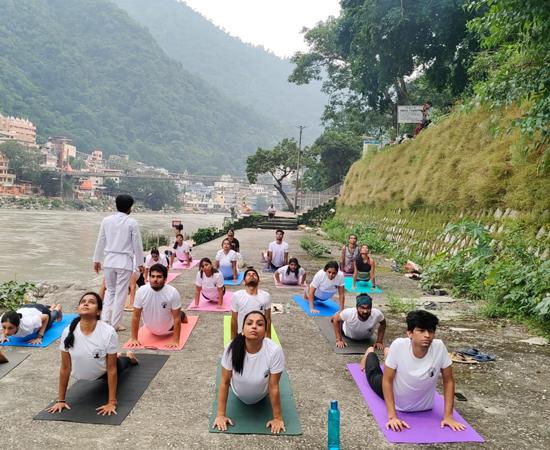
Rishikesh has long been associated with yoga, meditation, spirituality, and the traditional teachings of India. Located beside the sacred Ganges and surrounded by the Himalayan landscape, the city attracts yoga practitioners from around the world who want to develop their practice and teaching abilities. Among the advanced programs available here, a 300 Hour Yoga Teacher Training Course in Rishikesh is an excellent choice for practitioners who have already developed a solid foundation and are ready to explore yoga at a deeper level.
Unlike an introductory teacher training, a 300 Hour program generally focuses on refining existing knowledge rather than starting from the beginning. Students are expected to understand fundamental yoga practices and then develop greater confidence in areas such as advanced asana, teaching methodology, anatomy, pranayama, meditation, philosophy, sequencing, and practical teaching. Yoga Alliance's RYS 300 standards describe this level as advanced training intended to deepen the concepts generally introduced at the 200-hour level and develop more detailed teaching skills.
What Is a 300 Hour Yoga Teacher Training Course?
A 300 Hour yoga teacher training course is an advanced educational program designed for experienced yoga practitioners and teachers. The exact structure varies between schools, but reputable programs commonly combine practical classes, theoretical study, self-study, teaching practice, and assessments.
The curriculum typically covers five major areas: techniques and practice, teaching methodology, anatomy and physiology, yoga philosophy and ethics, and practicum. These areas help students move beyond simply performing yoga postures and learn how to understand, demonstrate, explain, adapt, and teach them effectively.
Who Should Join a 300 Hour Yoga Teacher Training in Rishikesh?
A 300 Hour course is generally more suitable for people who already have meaningful experience with yoga. It is not simply a longer version of a beginner course.
The program may be appropriate for:
Certified 200-hour yoga teachers who want to continue their education
Yoga instructors who want to improve their teaching techniques
Experienced practitioners interested in advanced yoga studies
Teachers who want to develop specialized classes
Students interested in yoga philosophy and traditional practices
Practitioners looking for greater confidence in sequencing and class management
Prerequisites differ from one school to another. Some programs specifically require completion of a 200-hour teacher training, while others may accept experienced practitioners after reviewing their background. Therefore, checking the school's admission requirements before enrolling is important.
Why Choose Rishikesh for 300 Hour Yoga Teacher Training?
The location of a teacher training can influence the overall learning experience, and Rishikesh offers an environment closely connected with India's yoga traditions.
The city provides opportunities to study yoga alongside meditation, spiritual practices, Sanskrit-based teachings, and traditional approaches to wellness. The presence of the Ganges and the surrounding Himalayan environment can also create a peaceful atmosphere for reflection and personal practice.
What Will You Learn During the Course?
A well-designed 300 Hour program usually goes considerably deeper than foundational teacher training.
Advanced Asana Practice
Students commonly revisit familiar postures while exploring more detailed alignment, modifications, transitions, stability, balance, and safe progression. Advanced programs may include challenging standing poses, backbends, arm balances, inversions, and more complex sequences.
The purpose is not simply to perform difficult poses. Students learn how to understand the requirements of a posture and how to help different students approach it safely.
Teaching Methodology
Teaching methodology is one of the most important parts of advanced teacher training. Students learn how to structure complete classes, communicate clearly, demonstrate postures, use appropriate verbal cues, observe students, and offer adjustments responsibly.
Advanced training may also explore different teaching approaches for beginners, intermediate practitioners, older students, or people with different physical abilities.
Anatomy and Physiology
Anatomy becomes particularly valuable when teachers begin working with more complex movements and adjustments. A 300 Hour course may explore applied anatomy, biomechanics, movement patterns, alignment, injury awareness, and the relationship between anatomy and yoga practice.
Pranayama and Meditation
Breathwork and meditation are often explored more deeply at the advanced level. Depending on the school, students may study traditional pranayama techniques, breath awareness, meditation methods, concentration practices, Yoga Nidra, or other contemplative approaches.
A Typical Daily Routine
The daily schedule depends on the school, but residential programs in Rishikesh are usually intensive.
A typical day may begin early with meditation, pranayama, or a morning asana session. This can be followed by breakfast and theoretical classes covering subjects such as anatomy, philosophy, or teaching methodology.
Afternoon sessions may focus on practical training, workshops, assignments, or teaching practice. Evening activities can include meditation, discussions, chanting, or reflection.
This kind of schedule requires discipline. Students should be prepared for several hours of learning and practice each day rather than expecting a conventional vacation experience.
Duration of a 300 Hour Course
There is no single duration followed by every school. Some residential programs complete 300 hours in approximately four weeks, while others use a longer schedule.
For example, current Rishikesh programs advertise durations ranging from around 24 to 28 days, while other schools use different structures.
The number of calendar days should therefore not be the only consideration. Students should examine how the school distributes the 300 hours between classroom learning, practical sessions, self-study, assignments, and teaching practicum.
How to Choose the Right 300 Hour Yoga Course in Rishikesh
With many schools offering advanced training, choosing a program requires careful research.
First, study the complete curriculum rather than choosing a course only because of its title. Look for a balanced combination of practice, theory, teaching methodology, anatomy, philosophy, and practicum.
Second, investigate the teachers. Their experience, teaching style, qualifications, and areas of specialization can significantly influence your learning experience.
Third, check the class size. Smaller groups can provide more opportunities for individual feedback, demonstrations, and supervised teaching.
Fourth, understand what the course fee includes. Accommodation, meals, course materials, excursions, and additional activities may or may not be included.
Finally, read the school's policies regarding attendance, assessments, certification, cancellations, and course requirements before paying a deposit.

 English
 Arabic
 French
 Portuguese
 Deutsch
 Turkish
 Dutch
Dutch
 Italiano
 Russian
 Romaian
 Portuguese (Brazil)
 Greek
Greek