
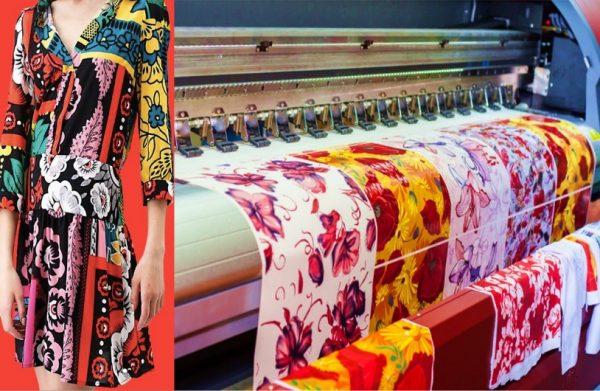
Digital printing on fabric is a textile printing technique in which digital artwork is transferred directly onto fabric using computer-controlled inkjet technology. The process allows printers to reproduce detailed patterns, photographs, illustrations, logos, gradients, and other artwork without preparing a separate physical screen for each design. It has become an important option for textile manufacturers, fashion businesses, interior designers, and companies producing customized fabric products.
The development of Digital printing on fabric has made textile production more flexible, particularly when designs are complex or production quantities are relatively small. A manufacturer can alter colors, change patterns, personalize individual pieces, and produce samples without creating new screens or engraved rollers. However, good results depend on more than the printer. Fabric composition, ink chemistry, pre-treatment, color management, print settings, and finishing all influence the quality and durability of the finished textile.
What Is Digital Printing on Fabric?
Digital fabric works in a similar basic way to an inkjet printer, but the equipment is specifically designed to handle textiles. Instead of printing onto paper, computer-controlled print heads deposit very small droplets of ink or dye onto fabric.
The printer receives artwork from a computer and converts the design into instructions that determine where each color should be placed. Because the artwork remains digital, it can be modified without manufacturing a new set of physical printing components.
This flexibility makes the process suitable for complicated artwork. A single design can contain many colors, smooth gradients, fine lines, and photographic details.
The printing method must match the textile. Cotton, polyester, silk, wool, nylon, and blended fabrics have different properties. Each fiber requires suitable inks and, in many cases, a specific pre-treatment and fixation process.
How Does Digital Printing on Fabric Work?
1. Preparing the Design
The first step is creating or preparing the artwork. Designers may use photographs, illustrations, logos, patterns, or computer-generated graphics.
The image should have enough resolution for its final size. Enlarging a small, low-resolution image can result in pixelation or loss of detail.
Designers should also check the pattern repeat, image proportions, fine lines, typography, and alignment. These details are easier to correct before printing than after production has started.
Color management is also important. The colors displayed on a monitor may not exactly match the printed textile because screens generate light while fabric reflects it. Professional workflows may use calibrated equipment, color profiles, test prints, and physical samples to improve consistency.
2. Selecting the Fabric
Fabric selection should be based on the final application and printing technology.
Cotton and linen are commonly printed using reactive dyes or suitable pigment systems. Polyester is frequently used with dye-sublimation and disperse dye technologies. Silk and wool are commonly associated with acid dye printing, while selected ink systems can be used for nylon.
Fabric construction also affects the result. A smooth, tightly woven fabric may reproduce fine details more sharply than a heavily textured material. Weight, absorbency, stretch, weave, and surface finish should be considered before production.
3. Pre-Treatment
Some digital textile printing processes require the fabric to be pre-treated before printing. Pre-treatment helps prepare the fibers and control how the ink behaves when it reaches the fabric.
The treatment depends on the fiber and ink system. When properly applied, it can improve color development, sharpness, and consistency.
Incorrect or uneven pre-treatment may cause problems such as weak colors, excessive ink spreading, or inconsistent coverage.
4. Printing
Once the textile has been prepared, it is fed into the printer. The print heads deposit ink or dye according to the digital artwork.
Precise fabric movement is important. If the material shifts, stretches, or feeds incorrectly, the design can become misaligned.
Printer calibration and maintenance are also necessary. Ink delivery, print-head condition, fabric tension, and machine settings can affect print quality.
5. Fixation and Finishing
The printed fabric may require additional treatment before it is ready for use.
Depending on the printing method, the textile may undergo steaming, curing, heat fixation, washing, or drying. These processes help stabilize the color and can improve resistance to washing and rubbing.
Finishing can also influence the fabric's hand feel, appearance, and dimensional stability. Therefore, the finished textile should be evaluated after all required processing.
Major Digital Textile Printing Methods
Dye-Sublimation Printing
Dye-sublimation printing is mainly used with polyester fabrics. Heat causes the dye to transfer into the polyester fibers.
It is widely used for sportswear, flags, banners, exhibition displays, soft signage, and promotional textiles. The method works particularly well for detailed, full-color designs.
Reactive Dye Printing
Reactive dyes are commonly used for cotton, linen, and other suitable cellulosic fabrics. The dye forms a chemical bond with the fiber during processing.
When correctly printed and fixed, reactive dyes can produce strong colors and good wash resistance. This makes them suitable for many apparel and home textile applications.
Acid Dye Printing
Acid dyes are often used for protein-based fibers such as silk and wool, as well as certain nylon fabrics.
The process requires appropriate conditions for dye absorption and fixation. When properly controlled, it can provide detailed patterns and vibrant colors.
Pigment Printing
Pigment printing uses colored particles that remain on the fabric surface with the help of a binder. It can be used on various fabric types.
Its performance depends on the specific ink, fabric, curing process, and intended application. Softness, color strength, and durability should be tested before commercial production.
Key Benefits of Digital Printing on Fabric
Detailed and Photographic Designs
One of the main advantages of Digital printing on fabric is the ability to reproduce highly detailed artwork. Photographs, subtle gradients, illustrations, and complex patterns can be printed without separating the design into a limited number of screen colors.
This gives designers considerable freedom when developing original textile collections.
Customization
Digital printing is well suited to personalized products. Individual names, numbers, logos, photographs, and other variable elements can be incorporated into the artwork.
For instance, a sportswear supplier can produce garments with different player names and numbers without creating a separate physical screen for each variation.
Faster Sampling
Manufacturers can create samples before committing to large production quantities. A sample can reveal problems with color, pattern scale, fabric compatibility, and image quality.
Early testing can help reduce waste and prevent expensive production mistakes.
Short Production Runs
Digital printing is particularly useful for prototypes, limited editions, custom orders, and small textile collections. Businesses can produce only the amount required instead of committing to a large volume.
Design Flexibility
Digital artwork can be edited quickly. Colors can be changed, patterns can be resized, and different versions can be tested without rebuilding physical printing components.
Practical Applications
Fashion and Clothing
Digitally printed fabrics are used for dresses, shirts, scarves, swimwear, activewear, and other garments. Designers can create highly detailed surface patterns and distinctive visual effects.
Home Textiles
Curtains, cushions, bedding, tablecloths, wall coverings, and decorative fabrics can use digitally printed designs. Customized printing is useful when an interior project requires a particular pattern or color combination.
Sportswear
Polyester-based sportswear is a major application for suitable digital printing systems. Team graphics, player names, numbers, sponsor logos, and full-surface patterns can be printed directly onto fabric.
Promotional Products
Digital printing can also be used for fabric banners, exhibition backdrops, event displays, retail graphics, and branded textile materials.
Common Challenges and Considerations
Choosing the Right Fabric and Ink
The fabric and ink must be chemically and technically compatible. An unsuitable combination can produce poor color development, bleeding, low durability, or an unwanted surface feel.
Always confirm the textile composition before selecting the printing system.
Maintaining Color Consistency
Color can vary between a digital file, monitor, printer, ink formulation, and fabric. Lighting conditions can also affect how the finished color appears.
For important orders, a physical sample or strike-off can help confirm the expected result.
Production Quantity
Digital printing is attractive for short runs and customized products. For very large quantities of a single repeated pattern, conventional printing can sometimes offer a lower unit cost.
The comparison should include setup costs, ink consumption, fabric preparation, finishing, labor, and production volume.
Post-Printing Treatment
Some printing technologies require additional processing after the image has been applied. Steaming, curing, washing, and heat fixation can increase production time, but these stages may be necessary to achieve appropriate color fastness and durability.
Frequently Asked Questions
1. What types of fabric can be digitally printed?
Cotton, linen, polyester, silk, wool, nylon, and various blends can be digitally printed when the appropriate ink and process are used.
2. Is digital printing suitable for small orders?
Yes. It is especially useful for samples, prototypes, personalized textiles, and limited production because designs can be changed without extensive physical setup.
3. Can photographs be printed on fabric?
Yes. Digital textile printers can reproduce photographs and highly detailed artwork, provided the source file has adequate resolution.
4. How long does digital fabric printing last?
Print durability varies according to the fabric, ink or dye, fixation method, finishing process, and care conditions. Properly processed textiles can provide good resistance to washing and rubbing.
5. Is digital printing more economical than screen printing?
It depends on the order. Digital printing can be cost-effective for detailed designs, customization, sampling, and short runs. Screen printing may be more economical for high-volume production of simple or repeated designs.
Conclusion
Digital printing on fabric provides textile manufacturers and designers with a flexible way to turn digital artwork into finished fabric. It is particularly valuable for detailed patterns, personalized designs, rapid sampling, and shorter production runs.
The quality of the result depends on the complete workflow rather than the printer alone. Selecting compatible fabric and ink, preparing the artwork correctly, controlling color, applying appropriate pre-treatment, maintaining the equipment, and completing the required finishing stages are all essential.
For fashion, sportswear, home décor, promotional products, and customized textiles, digital printing offers substantial design freedom. With appropriate materials and process control, it can produce detailed, attractive, and durable fabric while helping businesses respond more efficiently to changing designs and customer requirements.

 English
 Arabic
 French
 Spanish
 Portuguese
 Deutsch
 Turkish
 Dutch
Dutch
 Italiano
 Russian
 Portuguese (Brazil)
 Greek
Greek