
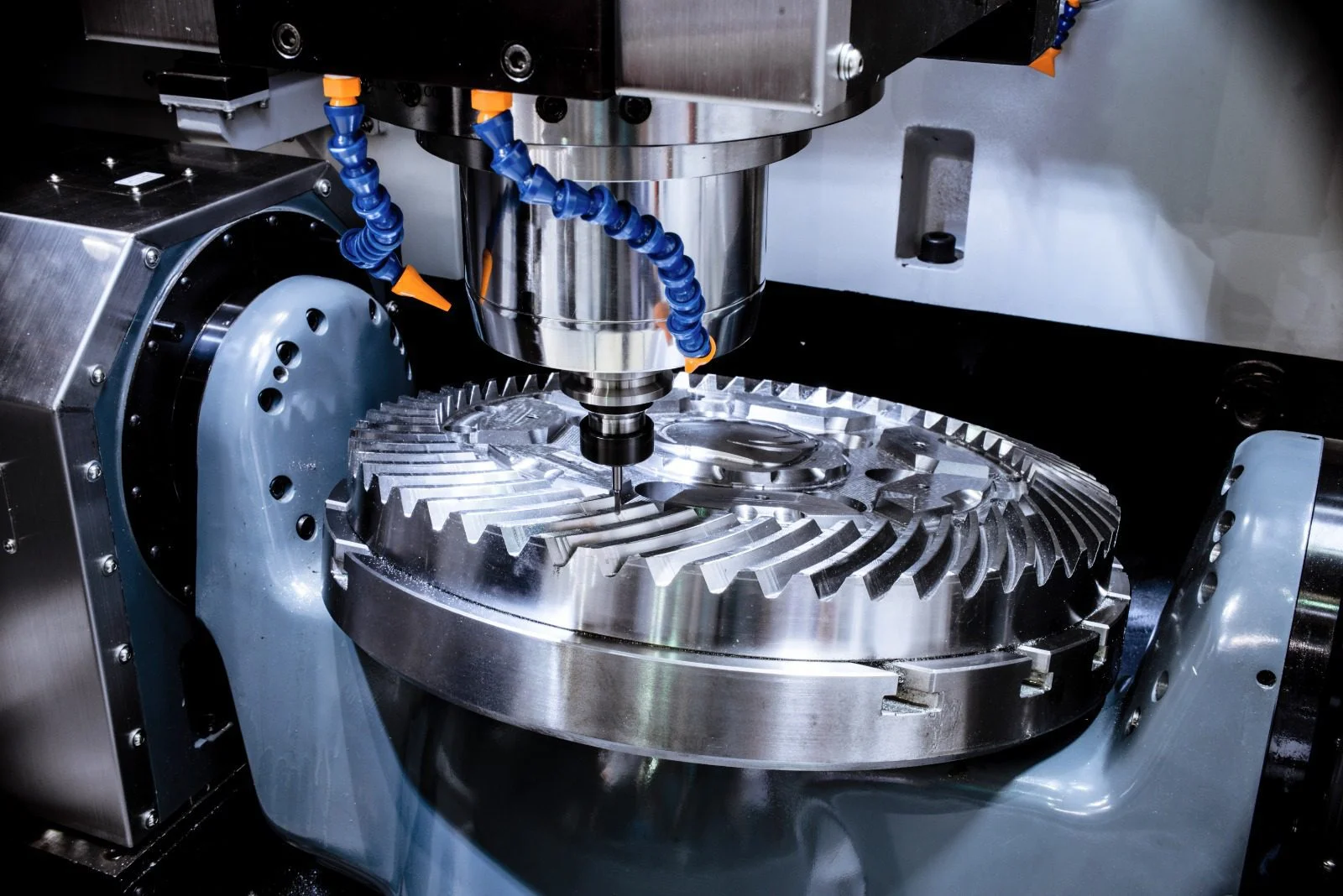
Precision parts manufacturing involves more than achieving a specified measurement once. Buyers need confidence that critical features remain consistent across production, materials suit the application, and finished components can be verified. These considerations become especially important when parts are destined for Oil and Gas Equipment, where reliability and traceability can directly affect maintenance schedules and operating risk.
Start With Function, Not Just a Part Number
Procurement often begins with a drawing, part number, or replacement request. That information is necessary, but understanding the component's function can reveal requirements that are not obvious from the drawing. A seal carrier may depend on surface finish and concentricity, while a structural bracket may be more concerned with hole location and load capacity.
Before requesting quotations, identify critical interfaces, operating conditions, material requirements, and applicable standards. If the part is replacing an existing component, document whether the original failed, wore prematurely, or simply became unavailable. Failure history can guide the new manufacturing specification.
Drawings should also be checked for clarity. Missing datums, conflicting dimensions, undefined threads, or unclear revision status can create different interpretations between suppliers. A short technical clarification before quotation can prevent much larger problems during production.
This functional approach helps manufacturers choose an appropriate process. Some components need turning, others milling, and some require a combination of machining, fabrication, and finishing. The right process is the one that reliably delivers the required function at an appropriate cost.
Material and Surface Requirements Affect Performance
Material selection should reflect the operating environment. Components exposed to pressure, heat, vibration, chemicals, or saltwater may need properties that differ greatly from general workshop parts. Corrosion resistance, hardness, tensile strength, and toughness can all matter depending on the application.
Material documentation is therefore valuable. A mill certificate can provide evidence of chemical composition and mechanical properties, while traceability records connect material to the manufactured part. This becomes particularly important for regulated or safety-sensitive applications.
Surface condition is another commonly overlooked factor. A component can have correct dimensions but perform poorly if its surface is too rough, damaged, or inconsistent. Sealing surfaces, bearing seats, sliding interfaces, and threads can each have different finishing requirements.
Where heat treatment, coating, or plating is required, buyers should define whether dimensions must be measured before or after treatment. Some processes can alter dimensions or surface characteristics, so the inspection plan should cover the complete manufacturing sequence rather than stopping at machining.
Inspection Should Match Component Risk
A good inspection plan focuses attention where deviations matter most. Critical dimensions should be checked with suitable calibrated instruments, while less important features can follow proportionate methods. This avoids both under-inspection and unnecessary measurement work.
First-article inspection is useful for new components because it verifies the manufacturing process before larger quantities are released. In-process checks can monitor features susceptible to tool wear or thermal changes. Final inspection provides documented confirmation that delivered parts meet the agreed specification.
Buyers should consider requesting:
• Dimensional inspection results for critical features.
• Material certificates where traceability is required.
• Surface-finish or coating records when applicable.
• Identification linking inspection documents to the supplied batch.
These records are more than paperwork. They help maintenance and quality teams understand what was supplied and provide a useful reference when the same component is reordered. Clear documentation can also shorten future investigations if a field issue occurs.
How to Compare Suppliers Beyond Price
Price matters, but it should be evaluated alongside process capability and total cost. A supplier offering a lower unit price may still be more expensive if parts arrive late, require rework, or cannot provide documentation needed for acceptance.
Compare suppliers on their ability to handle the actual requirements. Ask about relevant machining capabilities, material experience, inspection equipment, quality certifications, lead times, and engineering support. For complex components, ask how the supplier plans to fixture the part and verify critical features. A clear answer can be a stronger indicator of capability than a long equipment list.
For repeat work, consider whether the supplier can retain controlled production information. A repeat order should become easier when the drawing and process have already been approved. This can reduce future quotation time and improve consistency.
Local sourcing can offer another advantage for UAE projects: easier technical communication and potentially shorter logistics routes. Location should support, not replace, technical evaluation. The strongest supplier combines responsiveness with disciplined manufacturing and documented quality.
Another factor is documentation continuity. A quality-focused supplier should make it clear which drawing revision was manufactured, which material was used, and which inspection criteria were applied. This creates a useful technical trail for maintenance and future purchasing. It also makes supplier performance easier to evaluate because acceptance is based on defined requirements rather than subjective judgment.
For components associated with Oil and Gas Equipment, the buyer should decide early whether additional certificates, traceability records, or inspection reports are needed. These requirements can affect the manufacturing route and delivery schedule, so including them in the original request avoids last-minute document collection. A clear specification protects both sides and makes acceptance faster when the finished parts arrive.
This approach is also helpful when a project moves from a single prototype to a production batch. The approved first part becomes a reference for dimensions, finish, and inspection. That continuity helps protect consistency as order quantities change and reduces the chance that a later batch is interpreted differently from the original.
Conclusion
Reliable precision parts manufacturing starts with a clear functional specification and continues through material control, appropriate machining, targeted inspection, and documentation. For components used in Oil & Gas Equipment, buyers should pay particular attention to material traceability, critical dimensions, surface requirements, and evidence of conformity. A supplier that can discuss these points clearly before production is more likely to deliver a part that works reliably in the field. This is especially important when the component is installed within Oil and Gas Equipment.
FAQs
1. What is the main benefit of custom manufacturing?
It allows a component to be designed around a specific application, interface, material requirement, or operating condition rather than forcing the equipment to use a standard part.
2. Why do manufacturing tolerances matter?
Tolerances define acceptable dimensional variation and help ensure that mating components assemble and perform as intended.
3. Can manufacturers support prototypes and repeat production?
Yes. A well-controlled process can begin with a prototype or first article and then be scaled into repeat production after the design and process are approved.
4. What should a buyer check before choosing a supplier?
Review relevant manufacturing capability, material experience, inspection methods, documentation, quality systems, lead time, and engineering communication.

 Arabic
 French
 Spanish
 Portuguese
 Deutsch
 Turkish
 Dutch
Dutch
 Italiano
 Russian
 Romaian
 Portuguese (Brazil)
 Greek
Greek