
Introduction
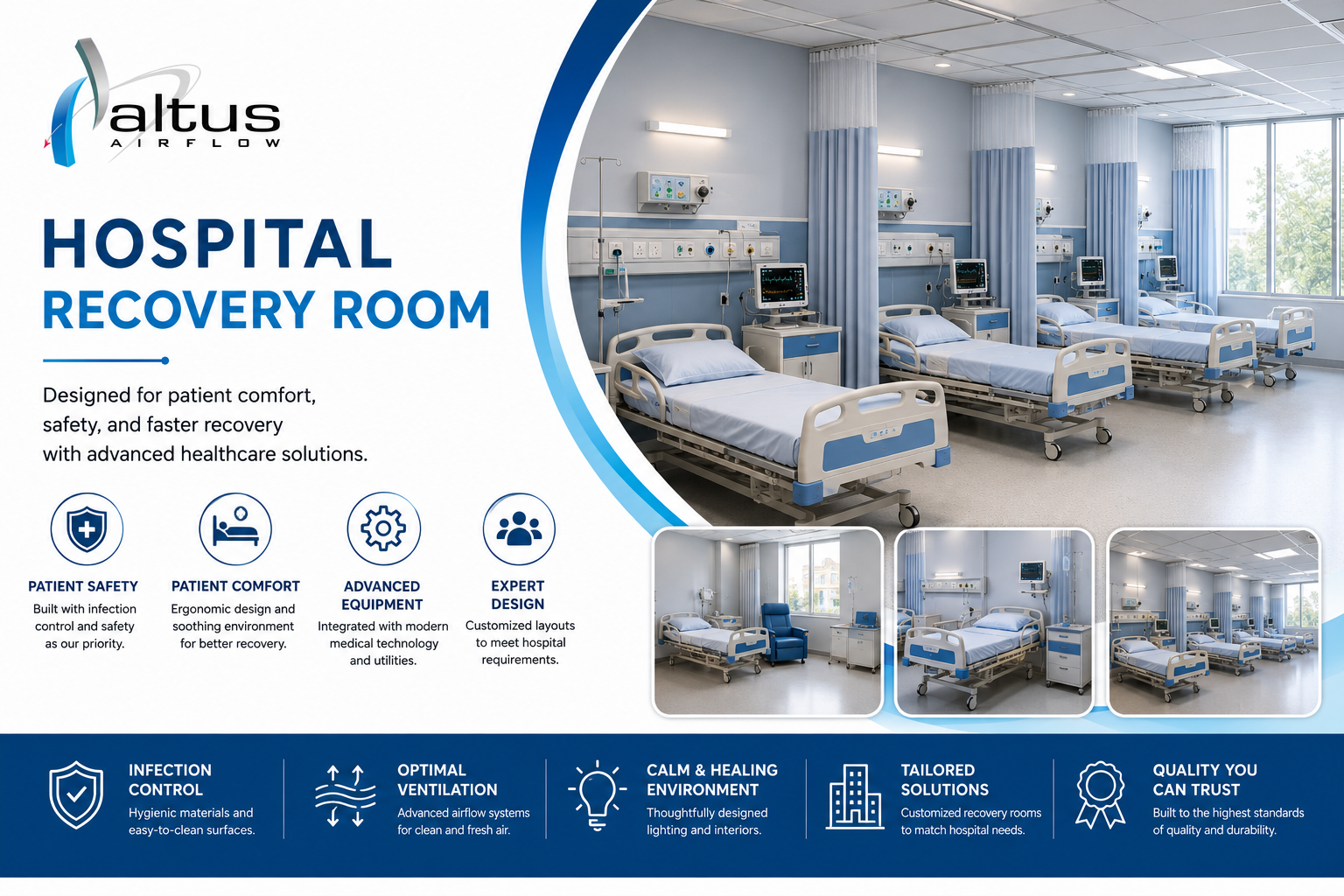
A Hospital Recovery Room is designed to provide close observation of patients following surgery, anesthesia, sedation, or certain medical procedures. Monitoring facilities are an essential part of this environment because patients may experience temporary changes in breathing, circulation, consciousness, or pain levels during recovery. The exact monitoring equipment depends on the procedure, patient condition, clinical protocols, and hospital requirements.
Bedside Vital-Sign Monitoring
Bedside monitors are commonly used to observe key physiological parameters.
Depending on the patient's condition, a monitor may display heart rate, blood pressure, oxygen saturation, respiratory rate, temperature, and other relevant measurements.
ECG Monitoring
Electrocardiogram monitoring can be used when cardiac observation is clinically appropriate.
It helps healthcare professionals assess heart rhythm and identify significant changes that may require further evaluation.
Blood Pressure Monitoring
Blood pressure may be checked at regular intervals or monitored continuously when clinically indicated.
Automated non-invasive blood pressure systems can make repeated measurements easier during the recovery period.
Oxygen Saturation Monitoring
Pulse oximetry is commonly used to assess oxygen saturation and pulse rate.
It can help healthcare professionals identify changes in oxygenation and determine whether additional respiratory support may be required.
Respiratory Monitoring
Observation of respiratory status is particularly important after anesthesia and sedation.
Depending on clinical requirements, respiratory monitoring can involve respiratory rate, oxygen saturation, capnography, or other appropriate technologies.
Capnography
Capnography can provide information about exhaled carbon dioxide.
It may be particularly useful for selected patients receiving anesthesia, sedation, or respiratory support, according to clinical protocols.
Temperature Monitoring
Body temperature may be monitored during recovery.
Temperature measurements can help healthcare professionals identify changes requiring clinical attention and support appropriate patient management.
Level-of-Consciousness Observation
Monitoring in recovery is not limited to electronic equipment.
Healthcare professionals also assess responsiveness, orientation, alertness, and recovery from anesthesia or sedation using appropriate clinical assessment methods.
Pain Assessment
Pain observation is another important component of post-procedure recovery.
Clinical teams may use standardized pain-assessment approaches appropriate to the patient's age, condition, and communication ability.
Neurological Observation
For selected procedures or patients, healthcare professionals may assess neurological status.
This can include responsiveness, pupil response, movement, or other observations according to the clinical situation.
Central Monitoring Station
Larger recovery areas may use a central monitoring station.
Information from multiple bedside monitors can be displayed centrally, allowing staff to maintain awareness of several patients while continuing bedside assessment.
Alarm Systems
Monitoring devices generally provide configurable alarms for selected physiological parameters.
Appropriate alarm management helps alert staff when measurements move outside established limits, with settings determined by clinical protocols and patient needs.
Nurse Call Systems
A nurse call system can provide a communication link between patients and staff where patients are able to use it.
It can also support communication between recovery spaces and nursing stations.
Emergency Monitoring Equipment
Recovery areas should provide rapid access to emergency resources.
Depending on hospital protocols, this may include defibrillators, emergency monitors, airway-management equipment, oxygen, suction, and resuscitation supplies.
Medical Gas Access
Monitoring and recovery care may require associated medical utilities.
Patient positions may therefore include access to oxygen, medical air, and vacuum systems according to the clinical requirements of the facility.
Oxygen Delivery Monitoring
Where supplemental oxygen is provided, staff can monitor the patient's oxygen saturation and clinical response.
Appropriate oxygen-delivery equipment and monitoring arrangements should be selected according to patient needs and hospital protocols.
Infusion Monitoring
Some recovering patients continue to receive intravenous fluids or medications.
Infusion pumps and syringe pumps can be used where clinically indicated, with staff monitoring the therapy and patient's response.
Equipment Integration
Monitoring equipment should be arranged so that staff can easily access patients.
Wall-mounted, ceiling-mounted, or appropriately positioned equipment supports can help reduce clutter around recovery beds.
Electrical Infrastructure
Monitoring equipment requires reliable electrical connections.
Recovery room infrastructure should provide appropriate medical-grade outlets, essential power arrangements, grounding, and organized cable management according to applicable requirements.
Backup Power
Some monitoring and life-support equipment may need to remain operational during power interruptions.
Emergency power and UPS arrangements can support designated essential systems according to the hospital's electrical infrastructure plan.
Data Connectivity
Modern monitoring systems may require network connectivity.
Where applicable, recovery room infrastructure can accommodate data connections that support monitoring systems and integration with approved hospital information technologies.
Documentation Workstations
Healthcare professionals need to record observations and clinical information.
Workstations can be located near patient areas or at designated nursing stations while maintaining suitable visibility and workflow.
Observation Visibility
Room layout itself is an important monitoring facility.
Patient positions should be arranged so staff can observe patients appropriately while maintaining privacy and allowing access to equipment and emergency resources.
Lighting for Clinical Observation
Suitable lighting supports patient assessment.
General and task lighting can provide adequate visibility for clinical procedures while adjustable lighting can help support patient comfort.
Environmental Monitoring
Temperature, humidity, ventilation, and other environmental conditions may also need to be managed.
HVAC systems should be planned according to applicable healthcare requirements and the functions of the recovery space.
Infection-Control Considerations
Monitoring equipment should be selected and arranged with cleaning and infection prevention in mind.
Accessible surfaces, appropriate equipment spacing, hand hygiene facilities, and organized cables can support routine cleaning procedures.
Conclusion
A Hospital Recovery Room typically includes monitoring facilities such as bedside vital-sign monitors, ECG, blood pressure measurement, pulse oximetry, respiratory monitoring, temperature monitoring, and, where clinically indicated, capnography. Central monitoring stations, nurse call systems, emergency equipment, infusion monitoring, appropriate medical gas access, electrical infrastructure, data connectivity, documentation workstations, and suitable room visibility can further support post-procedure observation. The exact combination should be determined by qualified clinical teams according to patient needs, procedure type, hospital protocols, and applicable healthcare requirements.
FAQs
1. What monitoring facilities are typically included in a Hospital Recovery Room?
Common facilities include vital-sign monitors, ECG, blood pressure monitoring, pulse oximetry, respiratory monitoring, temperature measurement, and other technologies selected according to clinical requirements.
2. Is ECG monitoring required for every recovery patient?
Not necessarily. ECG monitoring depends on the patient's condition, procedure, anesthesia, risk factors, and clinical protocols.
3. Why is oxygen saturation monitored after surgery?
Oxygen saturation monitoring can help healthcare professionals identify changes in oxygenation and determine whether additional assessment or respiratory support may be needed.
4. What is the role of central monitoring?
Central monitoring allows selected information from multiple bedside monitors to be viewed at a central station, supporting staff awareness across the recovery area.
5. Can monitoring equipment be integrated into recovery room infrastructure?
Yes. Monitoring devices can be accommodated through appropriately planned bedside, wall-mounted, ceiling-mounted, electrical, data, and equipment-support infrastructure.
Read Our Previous Blog----------->How can a Patient Recovery Room be equipped for comfortable observation?

 English
 Arabic
 French
 Spanish
 Portuguese
 Deutsch
 Turkish
 Dutch
Dutch
 Russian
 Romaian
 Portuguese (Brazil)
 Greek
Greek