
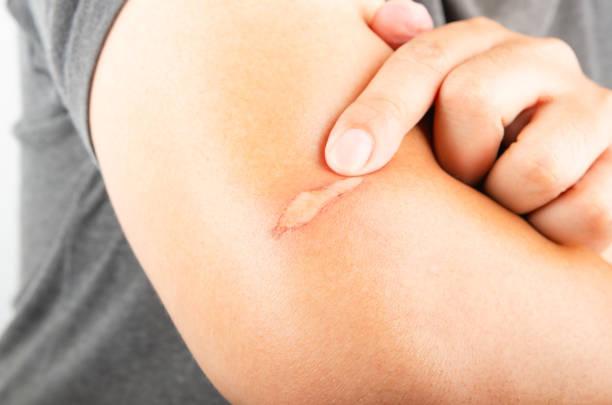
Keloids are raised, firm scars that develop when the body produces excessive scar tissue during the healing process. Unlike ordinary scars, keloids can extend beyond the original wound and may continue to grow over time. They can develop after injuries, surgeries, piercings, burns, or even minor skin damage. Understanding why keloids form is an important first step when considering keloid removal and deciding which approach may be appropriate.
What Is a Keloid Scar?
A keloid is an overgrown scar that forms when collagen production continues beyond what is needed to repair damaged skin. The resulting tissue can become thicker, firmer, and more noticeable than the original injury.
Keloids may appear pink, red, brown, or darker than the surrounding skin, depending on skin tone and how mature the scar is. They can occur on different parts of the body, although certain areas are more prone to developing them.
What Causes Keloids to Form?
Excessive Collagen Production
The primary reason keloids develop is an abnormal wound-healing response. During normal healing, collagen helps rebuild damaged skin and gradually reorganizes as the wound matures. With a keloid, the body continues producing excessive collagen, causing scar tissue to accumulate.
Skin Injury and Trauma
Keloids can develop after many types of skin injuries. Surgical incisions, cuts, burns, acne lesions, insect bites, vaccinations, and piercings may sometimes trigger excessive scar formation. In some cases, the original injury may have been so minor that a person does not remember it.
Genetic Predisposition
Some individuals are more likely to develop keloids because of genetic factors. A personal or family history of keloids may increase the likelihood of developing them after skin injuries. However, having no previous history does not completely eliminate the possibility.
Where Do Keloids Commonly Appear?
Keloids can develop almost anywhere, but they are often seen on areas such as the chest, shoulders, upper back, neck, jawline, earlobes, and other areas exposed to skin trauma. Their location can influence treatment planning because movement, skin tension, and previous injury may affect how the scar behaves.
How Are Keloids Different From Normal Scars?
Normal Scar Tissue
A typical scar generally remains within the boundaries of the original wound. Over time, it may become flatter, softer, and less noticeable as the skin continues to heal.
Keloid Tissue
A keloid can extend beyond the original injury and may remain raised or continue enlarging. Some keloids cause itching, tenderness, tightness, or discomfort, while others are primarily a cosmetic concern.
What Factors Can Increase the Risk of Keloids?
Several factors may contribute to keloid development. A history of previous keloids is one of the strongest considerations. Repeated trauma to the same area, skin tension around a wound, delayed healing, and certain types of injuries may also contribute.
Hormonal changes and individual differences in wound healing may influence scar behavior as well. Because many factors can overlap, a professional evaluation is useful when a raised scar begins changing in size, shape, or texture.
Can Keloids Continue to Grow?
Keloids can remain stable or gradually become larger over time. Some grow slowly, while others may become more prominent during the months following an injury. Their behavior can vary considerably between individuals.
Early assessment can be helpful because treatment planning may depend on the size, location, age, symptoms, and previous history of the keloid. For people exploring Keloid Treatment in Riyadh, a professional consultation can help determine whether the raised area is actually a keloid or another type of scar.
What Treatment Options May Be Considered?
Corticosteroid Injections
Corticosteroid injections may be used to help reduce excessive scar tissue and make some keloids flatter and softer. Multiple treatment sessions may sometimes be recommended depending on the scar's response.
Silicone-Based Treatments
Silicone sheets or gels may be recommended as part of scar management. They can help improve the texture and appearance of certain scars and may be incorporated into a broader treatment plan.
Cryotherapy
Cryotherapy uses controlled freezing to treat selected scar tissue. It may be considered for certain keloids, particularly when the scar characteristics make this approach appropriate.
Laser and Other Procedures
Laser-based approaches may sometimes be used to improve the appearance, color, or texture of scar tissue. Other procedures can also be considered depending on the individual case. Treatment selection should be based on professional assessment rather than the assumption that one technique works for every keloid.
Why Professional Assessment Is Important
Keloids can resemble other types of raised scars, including hypertrophic scars. Although both involve excess scar tissue, they are not identical. A qualified professional can examine the scar's borders, thickness, history, symptoms, and development pattern before recommending an appropriate treatment strategy.
The goal of treatment is often to reduce the prominence of the scar, improve its texture, manage symptoms, and limit further growth. Because keloids can sometimes return after treatment, ongoing monitoring may also be important.
Can Keloids Be Prevented?
Not every keloid can be prevented, especially when a person has a strong tendency to develop them. However, appropriate wound care and avoiding unnecessary skin trauma may help reduce avoidable risks. Individuals with a history of keloids should also inform healthcare professionals before undergoing elective procedures, piercings, or surgeries.
Book an Appointment
If you have a raised, thickened, itchy, or growing scar and are considering Keloid Treatment in Riyadh, professional evaluation can help identify the type of scar and determine suitable treatment options. Royal Clinic Saudia can assess your scar and discuss an individualized approach based on its appearance, location, and development.
FAQs:
What causes a keloid to become raised?
Excessive collagen production during wound healing causes scar tissue to build up and become raised beyond the original injury.
Can a small injury cause a keloid?
Yes. Keloids can develop after relatively minor skin injuries, including piercings, acne, insect bites, or small cuts.
Are keloids permanent?
Keloids can persist for a long time, but various treatments may help reduce their size, thickness, symptoms, or appearance.
Can a keloid come back after treatment?
Yes. Keloids have a tendency to recur, so treatment and follow-up should be planned according to the individual's scar characteristics.

 English
 French
 Spanish
 Portuguese
 Deutsch
 Turkish
 Dutch
Dutch
 Italiano
 Russian
 Romaian
 Portuguese (Brazil)
 Greek
Greek