
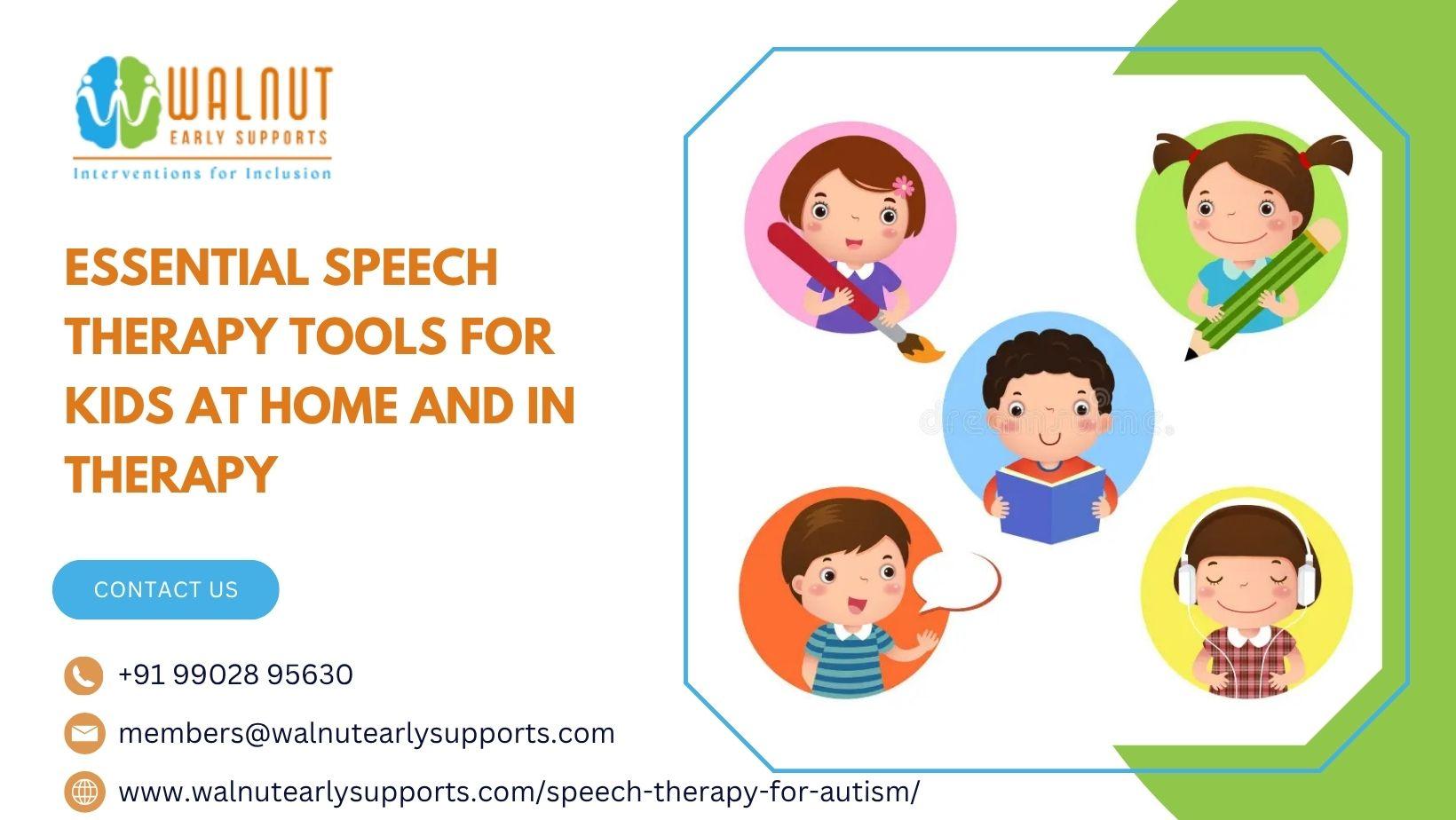
Communication develops through everyday interactions, play, listening, and practice. While many children naturally learn to communicate as they grow, some need extra support with speaking, understanding language, pronunciation, or social communication. Using the right Speech Therapy Tools can make practice more engaging and give children regular opportunities to develop important communication skills.
These resources can be useful both during professional therapy sessions and at home. When selected according to a child’s individual needs, they can support structured practice while keeping learning comfortable and enjoyable.
Why Speech Therapy Tools Are Helpful
Children learn in different ways. Some respond well to pictures, while others learn better through games, stories, movement, or conversation. Speech Therapy Tools provide different ways to practise communication skills and can be adapted to suit a child's age and abilities.
For example, a simple picture activity can be used to teach new vocabulary, encourage sentence formation, answer questions, or develop storytelling skills. A game can encourage turn-taking and listening, while an articulation activity can provide practice with specific speech sounds.
The goal is not simply to complete an activity. The goal is to create meaningful opportunities for children to listen, understand, respond, and express themselves.
Picture Cards and Visual Supports
Pictures are particularly useful for children who benefit from visual learning. Picture cards can show familiar objects, actions, people, emotions, or everyday situations.
Parents and therapists can ask children to name pictures, describe what they see, group similar items, or create simple sentences. For children developing early communication, pictures can also provide a helpful way to make choices or request something they want.
Visual schedules and choice boards can support children who find spoken instructions difficult to follow. They can make routines more predictable and help children understand what is expected.
Articulation and Speech Sound Activities
Some children have difficulty producing certain speech sounds clearly. Articulation activities can provide structured practice while keeping the experience enjoyable.
Activities can begin with listening and identifying sounds before moving to words, phrases, and sentences, depending on the child’s therapy goals. Picture-based games and matching activities can make repeated practice more interesting.
Parents should follow the guidance of a qualified speech-language professional when working on specific speech sound difficulties. The appropriate target sounds and practice level can vary from one child to another.
Vocabulary and Language Games
Building vocabulary is an important part of language development. Children need words to describe their experiences, understand instructions, answer questions, and communicate their thoughts.
Simple games can focus on naming objects, identifying categories, describing features, learning opposites, and creating sentences. Everyday items such as toys, books, clothing, or kitchen objects can become useful learning materials.
Speech Therapy Tools that combine pictures, questions, and interactive tasks can help children practise vocabulary in a structured way. Parents can then use the same words during daily conversations to reinforce learning naturally.
Speech Therapy Tools for Autism
Children with autism can have different communication strengths and needs. Some may use spoken language, while others may communicate through gestures, pictures, signs, or assistive communication systems. speech therapy tools for autism can include visual supports, social stories, choice boards, communication cards, and activities designed to encourage social interaction.
The resource should always match the child rather than expecting every child to learn in the same way. A therapist can help families identify appropriate strategies and adjust activities as communication skills develop.
Digital Resources for Home Practice
Technology can add variety to communication practice when used thoughtfully. online speech therapy materials may include digital games, interactive picture activities, vocabulary exercises, worksheets, and language tasks.
Digital resources can be convenient for home practice and may help maintain a child's interest. However, screen-based activities work best when combined with real communication. Parents can sit with the child, ask questions, model words, and encourage conversation instead of leaving the child to complete activities alone.
Resources for Different Learning Needs
Every child has a different starting point. Some may need support with first words, while others may be working on complex sentences, comprehension, pronunciation, or social communication.
When choosing child development therapy resources, consider the child's current abilities, interests, attention span, and specific learning goals. Materials should be challenging enough to encourage progress without making the child feel overwhelmed.
It is also useful to choose flexible resources that can be used in several ways. One activity may support vocabulary, comprehension, sentence building, and conversation depending on how an adult presents it.
Making Practice Part of Everyday Life
Speech and language practice does not always need to feel like formal therapy. Everyday moments can provide valuable opportunities for communication.
During meals, parents can talk about food, colours, tastes, and actions. While reading a story, they can ask simple questions and encourage the child to describe pictures. During play, adults can model useful words, expand the child's sentences, and encourage turn-taking.
The right Speech Therapy Tools can provide structure, but consistent interaction is equally important. With patient support, meaningful practice, and guidance from qualified professionals when needed, children can develop stronger communication skills and become more confident in expressing themselves.

 English
 Arabic
 Spanish
 Portuguese
 Deutsch
 Turkish
 Dutch
Dutch
 Italiano
 Russian
 Romaian
 Portuguese (Brazil)
 Greek
Greek