
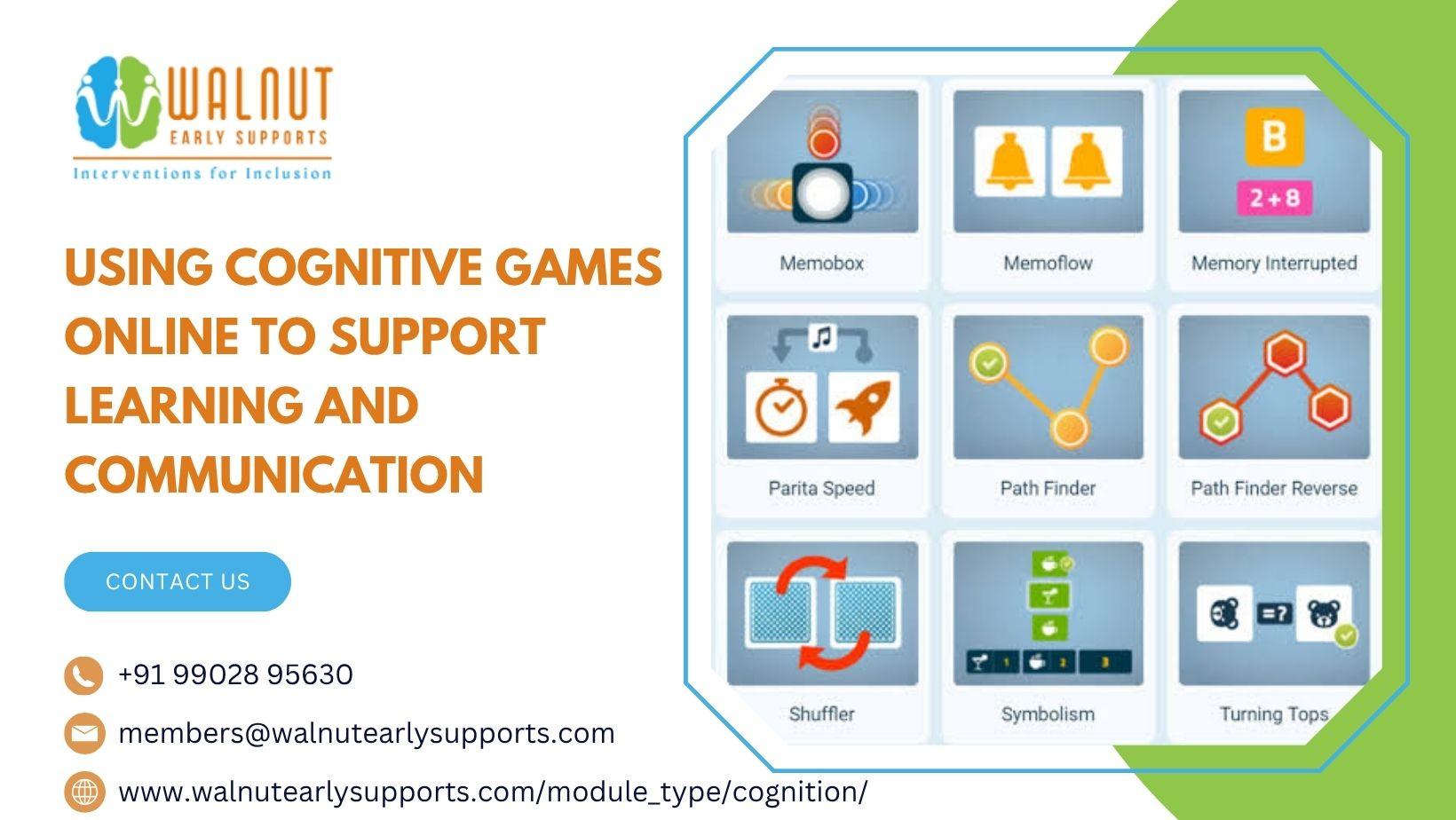
Children learn best when they are interested, involved, and given opportunities to practise new skills. Learning is not limited to reading, writing, or remembering information. It also involves paying attention, understanding instructions, solving problems, using language, and communicating with others.
Cognitive Games Online can bring these skills together through interactive activities that encourage children to think, respond, remember, and communicate. When used thoughtfully, these activities can complement classroom learning, home practice, and speech and language therapy.
What Are Cognitive Games?
Cognitive games are activities designed to encourage skills such as attention, memory, reasoning, problem-solving, visual processing, and flexible thinking. Online activities can present these tasks through pictures, matching activities, sequences, categorisation, and simple challenges.
The purpose is not simply to keep children occupied. A well-designed activity should have a clear learning goal and provide opportunities for children to practise a skill repeatedly.
For example, a child may complete a picture-matching activity to practise visual memory. A sorting task may encourage classification, while a sequencing activity can support both reasoning and language.
How Cognitive Games Can Support Learning
Learning requires children to take in information, understand it, remember it, and use it. Difficulties with attention or memory can sometimes make classroom tasks more challenging.
Games for cognitive development can provide additional practice in a playful format. Children may be asked to remember a group of pictures, identify differences, complete patterns, or follow a sequence of instructions.
These activities can support important learning behaviours, including:
- Staying focused on a task
- Remembering information
- Following directions
- Identifying patterns and relationships
- Making choices
- Solving simple problems
- Thinking before responding
Regular practice can help children become more comfortable with these types of tasks. Activities should remain appropriate to the child's abilities so that they are challenging without becoming frustrating.
Connecting Cognitive Skills With Communication
Cognitive development and communication are closely connected. Children need attention to listen, memory to remember words and information, and reasoning to understand relationships between ideas.
This is where Cognitive Games Online can become particularly useful during language-focused activities. A therapist or parent can use a cognitive task as a starting point for conversation.
For example, after a child completes a categorisation activity, an adult can ask:
“What group do these belong to?”
“Why do you think they go together?”
“Can you name another item in this group?”
These questions turn a simple game into an opportunity to practise vocabulary, sentence formation, comprehension, and expressive language.
Building Language Through Problem-Solving
Problem-solving activities can naturally encourage children to explain their ideas. Instead of focusing only on whether an answer is right or wrong, adults can encourage children to describe their thinking.
Cognitive ability games can involve identifying patterns, finding missing items, comparing objects, or deciding what should happen next. During these activities, children can practise words such as because, before, after, same, different, more, and less.
For children working on sentence development, adults can encourage complete responses rather than single-word answers. A question such as “Why did you choose this?” can encourage a child to form a longer response and explain their reasoning.
A Useful Resource for Therapy Sessions
Speech-language therapists often use repetition and structured practice to support communication goals. Digital activities can provide another way to practise targeted skills while keeping children engaged.
Therapy games for children can be adapted to support different learning goals. For example, a therapist may use a memory activity to practise vocabulary recall or a sequencing task to work on storytelling and sentence organisation.
These activities can also complement online speech therapy materials by providing variety during digital sessions or home practice.
The key is purposeful use. A game should be selected because it supports a particular skill, rather than simply because it is entertaining.
Choosing the Right Activities
Not every online game will provide meaningful developmental practice. Parents, educators, and therapists should look for activities that have a clear purpose and match the child's current abilities.
Consider the following before choosing an activity:
- Is the goal appropriate for the child?
- Are the instructions easy to understand?
- Can the difficulty be adjusted?
- Does the activity encourage active participation?
- Can the skill be connected to real-life communication?
- Does the child enjoy the activity without becoming overly frustrated?
Short, focused practice is often more useful than long sessions. Adults should also provide encouragement and allow children enough time to think and respond.
Taking Learning Beyond the Screen
Digital activities work best when they are combined with everyday interaction. After completing an activity, parents can continue practising the same skill away from the screen.
For example, a sorting game can lead to sorting household objects. A sequencing activity can become a conversation about the steps involved in getting ready for school. A memory task can be followed by asking the child to remember a short list of items.
Using speech and language therapy resources alongside real-world conversations can help children connect practice with meaningful communication.
Conclusion
Cognitive Games Online can support more than attention and thinking skills. When used with purposeful questions and interaction, they can create opportunities for children to practise vocabulary, comprehension, sentence formation, reasoning, and communication.
The most effective approach is to choose activities based on the child's individual needs and combine digital practice with conversation, hands-on learning, and professional guidance when appropriate. Used in this way, cognitive activities can become a practical part of a child's broader learning and communication journey.

 English
 Arabic
 French
 Spanish
 Deutsch
 Turkish
 Dutch
Dutch
 Italiano
 Russian
 Romaian
 Portuguese (Brazil)
 Greek
Greek