
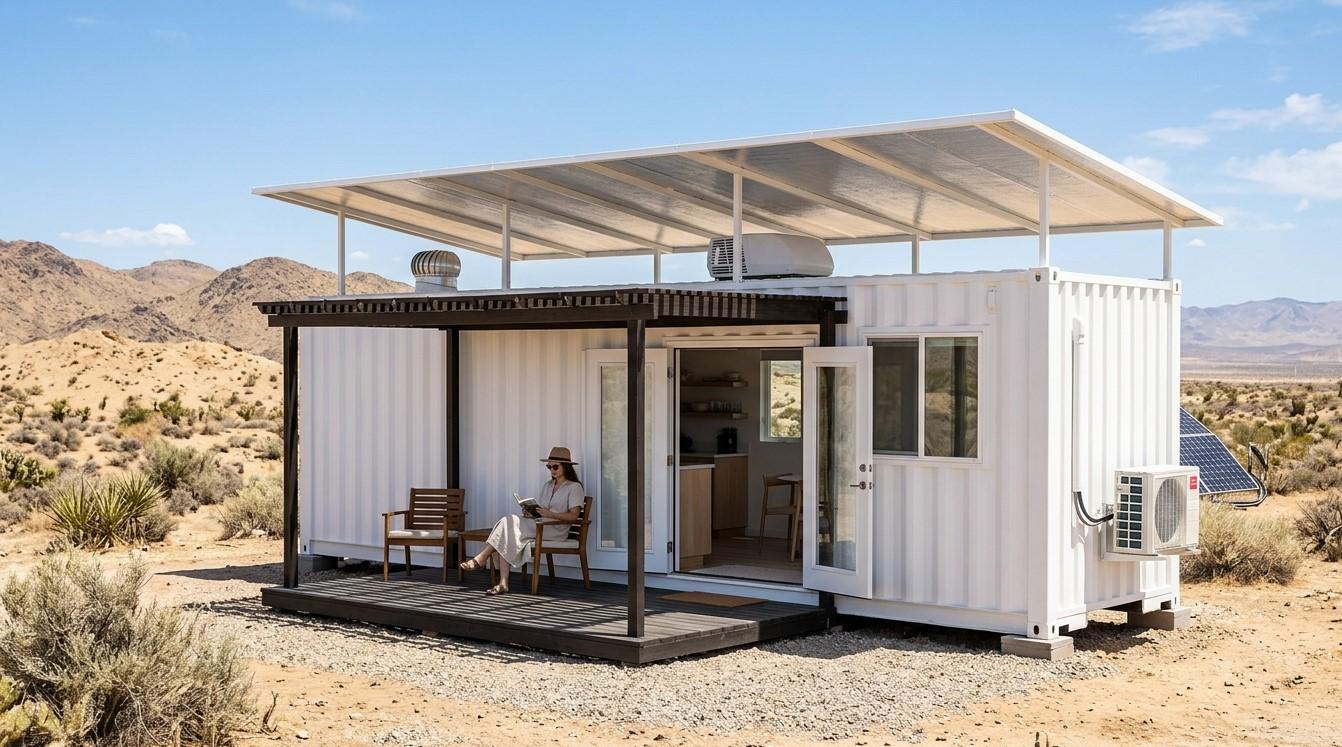
Shipping containers are built from steel, making them strong, secure, and suitable for a wide range of storage applications. However, that same steel construction can cause the interior to become very hot when the container sits in direct sunlight during warm weather.
If you're using a container to store furniture, equipment, inventory, tools, or other belongings, controlling heat can help create a more suitable storage environment.
Whether you're researching shipping containers for sale or already have a container on your property, there are several ways to reduce heat buildup. Options range from simple strategies such as choosing a shaded location to more advanced solutions such as insulation, ventilation, and air conditioning.
In this guide, we'll explain how to keep a shipping container cooler in hot weather and what to consider when choosing a container for your needs.
Table of Contents
- Why Do Shipping Containers Get Hot?
- 1. Choose a Shaded Location
- 2. Improve Natural Ventilation
- 3. Add Insulation
- 4. Use a Reflective Roof Coating
- 5. Install a Shade Structure
- 6. Use Fans and Mechanical Ventilation
- 7. Consider Air Conditioning
- 8. Choose the Right Container for Your Application
- 9. Reduce Moisture and Condensation
- 10. Store Heat-Sensitive Items Properly
- Which Container Is Best for Hot Weather?
- FAQs
- Keep Your Container Cooler With Conex Hub
Why Do Shipping Containers Get Hot?
A standard shipping container has a steel exterior that can absorb substantial solar heat when exposed to direct sunlight.
Without ventilation or insulation, heat can build up inside the enclosed steel structure, especially during the hottest part of the day.
The actual interior temperature depends on factors such as:
- Outdoor temperature
- Direct sunlight
- Container color and roof exposure
- Local climate
- Ventilation
- Insulation
- Container orientation
- How often the doors are opened
For basic storage, this may not be a major concern. However, if you're storing temperature-sensitive products, electronics, documents, equipment, or other sensitive materials, additional temperature management may be necessary.
1. Choose a Shaded Location
One of the simplest ways to reduce heat gain is to limit direct sunlight.
If possible, position the container where nearby structures or appropriate landscaping can provide shade without interfering with delivery, ventilation, or access.
When selecting a location, consider:
- Morning and afternoon sun
- Roof exposure
- Air movement
- Drainage
- Accessibility
- Nearby buildings
- Trees and branches
Don't sacrifice safe access just to create shade. The container still needs a suitable placement area and adequate delivery clearance.
Conex Hub recommends firm, dry, level ground for container placement and advises customers to maintain clear delivery access.
. Improve Natural Ventilation
Ventilation is one of the most practical ways to manage heat and moisture inside a container.
Allowing hot air to escape and fresh air to circulate can reduce heat buildup, although ventilation alone may not provide enough cooling for temperature-sensitive applications.
Standard storage containers may have ventilation features, while modified containers can be fitted with additional ventilation depending on their intended use.
When comparing storage containers for sale, ask about available ventilation options if your container will be located in a particularly hot climate.
For specialized applications, Conex Hub offers custom-engineered container solutions that can include ventilation and other modifications.
3. Add Insulation
Insulation can make a significant difference when you need greater control over the container's interior environment.
Insulation helps slow the transfer of heat from the exterior steel walls and roof into the interior.
Common insulation approaches can include:
- Spray foam insulation
- Rigid foam panels
- Fiberglass insulation
- Insulated wall systems
The best choice depends on your climate, budget, intended use, and whether you're planning additional modifications.
If you are converting the container into an office or workspace, insulation can be combined with ventilation, electrical systems, windows, and climate control.
Conex Hub's container office solutions, for example, are available with features including lighting and climate control for ready-to-use workspace applications.
4. Use a Reflective Roof Coating
The roof receives significant direct sunlight, so reducing solar heat absorption can help.
A suitable reflective or heat-reducing roof coating can reflect more sunlight rather than allowing the steel roof to absorb as much solar energy.
Before applying any coating, make sure it is compatible with the container's existing surface and appropriate for outdoor metal applications.
A coating can be especially useful when the container sits in an open area with little natural shade.
However, it should be considered one part of an overall cooling strategy rather than a replacement for insulation or mechanical cooling when precise temperature control is required.
5. Install a Shade Structure
If natural shade isn't available, a separate shade structure can help reduce direct solar exposure.
Options may include:
- Canopies
- Shade sails
- Covered structures
- Roof extensions
- Purpose-built shelters
The goal is to create an additional barrier between the sun and the container's roof and walls.
Make sure the structure doesn't interfere with the container doors, ventilation, delivery access, or maintenance.
6. Use Fans and Mechanical Ventilation
Fans can help move hot air out of a container and improve circulation.
For a storage container, strategically placed ventilation fans may be useful when natural airflow isn't sufficient.
A basic ventilation system can include:
- An intake point for fresh air
- An exhaust fan for hot air
- Appropriate vents or openings
- A suitable power source
For containers used as workshops or occupied spaces, ventilation becomes even more important.
If you are modifying a container, work with an experienced supplier or contractor to ensure ventilation is appropriate for the intended application.
7. Consider Air Conditioning
If you need a controlled indoor temperature, passive cooling methods may not be enough.
Air conditioning can be appropriate for modified containers used as:
- Offices
- Workspaces
- Equipment rooms
- Temperature-sensitive storage areas
- Specialized facilities
However, installing an air-conditioning system requires proper insulation and electrical planning. Cooling an uninsulated steel box can be inefficient because heat continuously enters through the walls and roof.
For applications requiring controlled temperatures, you may also want to consider a purpose-built refrigerated or cold-storage container.
Conex Hub currently offers cold-storage solutions, including refrigerated container options, for applications that require temperature control.
8. Choose the Right Container for Your Application
Not every storage project requires the same type of container.
For basic storage, a standard wind and water tight container may be sufficient.
For more demanding applications, you may need:
- High-cube containers
- Modified containers
- Refrigerated containers
- Insulated containers
- Ventilated containers
- Office containers
Conex Hub offers new one-trip and used containers, along with custom modifications and specialized solutions.
New one-trip containers have made a single voyage and arrive in near-new condition, while used containers can provide a more budget-friendly option for storage and projects.
When comparing shipping containers for sale, consider the environment in which the container will be used—not just its size and price.
9. Reduce Moisture and Condensation
Hot weather isn't the only environmental concern.
Temperature changes between the container's interior and exterior can contribute to condensation. Moisture can be problematic for items such as:
- Furniture
- Clothing
- Paper documents
- Electronics
- Tools
- Metal equipment
Ventilation can help manage moisture, while insulation can reduce temperature swings on interior surfaces.
You can also:
- Keep items off the floor
- Use pallets
- Leave space between stored items and walls
- Avoid putting wet items inside
- Use appropriate moisture absorbers
- Check the container periodically
If you're storing valuable or sensitive belongings, don't assume that a standard container provides climate-controlled conditions.
10. Store Heat-Sensitive Items Properly
Even with cooling improvements, some products may require specific temperature ranges.
Before storing an item, check the manufacturer's recommended storage conditions.
For example, temperature-sensitive materials may require controlled environments that a standard shipping container cannot provide.
If your application requires precise temperature control, discuss specialized container options with the supplier before purchasing.
This is particularly important for commercial inventory, electronics, pharmaceuticals, food products, chemicals, and other materials with specific storage requirements.
Which Container Is Best for Hot Weather?
The best choice depends on what you're storing.
| Storage Need | Possible Solution |
|---|---|
| General household storage | Standard container + ventilation |
| Tools and equipment | Ventilated storage container |
| Business inventory | Insulation + ventilation where appropriate |
| Office/workspace | Insulation + ventilation + HVAC |
| Temperature-sensitive goods | Refrigerated/cold-storage container |
| Long-term hot-climate storage | Shade + insulation + ventilation |
If you're searching for a shipping container for sale near me, don't simply choose the closest or cheapest unit. Consider the climate, intended use, container condition, ventilation, insulation requirements, and delivery location.
Conex Hub offers a range of standard and specialized containers, allowing customers to select solutions based on their intended application.
FAQs
Do shipping containers get very hot in summer?
Yes. Steel containers exposed to direct sunlight can become significantly hotter than the surrounding outdoor environment. The actual interior temperature depends on sunlight, outdoor temperature, ventilation, insulation, and other factors.
What is the easiest way to keep a shipping container cool?
Start by reducing direct sunlight with shade and improving ventilation. For greater temperature control, insulation and mechanical cooling can be added.
Does painting a shipping container white keep it cooler?
A light-colored or reflective exterior can reduce solar heat absorption compared with a darker surface, but paint alone may not provide sufficient temperature control for sensitive storage.
Should I insulate my shipping container?
Insulation can be worthwhile if you're dealing with a hot climate, storing temperature-sensitive items, or converting the container into an office or workspace.
Can I install an air conditioner in a shipping container?
Yes, modified containers can be equipped with air conditioning. Proper insulation, electrical capacity, ventilation, and installation are important for an efficient system.
How can I prevent condensation inside my container?
Ventilation, insulation, moisture management, and keeping stored items off the floor can help. Avoid placing wet items inside the container.
Are refrigerated shipping containers good for hot weather?
Refrigerated containers can be appropriate when you need controlled temperatures for temperature-sensitive goods. They are a specialized solution rather than a requirement for ordinary household or equipment storage.
Are shipping containers suitable for hot climates?
Yes. Shipping containers can be used in hot climates, but the appropriate cooling, insulation, ventilation, and storage strategy depends on what you're keeping inside.
Where can I find storage containers for sale?
You can compare standard, used, new one-trip, and specialized containers from suppliers such as Conex Hub. Available sizes and configurations can vary, so requesting a current quote is recommended.
Keep Your Container Cooler With Conex Hub
Keeping a shipping container cool in hot weather starts with choosing the right location and container for your application. Shade and ventilation can help with basic storage, while insulation, reflective coatings, and mechanical cooling provide additional temperature control.
For applications that require precise temperatures, a specialized refrigerated or climate-controlled solution may be more appropriate.
When comparing shipping containers for sale, think about more than storage capacity. Consider your local climate, what you're storing, how frequently you'll access the container, and whether modifications will be necessary.
Conex Hub offers new, used, and custom-fabricated shipping containers for storage, offices, projects, and specialized applications. The company says it has delivered more than 30,000 containers and operates five yards across California and Arizona.
Whether you're looking for storage containers for sale or searching for a shipping container for sale near me, Conex Hub can help you evaluate available container types and configurations for your project.
Ready to choose the right container for your storage needs? Contact Conex Hub today to request a quote and discuss your container size, condition, delivery requirements, and any cooling or modification needs.

 English
 Arabic
 French
 Spanish
 Portuguese
 Deutsch
 Turkish
 Dutch
Dutch
 Russian
 Romaian
 Portuguese (Brazil)
 Greek
Greek