
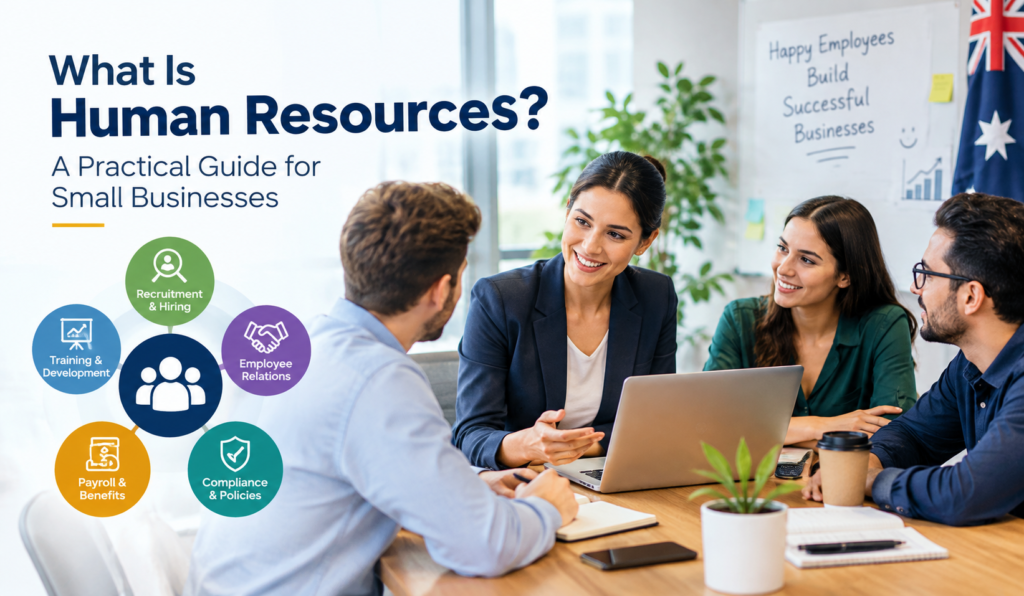
Running a small business means wearing a dozen hats. One day you're chasing invoices, the next you're fixing the printer, and somewhere in between you're supposed to be managing people too. That's where human resources comes in. If you've ever searched for human resources information because you weren't sure where to start, you're in good company. Most small business owners in Australia never studied HR; they just ended up doing it anyway.
This guide breaks down what human resources actually means, why it matters even if you've only got five staff, and how you can set up simple systems without hiring a whole HR team.
What Does Human Resources Actually Mean?
Human resources, or HR, is basically everything to do with managing the people who work for you. That includes hiring, pay, training, workplace safety, and sorting out issues when they pop up. Think of HR as the glue that holds your team together and keeps things running fairly and legally.
For big companies, HR is its own department with dozens of staff. For a small business, it might just be you, a spreadsheet, and a folder of employment contracts. That's fine. HR doesn't need to be fancy it just needs to be consistent.
Why Small Businesses Can't Skip HR
Some business owners think HR is only for big corporations. That's a costly mistake. Even if you've only got two or three employees, you're still dealing with contracts, pay rates, leave entitlements, and workplace safety rules. Get these wrong, and you could face fines, unhappy staff, or even legal trouble with Fair Work Australia.
Good HR practices also help you keep good people. Staff who feel supported, paid correctly, and treated fairly tend to stick around longer. That saves you the time and money it takes to constantly find and train new workers.
The Core Functions of HR for Small Businesses
Let's look at the main jobs HR covers. You don't need to master all of these overnight, but knowing what falls under HR helps you spot gaps in how you're currently running things.
Recruitment and Hiring
Finding the right people starts with a clear job ad, a fair interview process, and a proper offer letter. Rushing this step often leads to hiring the wrong person, which costs you time and money later on.
Payroll and Entitlements
This covers wages, superannuation, tax withholding, and leave balances. Getting payroll right isn't optional in Australia the Fair Work Act sets minimum standards you're legally required to follow.
Onboarding New Staff
A good onboarding process helps new hires settle in faster. This might include a welcome pack, basic training, and a clear rundown of what's expected of them in their first few weeks.
Workplace Health and Safety
Every business, no matter how small, has a duty of care to keep workers safe. This means identifying hazards, providing proper training, and keeping records of any incidents.
Performance and Development
Regular check-ins help staff know how they're going and where they can improve. This doesn't need to be a formal review process; even a quick monthly chat can make a big difference.
Handling Workplace Issues
Disputes, complaints, and misunderstandings happen in every workplace. Having a clear process for dealing with these issues protects both you and your staff.
Common HR Documents Every Small Business Needs
Having the right paperwork in place saves you headaches down the track. Here's a quick look at the essentials.
Table 1: Basic HR Documents for Small Business
| Document | Purpose |
| Employment contract | Sets out pay, hours, and job duties |
| Position description | Clarifies role expectations |
| Employee handbook | Outlines workplace policies |
| Leave request form | Tracks annual and sick leave |
| Incident report form | Records workplace accidents |
Keeping these documents updated and easy to find will save you a lot of stress if a dispute ever comes up.
HR Tasks to Prioritise When You're Just Starting Out
If you're building your HR processes from scratch, don't try to do everything at once. Focus on the basics first, then build from there as your team grows.
Table 2: Getting Started with HR — First Steps
| Priority | Task |
| High | Write clear employment contracts |
| High | Set up correct payroll and super |
| Medium | Create a simple staff handbook |
| Medium | Establish a WHS checklist |
| Low | Build a formal review process |
Start with the high-priority items. They're the ones most likely to cause legal or financial trouble if ignored.
How to Set Up HR Without a Big Budget
You don't need expensive software or a full-time HR manager to get this right. Here are a few practical ways small businesses handle HR on a tight budget.
Use free templates for contracts and policies from trusted sources like the Fair Work Ombudsman website. They're designed to meet Australian workplace laws, so you're not starting from scratch.
Keep a simple staff register with names, start dates, pay rates, and leave balances. A basic spreadsheet works fine for a small team.
Set calendar reminders for important dates, like performance reviews, contract renewals, and superannuation payments. Missing these can lead to fines or unhappy staff.
Talk to your staff regularly. A lot of HR problems come from poor communication, not bad intentions. A quick chat can solve issues before they become formal complaints.
When to Get Outside Help
There's a point where doing HR yourself becomes risky, especially as your team grows. If you're dealing with a serious workplace dispute, a potential unfair dismissal claim, or you're just not sure if you're meeting your legal obligations, it's worth speaking to an HR consultant or employment lawyer.
Many small businesses in Australia also use outsourced HR services. These companies handle payroll, contracts, and compliance for a monthly fee, which can be far cheaper than hiring an in-house HR person.
Staying On Top of Changing Laws
Workplace laws change fairly often in Australia, whether it's minimum wage increases, new leave entitlements, or updated safety rules. Falling behind on these changes can land you in trouble even if you didn't mean to break any rules.
A simple habit is checking the Fair Work Ombudsman website every few months, or signing up for updates from a small business association. Staying informed is one of the easiest ways to avoid costly mistakes.
Final Thoughts
Human resources might sound like a big, complicated topic, but at its core, it's just about managing people fairly and legally. As a small business owner, you don't need a huge department or a fancy system. You just need the right documents, a bit of consistency, and a willingness to ask for help when things get tricky.
Start small. Get your contracts and payroll sorted first, then build out the rest as your team grows. Good HR practices don't just keep you out of legal trouble, they help you build a workplace where people actually want to stay and do their best work.
-
What Does Human Resources Actually Mean?
-
Why Small Businesses Can't Skip HR
-
The Core Functions of HR for Small Businesses
-
Recruitment and Hiring
-
Payroll and Entitlements
-
Onboarding New Staff
-
Workplace Health and Safety
-
Performance and Development
-
Handling Workplace Issues
-
-
Common HR Documents Every Small Business Needs
-
HR Tasks to Prioritise When You're Just Starting Out
-
How to Set Up HR Without a Big Budget
-
When to Get Outside Help
-
Staying On Top of Changing Laws
-
Final Thoughts

 Arabic
 French
 Spanish
 Portuguese
 Deutsch
 Turkish
 Dutch
Dutch
 Italiano
 Russian
 Romaian
 Portuguese (Brazil)
 Greek
Greek