
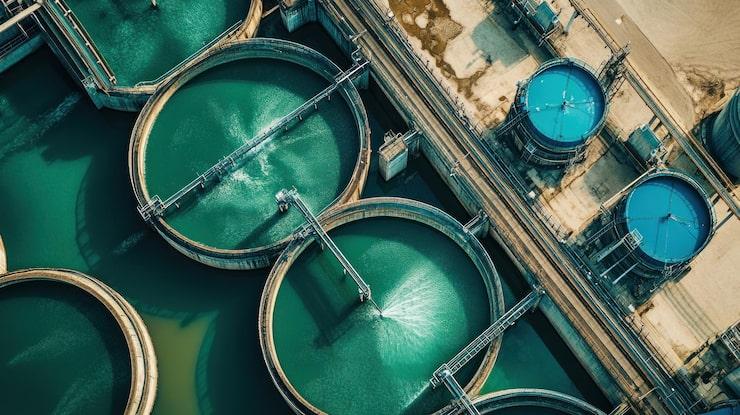
India’s water and wastewater infrastructure is undergoing a significant transformation as cities expand, drinking-water networks improve, sewerage coverage increases, and municipalities invest in treatment and reuse systems. Pumps form a critical link across this infrastructure, moving raw water, treated drinking water, sewage, sludge, stormwater, and reclaimed water between collection systems, treatment facilities, storage assets, and end users.
According to a Vyansa Intelligence report, the India water & wastewater pump market was valued at USD 1.04 billion in 2025 and is projected to reach USD 1.5 billion by 2032, representing a 5.37% CAGR during 2026–2032.
Urban Water Infrastructure Is Creating New Pumping Requirements
India’s continuing urban development requires substantial investment in reliable water-supply infrastructure. New residential areas, commercial districts, industrial zones, and public facilities need water to be abstracted, treated, stored, pressurized, and distributed.
The Government of India’s AMRUT 2.0 programme demonstrates the scale of this infrastructure push. Official government information shows thousands of projects covering water supply, sewerage, septage management, and water-body rejuvenation across Indian cities.
For an India water & wastewater pump market analysis, this creates opportunities across intake pumps, clear-water pumps, booster systems, sewage pumps, motors, controls, and associated services.
Wastewater Treatment Capacity Is Expanding
Urban sewerage infrastructure represents another important area for pumping equipment. Under AMRUT 2.0, 592 sewerage and septage management projects worth about ₹67,608 crore had been approved, together with 6,739 MLD of proposed sewage-treatment capacity.
Wastewater pumps operate under more difficult conditions than many clean-water systems. Sewage can contain solids, fibres, abrasive particles, and other materials capable of causing clogging or accelerating equipment wear.
Manufacturers therefore need to balance hydraulic efficiency with solids-handling capabilities, robust construction, corrosion resistance, and straightforward maintenance.
24x7 Water Supply Requires Better Pressure Management
Indian cities are increasingly pursuing continuous water-supply systems. Unlike intermittent distribution, 24x7 supply requires more consistent management of network pressure and flow.
Actual AMRUT 2.0 projects include continuous water-supply schemes incorporating mechanical and electrical equipment, instrumentation, PLC-SCADA systems, and long-term operation and maintenance.
These detailed industry insights highlight how pumping equipment is becoming integrated with broader network-management systems rather than operating as isolated mechanical assets.
Variable-speed drives can further help utilities adjust pump output according to real demand.
Treated Wastewater Is Becoming a Valuable Resource
India’s urban water strategy increasingly emphasizes circular use of water. Instead of treating wastewater solely for discharge, cities can reuse appropriately treated effluent for industrial, landscaping, and other non-potable applications.
AMRUT 2.0 projects already provide practical examples. In Vadodara, an approved project covers the reuse of 42 MLD of treated wastewater from the Chhani sewage treatment plant. In Agra, another completed project provides treated sewage from an STP for reuse at a waste-to-energy facility.
For the latest industry analysis, reuse creates additional pump applications because treated water must be transferred from treatment plants to storage and distribution infrastructure.
SCADA Is Changing Pumping Operations
Digitalization is becoming increasingly visible within India’s urban water infrastructure. Government figures show that 1,487 approved water-supply projects and 235 sewerage projects under AMRUT 2.0 include SCADA technology.
SCADA systems can provide centralized information on flow, pressure, water levels, pump status, and other operational parameters.
For pumping stations, this enables better coordination of equipment and quicker identification of abnormal conditions. Remote monitoring is particularly valuable where utilities operate numerous assets spread across large urban areas.
Energy Efficiency Can Lower Lifecycle Costs
Pumps frequently operate for thousands of hours annually, meaning electricity can account for a substantial share of their lifetime operating expense.
Correct sizing is therefore essential. Oversized pumps can operate inefficiently, while equipment that is too small may struggle to deliver required flows. High-efficiency motors, variable-frequency drives, optimized hydraulics, and intelligent control can help reduce unnecessary power consumption.
For a water & wastewater pump industry report, lifecycle performance deserves as much attention as initial equipment pricing.
Pumping Stations Remain Essential to Sewer Networks
Gravity is generally preferred for moving sewage where topography allows, but pumping stations remain necessary when wastewater must be lifted or transported across challenging elevations.
AMRUT 2.0 project records demonstrate direct investment in drainage and sewage pumping stations. Valsad, for example, has projects involving drainage pumping stations and associated networks, while Dholpur has an approved sewage pumping station project designed to redirect flows and address blockage and overflow problems.
Such projects provide clear evidence of the continuing importance of specialized wastewater pumping infrastructure.
Predictive Maintenance Can Improve Reliability
Unexpected pump failure can disrupt water distribution or sewage operations. Digital monitoring offers an opportunity to move from reactive maintenance toward condition-based strategies.
Sensors can monitor vibration, temperature, pressure, flow, and energy consumption. Abnormal readings can alert operators to potential mechanical or hydraulic problems before complete failure occurs.
This can be particularly valuable for sewage pumping stations, where equipment accessibility and emergency repairs can be difficult.
Aftermarket Services Represent a Long-Term Opportunity
India already has a substantial installed base of water and wastewater pumps. Every new treatment plant, distribution station, and pumping facility also creates future requirements for inspections, spare parts, motor servicing, control upgrades, refurbishment, and eventual replacement.
For water & wastewater pump market research, the opportunity therefore extends well beyond supplying equipment for new projects.
Companies offering strong regional service capabilities can differentiate themselves where minimizing downtime is critical to municipal operations.
Intelligent Pumping Will Support India’s Urban Water Transformation
India’s water and wastewater pump sector is increasingly connected with a broader transformation in urban infrastructure. Water-supply expansion, sewerage development, additional treatment capacity, treated-water reuse, continuous supply, and SCADA adoption are changing what utilities require from pumping equipment.
Future solutions will need to combine dependable hydraulic performance with energy-efficient motors, variable-speed operation, solids-handling capabilities, automation, and accessible maintenance. As India expands and modernizes its urban water systems, pumps will remain fundamental to moving water reliably through every stage of the cycle.

 Arabic
 French
 Spanish
 Portuguese
 Deutsch
 Turkish
 Dutch
Dutch
 Italiano
 Russian
 Romaian
 Portuguese (Brazil)
 Greek
Greek