
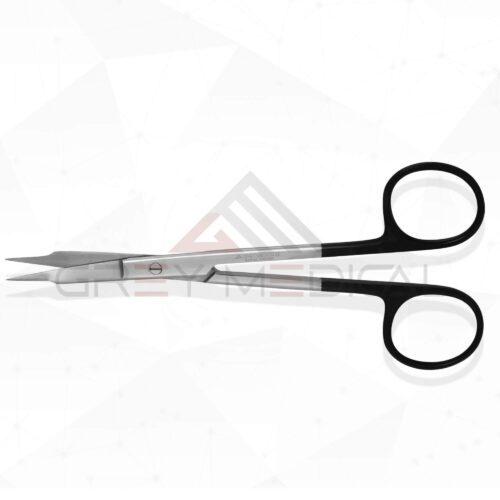
Operating scissors are essential surgical instruments designed to cut tissues, sutures, and other materials during medical and surgical procedures. Their precision, durability, and ease of handling make them valuable tools in operating rooms, clinics, and healthcare facilities. Available in various designs and sizes, operating scissors support surgeons in performing delicate tasks with accuracy and control. Selecting the appropriate scissors helps improve workflow, maintain precision, and support the requirements of different surgical procedures.

Features and Design of Operating Scissors
High-quality operating scissors are designed to deliver reliable cutting performance and comfortable handling. They are commonly manufactured from medical-grade stainless steel, which provides strength, corrosion resistance, and durability when properly maintained. Some models feature tungsten carbide inserts to enhance cutting efficiency and extend the life of the blades.
The instrument's design may include straight or curved blades, depending on its intended application. Ergonomic finger rings and balanced construction allow healthcare professionals to maintain a steady grip during procedures. These design features make surgical scissors suitable for a wide range of clinical applications while supporting consistent performance.
Types of Operating Scissors
Operating scissors are available in several configurations to accommodate different surgical needs. Straight scissors are generally used for cutting sutures, dressings, and materials that require accessible, direct cutting. Curved scissors are useful when improved access or visibility is needed around anatomical structures.
Mayo scissors are commonly associated with cutting heavier tissues and surgical materials, while Metzenbaum scissors are designed for more delicate tissue dissection. Although these instruments serve different purposes, each type is developed to provide appropriate control and cutting performance. Choosing the correct instrument depends on the procedure, tissue characteristics, and the professional's requirements.
Applications of Operating Scissors in Healthcare
Operating scissors are used across numerous surgical specialties, including general surgery, dentistry, gynecology, and other clinical disciplines. Depending on their design, they may assist with tissue dissection, trimming sutures, cutting dressings, and preparing materials during surgical procedures.
Their versatility makes them an important part of surgical instrument sets. Healthcare professionals select specific scissors according to the task, ensuring the instrument is appropriate for the intended use. Proper handling and routine inspection also help maintain cutting accuracy and support safe instrument management.
Choosing High-Quality Surgical Scissors
When selecting operating scissors, healthcare facilities should consider material quality, blade sharpness, construction, sterilization compatibility, and ease of handling. Well-manufactured instruments should provide consistent cutting performance and withstand repeated reprocessing according to the manufacturer's instructions.
Grey Medical® is a privately owned medical technology company dedicated to innovation and excellence in the craft of surgical instruments. Its commitment to instrument craftsmanship reflects the importance of precision, reliability, and quality in medical environments. When evaluating surgical instruments, professionals should review product specifications and select models that meet their clinical needs and applicable standards.
Maintenance and Sterilization
Proper maintenance is essential for preserving the performance of operating scissors. Instruments should be cleaned promptly after use, inspected for damage, and processed according to validated sterilization procedures and manufacturer guidance. Hinges should move smoothly, while blades should remain properly aligned and free from corrosion or damage.
Regular inspection can help identify dull edges, loose joints, and other issues that may affect performance. Appropriate storage also protects the instrument from unnecessary wear and helps maintain its condition between procedures.
Conclusion
Operating scissors remain indispensable instruments in modern healthcare because of their versatility, precision, and practical design. From delicate tissue dissection to cutting sutures and surgical materials, the right scissors can support efficient clinical workflows. By prioritizing quality materials, appropriate instrument selection, and proper maintenance, healthcare professionals can preserve instrument performance and reliability. Choosing well-crafted surgical instruments is an important step toward supporting the demands of professional medical practice.

 English
 French
 Spanish
 Portuguese
 Deutsch
 Turkish
 Dutch
 Italiano
 Russian
 Romaian
 Portuguese (Brazil)
 Greek