
Choosing a skincare product becomes easier when you know what your skin actually needs. If your face feels greasy by midday, your nose has visible blackheads, or small bumps keep appearing, your routine may need a better approach to pore care.
A Salicylic Acid Serum in Pakistan is one option worth considering for these concerns. Rather than relying on harsh scrubs or constantly switching products, you can use a targeted exfoliating treatment to help manage the buildup that contributes to congested skin.
The important part is choosing a formula that suits your skin and using it without overdoing the active ingredients.
When Should You Consider a Salicylic Acid Serum?
Not every skin concern requires an exfoliating serum. Understanding what you are trying to improve helps you decide whether this type of product belongs in your routine.
-
Frequent blackheads: You may benefit from an ingredient that helps loosen the buildup inside pores.
-
Small, recurring bumps: Congestion can contribute to certain types of blemishes.
-
Persistent oiliness: A suitable exfoliating routine may help reduce the greasy appearance associated with excess surface oil.
-
Uneven texture: Removing accumulated dead skin cells can help the skin feel smoother.
-
Marks left after breakouts: Additional tone-supporting ingredients may help improve the appearance of lingering dark spots.
A serum will not address every cause of acne. Hormonal breakouts, deep cysts, and certain inflammatory skin conditions may need professional treatment.
Understanding the Role of Salicylic Acid
Salicylic acid belongs to a group of ingredients called beta hydroxy acids, commonly known as BHAs. Its oil-soluble nature allows it to work within oily pores, where dead skin cells and sebum can accumulate.
This makes it particularly relevant for people dealing with blackheads and whiteheads. Instead of physically scrubbing the skin, salicylic acid helps loosen the material contributing to pore congestion.
Regular use may improve the appearance of blemish-prone skin. However, using a stronger formula or applying it more frequently does not guarantee better results. Excessive exfoliation can leave skin irritated and uncomfortable.
Why the Other Ingredients Matter
Salicylic acid is only one part of a skincare formula. Supporting ingredients can serve different purposes, especially when your concerns include both congestion and uneven skin tone.
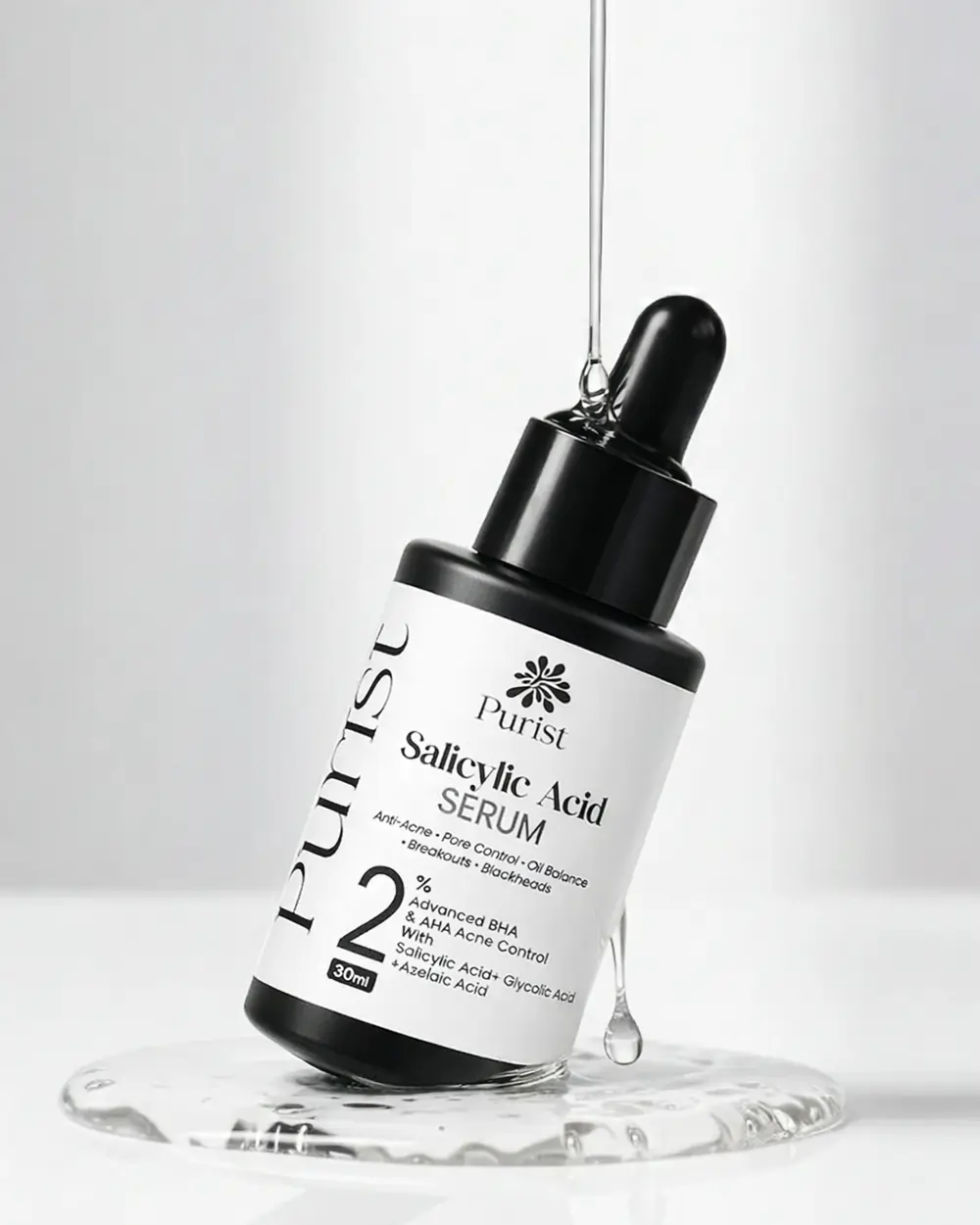
Purist Salicylic 2% Acid Serum combines salicylic acid with other active and hydrating ingredients. Understanding their individual roles helps you decide how the product fits into your routine.
Glycolic Acid for Surface Exfoliation
Glycolic acid is an alpha hydroxy acid (AHA) that works mainly on the skin's surface. It helps loosen dead skin cells and improve the appearance of rough texture.
When combined with salicylic acid, it addresses a different aspect of exfoliation. The combination can be useful for some people, but it also increases the potential for irritation.
Azelaic Acid for Uneven-Looking Skin
Azelaic acid is used in skincare to address concerns such as blemish-prone skin and uneven pigmentation. It can complement a routine designed to improve the appearance of post-acne marks.
Results depend on the complete formula and how well your skin tolerates it.
Niacinamide for Skin Balance
Niacinamide is a form of vitamin B3. It supports the skin barrier and may help improve the appearance of excess oil and uneven skin tone.
It can also complement exfoliating ingredients by supporting a balanced skincare routine.
Alpha Arbutin for Dark Marks
Dark spots sometimes remain after a blemish has healed. Alpha Arbutin is commonly used in skincare products formulated to improve the appearance of uneven pigmentation.
It does not remove deep acne scars, and visible changes in pigmentation generally take time.
Hyaluronic Acid, Glycerin and Allantoin
Exfoliation is not the only consideration when selecting a serum. Hyaluronic acid and glycerin help attract and retain moisture, while allantoin helps condition and soothe the skin.
These ingredients contribute to the formula's overall skincare approach, although they cannot eliminate the risk of irritation from active acids.
How to Fit the Serum Into Your Existing Routine
A useful skincare routine does not need a long list of products. The aim is to introduce active ingredients carefully while keeping cleansing, moisturising, and sun protection consistent.
In the evening
-
Wash your face with a gentle cleanser.
-
Allow your skin to dry completely.
-
Apply a small amount of the Salicylic Acid Serum according to its product instructions.
-
Follow with a moisturiser.
Begin with two evenings per week and assess your skin before increasing frequency. Because this formula contains multiple active acids, avoid layering it with other strong exfoliants or retinol when starting out.
In the morning
Cleanse gently if needed, apply moisturiser, and finish with broad-spectrum SPF 30 or higher. Sunscreen is particularly important when managing post-acne marks and maintaining an even-looking complexion.
Five Mistakes That Can Work Against Your Skin
Using Too Many Active Ingredients
Combining several exfoliating products may cause more irritation than benefit. Keep your routine simple while introducing a new serum.
Applying More Product Than Necessary
A larger amount will not make the ingredients work faster. Follow the product directions and use only the recommended amount.
Ignoring Skin Tightness and Burning
Persistent stinging, redness, peeling, or tightness can indicate irritation rather than progress. Stop using the serum if these symptoms develop and allow your skin to recover.
Skipping Moisturiser Because Your Skin Is Oily
Oily skin still needs hydration. Choose a lightweight moisturiser that feels comfortable on your skin instead of avoiding moisturiser altogether.
Expecting Dark Marks to Disappear Quickly
Post-acne pigmentation can take weeks or months to improve. Consistency and sun protection matter more than repeatedly changing treatments.
Is This Type of Serum Right for You?
A Salicylic Acid Serum may suit people who experience blackheads, whiteheads, oily skin, and recurring pore congestion. A formula with additional ingredients may also appeal to those concerned about uneven texture and the appearance of post-acne marks.
However, a multi-acid formula may be too intense for some beginners or people with sensitive, dry, or irritated skin. If you fall into these groups, speak with a dermatologist before introducing it.
If you are pregnant or breastfeeding, ask your healthcare professional whether the specific product is appropriate for you.
What Should You Expect From Consistent Use?
Skincare improvements happen gradually. You may notice changes in skin texture before you see a meaningful reduction in breakouts or dark marks.
Give an acne treatment several weeks to assess its effects, provided your skin tolerates it. If your acne remains persistent, becomes painful, or leaves scarring, consult a dermatologist rather than relying on cosmetic products alone.
The goal is steady improvement without compromising the skin barrier.
Frequently Asked Questions
Is a Salicylic Acid Serum better than a cleanser?
A leave-on serum remains in contact with the skin longer than a rinse-off cleanser. However, the best option depends on the formula, your skin concerns, and your tolerance for active ingredients.
Can beginners use a 2% Salicylic Acid Serum?
Some beginners can tolerate a 2% formula, but concentration is not the only factor. This particular formula also contains other active acids, so starting infrequently is important.
Does salicylic acid help with dark spots?
Its main role is exfoliation and pore care. Other ingredients, such as Alpha Arbutin and Niacinamide, may help improve the appearance of uneven pigmentation. Sunscreen also plays an important role.
Can I use the serum with a moisturiser?
Yes. Applying a suitable moisturiser after the serum can help maintain hydration and reduce dryness.
How often should I apply it?
Start with two evenings per week and follow the directions provided with the product. Increase frequency only if your skin tolerates the formula without persistent irritation.
A More Considered Approach to Clearer Skin
Clearer-looking skin is not about using the largest number of products. It is about choosing ingredients that address your concerns, introducing them carefully, and maintaining a routine your skin can tolerate.
Purist Salicylic 2% Acid Serum combines pore-focused exfoliation with ingredients intended to address texture, uneven-looking skin tone, and hydration. If these concerns match your skincare needs, review the Purist Salicylic Acid Serum product details to determine whether the formula fits your routine.
Start gradually, keep your routine balanced, and give your skin time to respond.

 Arabic
 French
 Spanish
 Portuguese
 Deutsch
 Turkish
 Dutch
 Italiano
 Russian
 Romaian
 Portuguese (Brazil)
 Greek