
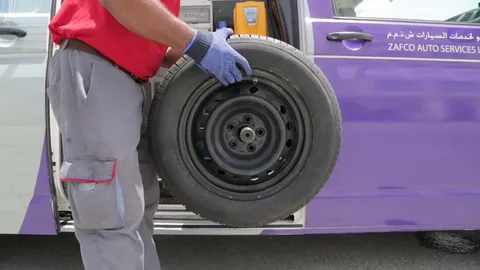
A flat tire or sudden loss of air pressure can interrupt your day, especially when you have work, appointments, or family responsibilities to manage. For drivers in Atlanta, GA, deciding whether to drive to a tire shop or call a mobile tire repair service depends on the tire's condition, your location, and the safety of continuing to drive.
Mobile tire repair can be a convenient option when your vehicle cannot safely reach a repair shop or when you want tire service at your current location. Understanding when to request mobile assistance can help prevent additional tire damage and reduce unnecessary delays.
When Your Tire Has Lost Most of Its Air Pressure
If your tire is completely flat or severely underinflated, driving to a tire shop is generally not a safe choice. A tire without sufficient air pressure cannot support the vehicle properly, and driving on it may damage the sidewall, wheel, and other components.
Instead of attempting to reach a nearby repair facility, move your vehicle to a safe location if possible and arrange roadside assistance or mobile tire service. A technician can inspect the damage and determine whether the tire can be repaired or needs replacement.
When You Notice a Slow Tire Leak
Sometimes, a tire loses air gradually rather than going flat all at once. You might notice the tire pressure warning light, repeated pressure loss after inflation, or a tire that looks lower than the others.
Although a slow leak may not seem urgent, it can become a more serious problem if ignored. A nail or screw embedded in the tread may be responsible, but a damaged valve stem, wheel, or tire bead can also cause air loss.
Calling a mobile tire repair provider can help you address the problem at home, at work, or in a parking lot before you need to make another trip. Avoid driving if the tire pressure is too low or the vehicle feels unstable.
When You Are Stuck at Work or in a Parking Lot
A flat tire can happen anywhere, including office parking garages, shopping centers, apartment complexes, and public parking lots. If you cannot safely drive to a tire shop, mobile service may be a practical alternative.
Rather than arranging transportation to a repair facility and returning later to collect your vehicle, you can ask whether a technician can service the tire where the car is parked.
Before scheduling service, provide your exact location and confirm that the technician can access the vehicle. For underground garages or restricted parking areas, mention any height limits or access requirements.
When Your Schedule Does Not Allow a Trip to the Tire Shop
Driving to a tire shop may involve travel time, waiting for an available technician, and arranging transportation if the repair takes longer than expected. For busy Atlanta drivers, these extra steps can make an unexpected tire problem even more inconvenient.
Mobile tire repair brings the service to your location when coverage and technician availability permit. This can be useful if you are at home before work, parked outside your office, or managing several appointments throughout the day.
However, mobile service does not guarantee immediate assistance. Ask about the estimated arrival time, the services available for your vehicle, and any additional charges before confirming.
When You Need Help With a Tire Replacement
Not every damaged tire can be repaired. Sidewall damage, a large puncture, severe tread damage, or internal damage caused by driving on an underinflated tire may mean the tire needs to be replaced.
If you suspect replacement is necessary, contact a mobile tire provider and share your vehicle details and tire size if available. Ask whether the correct replacement tire is in stock and whether installation can be completed at your location.
This can help you avoid traveling to a shop only to discover that the required tire is unavailable. A professional inspection should determine whether repair or replacement is appropriate.
When Driving to a Tire Shop May Be Reasonable
Mobile tire repair is not always necessary. If the tire is holding air, has no visible damage, and a qualified professional determines that the vehicle can be driven safely, visiting a tire shop may be a reasonable option.
Check your tire pressure and follow your vehicle manufacturer's guidance. Do not rely solely on the tire pressure warning light or the appearance of the tire to decide whether it is safe to drive.
If you are unsure about the tire's condition, avoid taking unnecessary risks. Contact a tire professional for advice before moving the vehicle.
What Information Should You Provide When Calling?
To help a mobile tire repair provider understand your situation, prepare a few basic details before calling:
-
Your location: Provide an address, parking lot name, or nearby landmark.
-
Vehicle information: Share the make, model, and year if known.
-
Tire problem: Explain whether the tire is flat, leaking slowly, punctured, or visibly damaged.
-
Tire size: If available, read the size printed on the tire sidewall.
-
Access conditions: Mention whether your vehicle is in a garage, on a roadside, or in another restricted area.
Also, confirm the estimated arrival time, repair or replacement options, and total cost. If you are on a highway or another dangerous roadside location, prioritize safety and request appropriate roadside assistance rather than attempting a repair beside moving traffic.
Conclusion
You should consider mobile tire repair instead of driving to a tire shop when your tire is flat, losing air rapidly, visibly damaged, or unsafe to drive on. It can also be a convenient option when your vehicle is parked at home or work and you want to avoid an unnecessary trip to a repair facility.
For drivers in Atlanta, GA, peachstatetires.com is an option to consider for mobile tire repair and replacement services. Contact Peach State Tires to explain your tire problem, confirm service availability at your location, and determine the best next step for your vehicle.

 English
 Arabic
 French
 Spanish
 Portuguese
 Deutsch
 Turkish
 Dutch
 Russian
 Romaian
 Portuguese (Brazil)
 Greek