
Introduction
Search behavior is changing as users increasingly turn to AI-powered platforms to discover products, compare services, and find recommendations. For businesses, this creates a new challenge: understanding whether their content is visible in AI-generated answers and whether that visibility contributes to meaningful business results.
Generative Engine Optimization (GEO) helps businesses improve how their content and brand can be discovered across AI-powered search experiences. However, improving visibility is only part of the process. Measuring the return on investment (ROI) of GEO is essential for identifying effective strategies, allocating resources, and making informed marketing decisions.
What Does GEO ROI Mean?
GEO ROI measures the value a business gains from its efforts to improve visibility in AI-generated responses and answer-based search experiences.
Traditional SEO often focuses on organic rankings, clicks, and website traffic. GEO introduces additional indicators, including brand mentions in AI answers, citations of relevant web pages, and visibility for important customer queries.
GEO ROI should not rely on a single metric. Instead, businesses should evaluate visibility alongside website engagement, qualified leads, conversions, and other outcomes relevant to their goals.
1. Establish a Baseline Before Making Changes
Before investing in GEO improvements, understand your current AI search presence.
Create a list of relevant questions potential customers might ask AI platforms. Include queries about your products, industry, competitors, and common customer problems.
Record whether your brand appears in the responses, which sources are referenced, and how your business is described. Repeat these checks periodically to identify changes over time.
AI-generated responses can vary depending on the platform, query wording, and context. Therefore, use a consistent set of queries and treat individual results as observations rather than definitive measurements.
2. Track the Metrics That Matter
A practical GEO measurement framework should combine visibility indicators with business outcomes.
Brand mention frequency: Measure how often your brand appears in responses to relevant queries.
Citation frequency: Track how often AI answers reference your website or other relevant content as a source.
Share of voice: Compare your brand's presence with competitors across a consistent set of queries.
Referral traffic: Monitor visits arriving from identifiable AI-powered search and assistant platforms where analytics data makes this possible.
Conversions and qualified leads: Evaluate whether measurable visits or campaigns associated with AI discovery contribute to sign-ups, enquiries, purchases, or other business goals.
Content performance: Identify pages that attract relevant traffic, earn citations, or support important customer questions.
Together, these metrics provide a more complete picture than visibility data alone.
3. Connect GEO Activity With Business Results
Visibility does not automatically translate into revenue. A brand might appear frequently in AI responses without generating measurable website traffic or conversions.
To evaluate business impact, connect GEO activities with analytics and conversion tracking wherever possible. Use campaign parameters when appropriate, review referral sources, and compare performance before and after significant content improvements.
You can also monitor branded search trends, lead quality, and customer feedback. These signals may help explain changes in brand awareness, although they do not independently prove that GEO caused those changes.
For a more reliable assessment, document other marketing activities and external factors that could influence results.
4. Calculate GEO ROI Carefully
A simple ROI formula can help businesses evaluate whether measurable benefits justify their investment.
GEO ROI = ((Attributable value − GEO investment) ÷ GEO investment) × 100
For example, imagine a business invests €2,000 in a GEO campaign and can reasonably attribute €3,000 in additional value to that activity. Its estimated ROI would be 50%.
However, the calculation is only as reliable as the attribution method. Avoid counting all AI visibility, organic traffic growth, or brand mentions as direct financial returns. Clearly distinguish measured revenue from estimated or indirect benefits.
For early-stage GEO programs, it may be more useful to establish a baseline, track progress, and improve measurement before relying on a single ROI figure.
5. Use GEO Reporting to Improve Your Strategy
Reporting should help your team decide what to do next, not simply show numbers.
Review performance regularly and look for patterns. Which customer questions generate the strongest brand visibility? Which pages are cited by AI systems? Where do competitors appear more often? Which content gaps prevent your business from answering important questions clearly?
Use these findings to prioritize improvements such as updating outdated information, creating more helpful explanatory content, strengthening evidence for product claims, and making essential business details easier to understand.
A repeatable reporting process also helps marketing teams communicate progress to stakeholders and justify future investments.
6. Use Lunocode to Explore AI Visibility
Monitoring AI search presence across many queries and competitors can become difficult when managed entirely by hand. A dedicated GEO platform can help businesses organize their visibility research and identify opportunities for improvement.
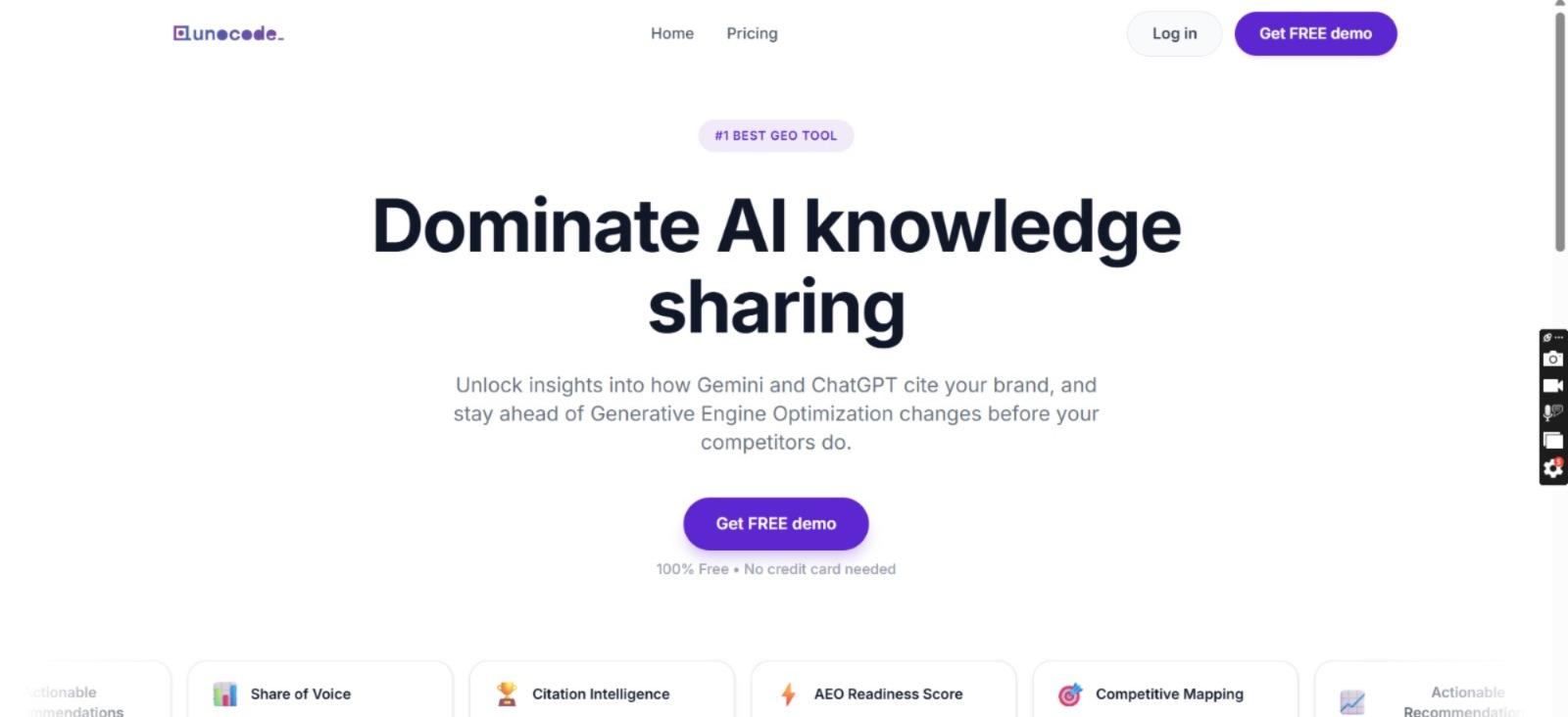
Lunocode focuses on GEO and AI visibility, helping businesses explore how their brands appear in AI-powered search experiences. By incorporating visibility insights into a wider reporting process, teams can make more informed decisions about content priorities and optimization efforts.
Explore the platform at https://lunocode.eu/ to learn more about Lunocode and its approach to AI visibility.
Conclusion
Measuring GEO ROI requires more than counting brand mentions or citations. Businesses need to connect AI search visibility with relevant engagement and commercial outcomes while recognizing the limitations of attribution.
Start with a consistent query set, track meaningful visibility indicators, connect available analytics data, and review results over time. With a structured measurement process, GEO becomes easier to evaluate, refine, and integrate into your broader digital marketing strategy.
As AI-powered discovery continues to evolve, businesses that measure their visibility carefully will be better prepared to understand what works and where further improvements are needed.

 English
 French
 Spanish
 Portuguese
 Deutsch
 Turkish
 Dutch
 Italiano
 Russian
 Romaian
 Portuguese (Brazil)
 Greek