
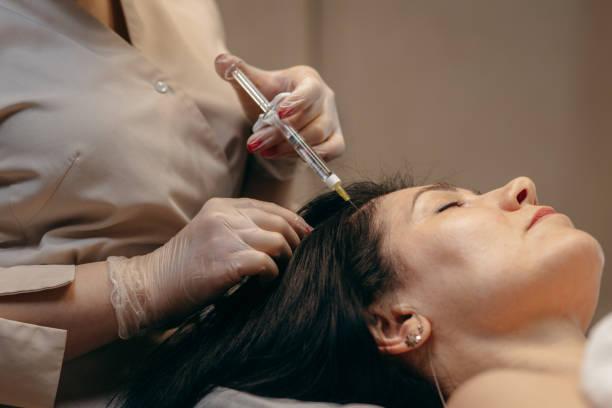
Acne scars can remain visible long after breakouts have healed, affecting skin texture and creating uneven areas across the cheeks, forehead, and other parts of the face. These changes may develop when inflammation damages the skin during an acne breakout, and their appearance varies depending on the depth and type of scarring. People exploring non-surgical skin-rejuvenation options may ask whether Magellan plasma injections in Riyadh (حقن بلازما ماجلان في الرياض) can help improve the appearance of acne scars and support smoother-looking skin.
Choosing the right treatment depends on the type of scar, the condition of the surrounding skin, and whether active acne is still present. Some scars appear as shallow depressions, while others are raised or associated with changes in pigmentation. Before considering Magellan plasma injections in Riyadh, it is important to understand what plasma-based treatments may offer, what the current evidence can and cannot establish, and when other acne-scar treatments may be more suitable.
What Are Magellan Plasma Injections?
Magellan plasma injections involve a plasma preparation derived from a patient's own blood. Depending on the system and protocol, the preparation may contain platelets and other blood components associated with the body's natural repair processes. A trained medical professional prepares and administers the material according to the treatment plan.
Platelets release signalling substances involved in tissue repair, which has led to interest in plasma-based procedures for selected aesthetic concerns. However, different plasma preparations are not interchangeable, and evidence for one platelet-based treatment does not automatically establish the effectiveness of a specific Magellan procedure for acne scars. Patients should ask which preparation is being used and what clinical evidence supports its proposed use.
Can Magellan Plasma Injections Improve Acne Scars?
Plasma-based treatments may be discussed as an option for selected skin-rejuvenation goals, but evidence for treating acne scars depends on the specific preparation and procedure. They should not be presented as a proven stand-alone solution for every scar type. The degree of improvement, if any, can vary according to scar depth, skin condition, treatment technique, and individual response.
For some patients, a clinician may consider a plasma-based procedure as part of a broader treatment plan. However, established acne-scar treatments, such as microneedling, certain laser procedures, subcision, or other dermatologist-directed approaches, may be more appropriate depending on the type of scarring. A consultation helps identify the most suitable options rather than relying on one treatment for every concern.
Understanding Different Types of Acne Scars
Atrophic or Depressed Scars
Atrophic scars form when the skin loses supporting tissue during the healing process. They may appear as narrow, deep indentations or broader depressions. These scars often require treatments selected according to their shape, depth, and attachment to underlying tissue. Plasma injections alone may not adequately correct deeper depressions.
Raised Acne Scars
Raised scars develop when excess scar tissue forms during healing. Some may extend beyond the original acne lesion. These scars require careful assessment because treatments designed for depressed scars may not be suitable for raised ones. A dermatologist can recommend an approach based on the scar's characteristics.
Post-Acne Marks and Uneven Pigmentation
Flat red, brown, or darker marks left after acne are not necessarily true scars. They may reflect lingering inflammation or changes in pigmentation. Their treatment differs from that of depressed or raised scars, and options may include sun protection, appropriate skincare, prescribed topical treatments, or selected dermatological procedures. Plasma injections should not be assumed to remove pigmentation.
How Does the Treatment Process Work?
Initial Skin Assessment
The first step is an examination by a qualified practitioner. The clinician should assess the scar type, skin tone, active acne, medical history, medications, and previous treatments. If you are considering Magellan plasma injections in Riyadh, ask whether the treatment is supported by evidence for your particular scar type and whether an alternative procedure may offer a more predictable result.
Preparation and Administration
If treatment is considered appropriate, a small blood sample may be collected and processed according to the system's protocol. The resulting preparation is then administered using a technique selected for the treatment area. The clinician should explain the procedure, expected benefits, limitations, and possible risks before obtaining your consent.
Recovery and Aftercare
Temporary redness, swelling, tenderness, or bruising may occur following injections. Aftercare depends on the procedure performed and may include guidance on cleansing, skincare, sun protection, and exercise. Follow your practitioner's instructions and seek medical advice if symptoms worsen or become unusual.
How Many Sessions Are Needed?
There is no universal session schedule for acne-scar treatment with Magellan plasma injections. The recommended plan depends on the preparation, the clinician's assessment, and the patient's response. Multiple sessions may be discussed, but patients should avoid providers who guarantee complete scar removal or promise a specific result for everyone.
Acne-scar improvement often takes time, and some scars may remain visible even after appropriate treatment. A realistic plan may involve more than one approach, particularly when a patient has several scar types. Treating active acne and preventing new breakouts are also important steps in reducing the risk of additional scarring.
Are Magellan Plasma Injections Suitable for Everyone?
Not every patient is a suitable candidate. Active acne, skin infections, certain medical conditions, medication use, and other health factors may affect treatment decisions. Using a preparation derived from the patient's own blood does not eliminate risks such as infection, bruising, swelling, or unsatisfactory results.
A qualified practitioner should explain the available alternatives and the level of evidence supporting the proposed treatment. Depending on the scar type, other procedures may be more appropriate, and a dermatologist can help develop a plan that reflects the patient's skin condition and goals.
Book an Appointment at Royal Clinic Saudia
If acne scars are affecting your skin's appearance, book a consultation at Royal Clinic Saudia (عيادات رويال كلينك) to discuss your concerns and available treatment options. A qualified professional can assess your scars, explain the limitations of different procedures, and determine whether Magellan plasma injections in Riyadh may have a role in your personalised treatment plan. An individual assessment helps establish realistic expectations and supports informed decisions about skin rejuvenation.
FAQs:
Can Magellan plasma injections completely remove acne scars?
Complete removal cannot be guaranteed. Results depend on the type and depth of scarring, and some scars may require other dermatological treatments.
Are Magellan plasma injections suitable for deep acne scars?
Deep or tethered scars often need specific treatment approaches. A dermatologist can assess whether plasma-based treatment is appropriate or whether another procedure may be more effective.
Can plasma injections treat acne marks and pigmentation?
Acne marks and true scars are different concerns. Plasma injections are not a proven solution for every type of pigmentation, so the cause of the marks should be assessed before treatment.
How long does acne-scar treatment take to show results?
The timeline varies according to the treatment selected, scar type, and individual response. Improvement may require multiple sessions or a combination of treatments, and results are not guaranteed.

 English
 Arabic
 French
 Spanish
 Portuguese
 Turkish
 Dutch
 Italiano
 Russian
 Romaian
 Portuguese (Brazil)
 Greek