
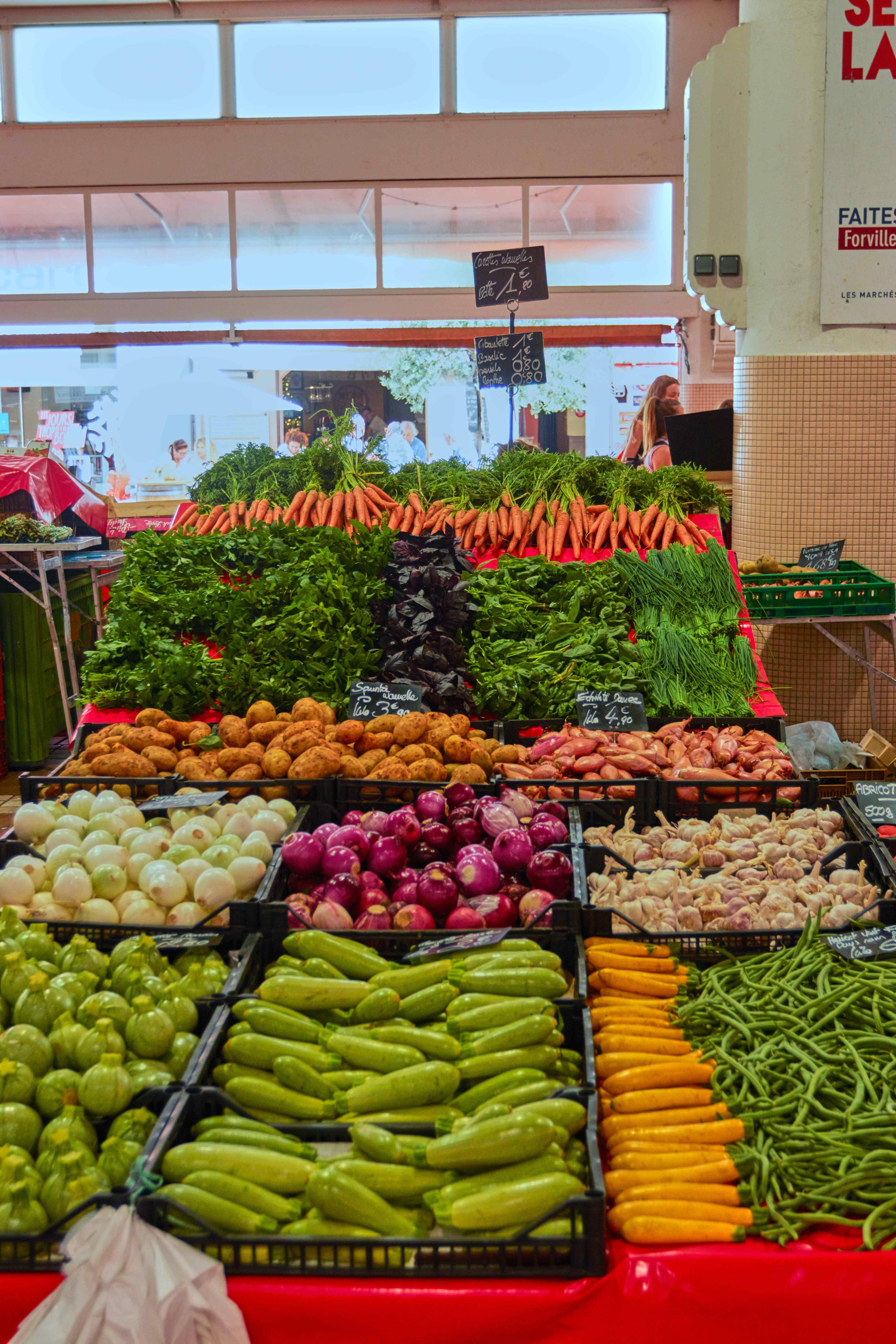
Fresh fruit and vegetables are essential ingredients for restaurants, hotels, cafés and catering businesses. From salad ingredients and seasonal vegetables to fresh fruit platters and event menus, hospitality kitchens depend on having the right produce available at the right time.
However, deciding how much fresh produce to purchase can be challenging. Customer numbers change throughout the week, menu preferences shift with the seasons, and catering events can create sudden increases in ingredient requirements. Ordering too much can lead to spoilage and unnecessary costs, while ordering too little can result in menu shortages and last-minute purchasing.
This is where restaurant fresh produce forecasting becomes important. By reviewing previous sales, expected customer numbers, menu requirements, seasonal availability and upcoming events, hospitality businesses can make more informed purchasing decisions.
This guide explains how restaurants and catering companies can forecast fresh produce demand, plan purchasing quantities and maintain a more efficient supply of fruit and vegetables.
1. What Is Fresh Produce Demand Forecasting?
Fresh produce demand forecasting is the process of estimating how much fruit and vegetables a hospitality business will need over a specific period.
Instead of ordering ingredients based only on guesswork or previous habits, businesses use available information to estimate future consumption.
For example, a restaurant may review its previous Friday dinner sales and discover that customers regularly order more salads and vegetable-based dishes at the weekend. The purchasing team can use this information to estimate how much lettuce, tomatoes, cucumbers and other ingredients will be needed for the next Friday service.
Forecasting considers several important factors:
-
Expected customer numbers
-
Previous sales and ingredient usage
-
Menu popularity and recipe requirements
-
Seasonal changes in customer demand
-
Weather and local trading conditions
-
Private functions and catering events
-
Current stock levels and supplier delivery schedules
The purpose is to connect purchasing quantities with realistic kitchen requirements.
2. Why Restaurants Need Accurate Fresh Produce Forecasting
Fresh produce has a limited usable life, which makes purchasing decisions particularly important. Restaurants cannot always keep excess vegetables and fruit in storage for extended periods.
A reliable forecasting process can help businesses manage several operational challenges.
Reduce unnecessary food waste
Ordering more produce than a kitchen can use increases the risk of spoilage. Forecasting helps businesses estimate realistic quantities and avoid holding excessive stock.
Prevent ingredient shortages
Running out of popular ingredients can affect menu availability and disrupt service. Demand planning helps kitchens prepare for expected customer requirements.
Improve purchasing cost control
When purchasing quantities reflect actual demand, businesses can make better use of their budgets and reduce unnecessary emergency orders.
Support consistent menu quality
Fresh ingredients are important for maintaining the taste, appearance and quality of dishes. Better purchasing plans help kitchens obtain produce when it is needed.
Improve supplier coordination
Forecasts give purchasing teams a clearer idea of upcoming requirements. This makes it easier to discuss order quantities, delivery frequency and product availability with suppliers.
3. Use Customer Numbers to Estimate Produce Requirements
Customer numbers are one of the most useful starting points for fresh produce forecasting.
A restaurant expecting 50 customers will generally require different quantities from one expecting 200 customers. However, guest numbers alone are not enough. Businesses must also consider what customers are likely to order.
For example, a hotel breakfast service may require substantial quantities of fruit, tomatoes, mushrooms and salad ingredients. A restaurant focused on grilled dishes may have different vegetable requirements.
Calculate expected covers
A cover represents one customer served. Restaurants can estimate future covers using:
-
Previous daily customer numbers
-
Reservations and booking records
-
Typical weekday and weekend traffic
-
Seasonal customer patterns
-
Holiday periods
-
Local events and promotions
Once expected covers have been estimated, the kitchen can use menu sales and recipe information to calculate ingredient requirements.
Example of produce demand
Imagine a restaurant expects 120 customers for an evening service. Based on previous sales, approximately 35% of customers are expected to order a dish containing a particular vegetable.
That means the kitchen expects around 42 orders containing that ingredient.
If each portion requires 100 grams of the vegetable, the estimated requirement is 4.2 kilograms before allowing for preparation loss or any additional menu use.
This type of calculation is more useful than ordering an arbitrary quantity based on experience alone.
4. Analyse Menu Demand and Ingredient Usage
Not every menu item sells in equal quantities. Some dishes may be consistently popular, while others sell only occasionally.
Restaurants should review menu performance to understand which ingredients are likely to be needed most frequently.
Identify popular dishes
Point-of-sale reports, kitchen records and sales summaries can help identify best-selling meals. Purchasing teams can use this information to estimate ingredient demand.
For example:
-
Popular salads may increase demand for lettuce, cucumbers and tomatoes.
-
Vegetable curries may require onions, peppers, spinach and seasonal vegetables.
-
Fruit desserts may increase demand for berries, apples and citrus fruits.
-
Breakfast dishes may require mushrooms, tomatoes and fresh herbs.
Connect recipes with purchasing quantities
Standard recipes help translate expected menu sales into ingredient requirements.
If a dish requires 150 grams of mixed vegetables and the restaurant expects to sell 40 portions, the forecasted requirement is 6 kilograms of mixed vegetables.
Repeat this calculation for the main ingredients across the menu, then combine quantities where the same ingredient appears in several dishes.
Review changes in menu popularity
Menu demand can change when prices, promotions, recipes or customer preferences change. Forecasts should be updated when restaurants introduce new dishes or remove existing ones.
A regular review helps prevent purchasing teams from continuing to order quantities based on outdated sales patterns.
5. Account for Seasonal Changes in Fruit and Vegetable Demand
Seasonality has an important influence on fresh produce purchasing. The availability, quality and price of certain fruits and vegetables can change throughout the year.
Restaurants should consider both seasonal supply and changing customer preferences when preparing purchasing forecasts.
Spring
Spring menus may feature ingredients such as asparagus, peas, spinach, radishes and fresh herbs. Restaurants can review previous spring sales to estimate likely requirements.
Summer
Warmer weather can increase demand for salads, berries, melons, cucumbers and refreshing fruit dishes. Outdoor dining and seasonal events may also influence customer numbers.
Autumn
Autumn menus often include pumpkins, squash, apples, pears and root vegetables. Restaurants may adjust their purchasing plans as menus move towards warmer and more substantial dishes.
Winter
Winter menus may place greater emphasis on potatoes, carrots, cabbage, onions, leeks and other vegetables suitable for soups, stews and roasted dishes.
These are general seasonal examples rather than fixed availability rules. Actual supply depends on growing conditions, sourcing locations and the time of year.
Restaurants should communicate with suppliers about current availability and suitable alternatives before finalising seasonal menus.
6. Include Catering Events and Large Orders in Forecasts
Catering businesses face different forecasting challenges from restaurants serving regular daily customers. A single event can create a significant increase in fresh produce requirements.
Weddings, corporate functions, conferences, private parties and outdoor events may involve hundreds of guests and multiple menu options.
Purchasing teams should not rely only on average daily sales when planning these orders.
Start with confirmed guest numbers
Use the latest confirmed guest count to estimate the number of portions required. Where numbers are still changing, maintain a separate estimate for possible increases rather than treating unconfirmed guests as guaranteed orders.
Review the event menu
Different catering menus require different ingredients. A buffet with several salads and vegetable side dishes may require a broader range of produce than a limited plated menu.
Review every recipe and calculate the quantities needed for the expected portions.
Consider preparation and delivery schedules
Fresh produce should arrive at a time that supports preparation and service without creating unnecessary storage pressure.
The purchasing team should consider:
-
Event date and service time
-
Ingredient preparation requirements
-
Supplier order deadlines
-
Delivery availability
-
Available refrigeration and storage
-
Product shelf life
-
Possible guest number changes
For large functions, it may be useful to prepare a separate purchasing forecast for each event rather than combining all requirements into the normal daily order.
7. Use Current Stock Levels Before Placing New Orders
Forecasting future demand is only one part of purchasing. Businesses must also check how much usable stock they already have.
Ordering the full forecasted quantity without considering existing inventory can result in unnecessary overstocking.
A practical purchasing calculation is:
Required purchase quantity = Forecasted ingredient requirement − Usable stock − Confirmed incoming stock
For example, a restaurant forecasts that it will need 20 kilograms of tomatoes for the next service period. It already has 5 kilograms of suitable stock and has another 3 kilograms confirmed for delivery.
The remaining purchase requirement is 12 kilograms.
The final order should also consider supplier pack sizes, preparation losses, delivery lead times and any justified reserve quantity.
When reviewing purchasing requirements, businesses can also work with suppliers that understand the needs of professional kitchens. ES Connect's fresh fruit and vegetable wholesale sourcing for hospitality businesses is relevant to restaurants, hotels, cafés and catering operators looking to organise their produce purchasing.
8. Consider Supplier Lead Times and Delivery Frequency
A forecast is only useful when it connects with the supplier's ability to deliver the required ingredients.
Some fresh produce may be available at short notice, while other products require advance planning. Businesses should understand supplier order deadlines, delivery days and minimum order quantities.
Match delivery frequency with ingredient shelf life
Delicate leafy vegetables, berries and prepared salad products may require more frequent deliveries than certain longer-lasting vegetables.
Restaurants should balance delivery frequency against transport costs, minimum order requirements and available storage capacity.
Communicate expected demand changes
If a restaurant expects a busy weekend, private function or seasonal menu launch, it should communicate the anticipated requirements to its suppliers as early as practical.
Good communication gives suppliers more opportunity to plan availability and helps reduce the risk of last-minute shortages.
Identify suitable alternatives
Supply conditions can change. A forecasting plan should allow for suitable ingredient substitutions when a particular product becomes unavailable.
Any substitution should be checked against the recipe, quality requirements, customer expectations and relevant dietary information.
9. Use Historical Data to Improve Forecast Accuracy
Past purchasing and sales records provide valuable information for future planning.
Restaurants should compare similar trading periods rather than relying on one overall monthly average. A Saturday evening service may have very different requirements from a Monday lunch.
Useful records include:
-
Daily and weekly customer numbers
-
Sales by menu item
-
Ingredient usage
-
Previous purchase quantities
-
Stock remaining after service
-
Spoilage and preparation waste
-
Supplier delivery performance
-
Seasonal menu changes
-
Catering and event orders
For example, if a restaurant regularly uses more fresh vegetables during weekend services, its purchasing forecast should reflect that pattern.
It is also important to recognise unusual trading conditions. A one-off event, temporary closure or stock shortage may make historical figures less representative of normal demand.
Forecasts should be reviewed regularly and adjusted as the business gathers more information.
10. Manage Uncertainty with Different Demand Scenarios
Customer demand cannot always be predicted precisely. Reservations may change, weather can affect footfall and catering guest numbers may increase or decrease.
Rather than relying on a single estimate, businesses can prepare three simple scenarios.
Base forecast: The most realistic estimate using normal sales patterns and currently known orders.
High-demand forecast: A higher estimate for busy periods, confirmed events, promotions or stronger-than-usual customer activity.
Low-demand forecast: A lower estimate for quieter trading periods, cancellations or reduced reservations.
This approach helps purchasing teams understand the possible range of requirements.
For highly perishable ingredients, additional purchasing should be considered carefully. A large reserve quantity may create more waste than protection. Longer-lasting products may allow a different level of purchasing flexibility.
11. Monitor Forecasts Against Actual Produce Usage
Forecasting should be an ongoing process rather than a one-time calculation.
After each trading period, managers should compare estimated requirements with actual usage and identify where the forecast was inaccurate.
For example:
-
Was more produce used than expected?
-
Were some ingredients left unused?
-
Did a particular menu item sell better than predicted?
-
Were there unexpected customer numbers?
-
Did supplier availability affect the order?
-
Was produce lost during preparation or storage?
These checks help businesses understand whether problems came from inaccurate demand estimates, excessive preparation, poor stock control or unexpected changes in trading conditions.
A simple weekly review can gradually improve purchasing accuracy and reduce avoidable waste.
12. How Better Procurement Supports Fresh Produce Planning
Accurate forecasting works best when purchasing teams and suppliers communicate effectively.
Restaurants and catering businesses need access to suitable produce, reliable delivery arrangements and purchasing quantities that reflect their operating requirements.
A procurement partner can help businesses review supplier options, organise purchasing requirements and coordinate fresh produce sourcing.
ES Connect supports hospitality procurement across the UK, helping foodservice businesses manage supplier sourcing and purchasing arrangements. Its fresh produce procurement and wholesale sourcing services for hospitality businesses are relevant to operators looking to improve how they source fruit and vegetables.
When purchasing plans are supported by clear demand forecasts, businesses can make more informed decisions about order quantities, delivery frequency and ingredient availability.
13. A Practical Fresh Produce Forecasting Routine
Restaurants do not necessarily need complex forecasting software to begin improving purchasing decisions. A spreadsheet supported by accurate sales and stock records can provide a useful starting point.
A simple weekly routine could include:
-
Review customer numbers and sales from comparable days.
-
Check reservations and upcoming catering commitments.
-
Identify popular menu items and their ingredient requirements.
-
Review seasonal produce availability.
-
Count existing usable stock.
-
Check supplier delivery schedules and order deadlines.
-
Calculate the quantities required for the next period.
-
Place orders according to forecasted demand.
-
Record actual ingredient usage and waste.
-
Compare results and improve the next forecast.
Larger businesses may benefit from inventory or purchasing systems that connect sales information with recipes, stock levels and supplier orders. However, the quality of the information entered remains important.
Conclusion
Restaurant fresh produce forecasting helps hospitality businesses make better purchasing decisions by connecting expected customer demand with menu requirements, seasonal changes, catering orders and available stock.
By reviewing historical sales, estimating guest numbers, calculating recipe quantities and communicating with suppliers, restaurants and catering companies can plan their fresh produce requirements more effectively.
A consistent forecasting routine can help reduce unnecessary food waste, avoid ingredient shortages, improve purchasing control and maintain the quality of dishes served to customers.
For hospitality businesses working with fresh fruit and vegetables every day, better demand planning is an important step towards a more organised and efficient procurement process.

 English
 French
 Spanish
 Portuguese
 Deutsch
 Turkish
 Dutch
 Italiano
 Russian
 Romaian
 Portuguese (Brazil)
 Greek