
How Intelligent Robots Are Transforming the Physical World
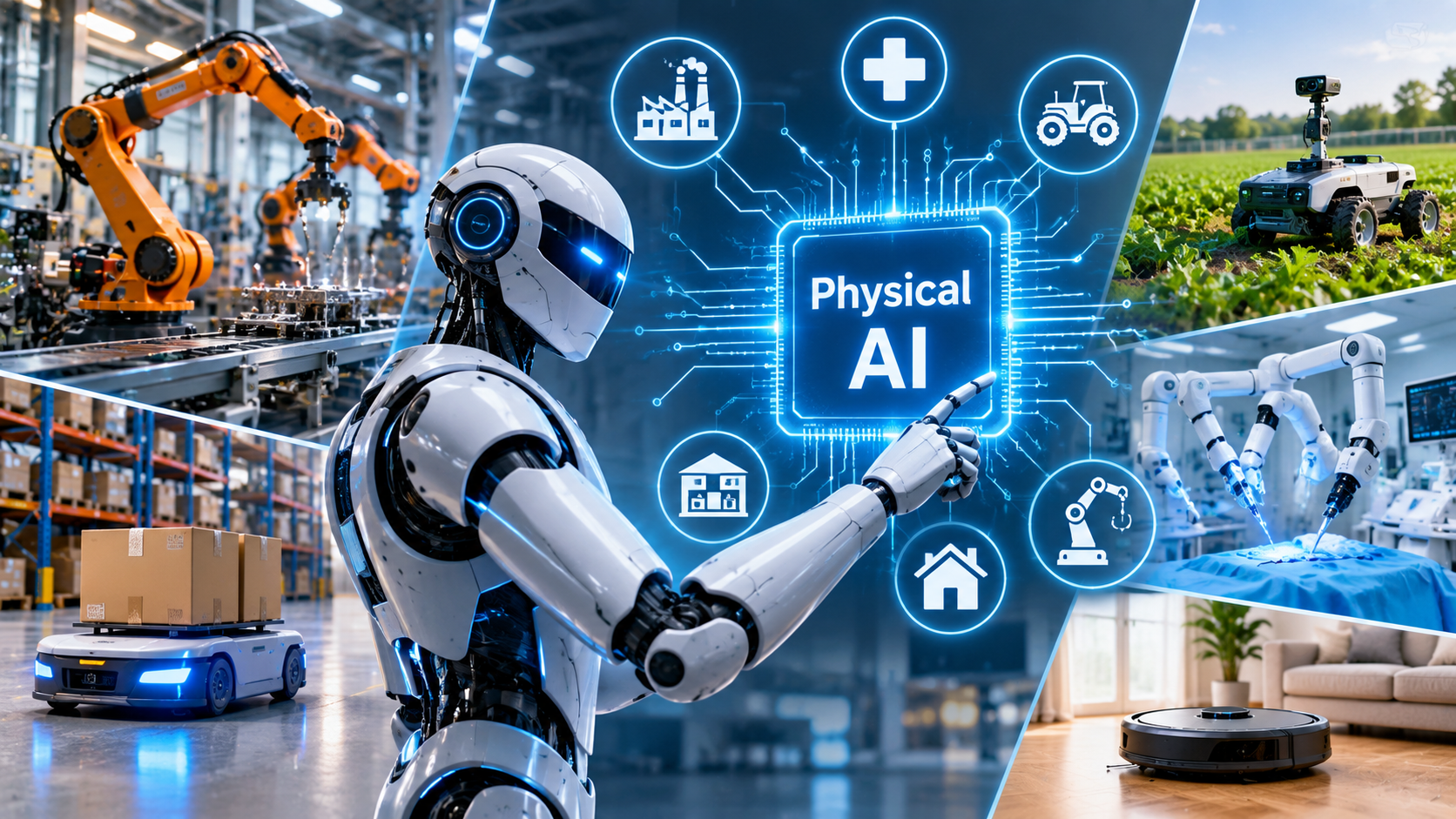
Artificial intelligence is moving beyond computer screens and entering factories, warehouses, hospitals, farms, and homes. Intelligent robots can now combine advanced software with cameras, sensors, and mechanical systems to interact with their surroundings. This growing field, known as Physical AI, is changing how machines understand their environments, make decisions, and perform real-world tasks.
Understanding the Technology Behind Intelligent Machines
Traditional robots usually follow predefined instructions to complete repetitive tasks. In contrast, Physical AI enables machines to interpret their surroundings, respond to changing conditions, and select appropriate actions based on available information.
These systems combine machine learning, computer vision, sensors, and robotics to connect digital intelligence with physical movement. For example, a warehouse robot can detect an unexpected obstacle and adjust its route instead of following a fixed path.
Businesses exploring this technology can learn more about Physical AI and the rise of intelligent robots in the real world, including how these systems are expanding beyond traditional automation.
Real-World Applications Across Different Industries
Intelligent robots are becoming useful in industries where accuracy, efficiency, and repetitive physical work are important. In manufacturing, AI-powered robotic arms can inspect products, handle components, and assist with assembly processes. Their ability to respond to variations can help improve productivity and reduce certain operational errors.
Warehouses also benefit from autonomous mobile robots that transport goods, navigate busy spaces, and support inventory operations. In agriculture, intelligent machines can monitor crops, identify weeds, and assist with precision spraying.
Healthcare offers another promising application. Robots can support medical professionals with logistics, rehabilitation, and certain surgical procedures under appropriate supervision. Meanwhile, domestic robots are becoming more capable of navigating homes and performing selected cleaning and assistance tasks.
How Robots Learn to Interact With Their Environment
Physical AI relies on a continuous cycle of perception, decision-making, and action. Cameras and other sensors collect information about nearby objects, movement, distance, and environmental conditions. AI models process this information to determine an appropriate response, while motors and mechanical components carry out the selected action.
Training often involves demonstrations, simulated environments, and real-world feedback. Simulation allows developers to test robot behavior in virtual settings before deploying systems in physical locations.
However, real-world environments remain challenging. Unexpected obstacles, unfamiliar objects, changing lighting, and differences between simulated and actual conditions can affect performance. Reliable systems therefore require extensive testing and appropriate safety mechanisms.
Benefits and Challenges of Physical AI
One major advantage of Physical AI is its potential to improve efficiency by handling repetitive, physically demanding, or hazardous tasks. Intelligent robots can also support consistent operations, help organizations use resources effectively, and assist workers with complex activities.
However, adoption comes with challenges. Hardware, training, maintenance, and integration can be expensive. Robots must also operate safely around people, protect sensitive data, and respond appropriately when something goes wrong.
Companies should evaluate specific business needs, establish clear safety procedures, and introduce automation gradually rather than assuming every task requires a robotic solution.
As intelligent machines continue to develop, Physical AI is helping bring advanced artificial intelligence into everyday physical environments, opening new possibilities for manufacturing, transportation, healthcare, agriculture, and domestic assistance.

 Arabic
 French
 Spanish
 Portuguese
 Deutsch
 Turkish
 Dutch
 Italiano
 Russian
 Romaian
 Portuguese (Brazil)
 Greek