
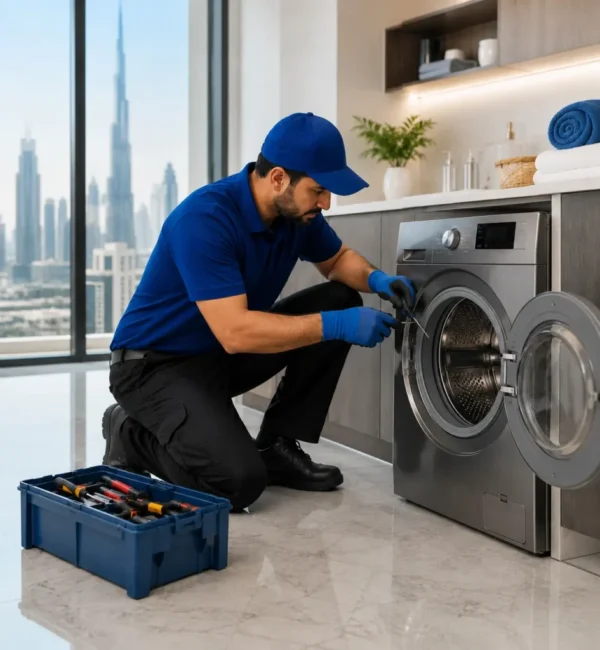
Your washing machine suddenly stops, flashes an error code, or refuses to start another cycle. You may see letters and numbers on the display without knowing what they mean or how to fix the problem. These messages often appear when the appliance detects an issue with water supply, drainage, door locking, load balance, or an internal component. Ignoring the warning or repeatedly restarting the machine may make the problem harder to diagnose.
Understanding washing machine error codes helps you identify the type of fault and decide what to check next. Some errors point to simple issues, such as a closed water tap or an overloaded drum. Others indicate sensor, motor, heating, or control board problems that need technical testing. Always check your model's manual because the same code can mean different things across brands.
What Does an Error Code Actually Mean?
An error code is a warning generated by the washing machine's control system when it detects an abnormal condition. The display helps narrow down the affected function, but it does not always identify the exact damaged part. Use the code as a starting point for troubleshooting rather than treating it as a confirmed diagnosis.
Water Supply Errors
A water supply warning may appear when the machine cannot fill within the expected time. Check whether the tap is open, the inlet hose is bent, or the water pressure is unusually low.
Drainage Errors
A drainage code can indicate that water is not leaving the drum properly. A clogged filter, blocked hose, trapped object, or faulty drain pump may cause this warning.
Door Lock Errors
If the door does not lock correctly, the machine may refuse to start or continue the cycle. Check for trapped clothing around the seal and make sure the door closes properly.
Common Error Messages and What to Check
Different manufacturers use different code formats, so always confirm the meaning in your appliance manual. The following examples show common fault categories and some brand-specific codes. They are useful starting points, not universal definitions.
Water Inlet and Filling Warnings
Codes related to water intake may appear when the washer cannot fill correctly. Check the water supply, inlet hose, and filter screen if your manual allows access. If the water supply works normally but the warning remains, the inlet valve or sensor may need testing.
Drainage and Water-Level Warnings
A drainage warning usually means the machine cannot remove water as expected. Check the drain filter and hose for visible blockages. If the drum remains full after these checks, the pump or water-level system may need inspection.
Door and Lock Warnings
A door-lock code means the washer cannot confirm that the door has closed and locked correctly. Remove any trapped clothing, close the door firmly, and check for visible damage around the latch. Do not force the door open while water remains inside.
LG and Samsung Washer Errors: Why the Code Matters
LG and Samsung washer errors can look similar, but their meanings depend on the model and display format. For example, LG uses codes such as IE for water inlet issues, OE for drainage problems, and UE for load imbalance on many models. Samsung commonly uses 4C or 4E for water supply issues, 5C or 5E for drainage problems, and Ub or UE for an unbalanced load. Always confirm the code against your model's manual.
LG IE and OE Codes
An LG IE code commonly points to a water inlet problem, while OE generally indicates a drainage issue. Check the water tap and inlet hose for IE, or inspect the drain filter and hose for OE.
Samsung 4C and 5C Codes
Samsung 4C usually relates to water supply, while 5C indicates a drainage issue on many models. Check the water connection for 4C and the drainage path for 5C before arranging a repair.
UE and Ub Load Balance Codes
These codes can appear when clothes collect unevenly inside the drum. Pause the cycle, redistribute the laundry, and remove some items if the load is too heavy. If the warning returns with balanced loads, the suspension or balance detection system may need inspection.
Understand Front-Load Washer Fault Codes
Front-load washer fault codes often relate to the door lock, water level, drainage, motor, or temperature sensor. The display may show a short code when the control system detects that a function is not working as expected. Check the manual for your exact model before trying to clear the warning.
Door Lock and Door Sensor Faults
A door-related code may appear when the washer cannot confirm that the door has locked. Check for clothes caught between the door and gasket, then close the door properly. If the warning remains, the latch or door-lock mechanism may need testing.
Water-Level Sensor Warnings
The water-level sensor monitors the amount of water inside the drum. If it sends incorrect readings, the washer may fill too much, stop filling, or interrupt the cycle. Sensor and wiring checks usually require a technician.
Motor and Temperature Errors
Motor-related warnings may appear when the drum cannot rotate as expected. Temperature codes can indicate a problem with the heating system or temperature sensor. Stop the cycle if the warning returns and arrange a technical inspection rather than repeatedly restarting the appliance.
What You Can Check Before Calling a Technician
Some error messages appear because of simple operating conditions rather than damaged components. A few basic checks can help you resolve minor issues, but always follow the safety instructions in your washing machine manual.
Check the Water Supply
If the display indicates a filling problem, confirm that the water tap is fully open and the inlet hose is not bent. Check for visible leaks around the connection. Turn off the water supply before inspecting or disconnecting any hose.
Inspect the Drain Filter
For a drainage warning, check whether the drain filter needs cleaning. Switch off and unplug the appliance first, and prepare towels or a shallow container because water may spill out. Follow the manufacturer's instructions for opening and cleaning the filter.
Redistribute the Laundry
If the display shows an imbalance warning, pause the cycle and spread the clothes evenly around the drum. Remove some items if the load is too heavy. Check that the machine stands level on a firm surface before restarting.
Restart Only When It Is Safe
Some temporary electronic errors may clear after switching the appliance off and restarting it according to the manual. However, do not reset the washer repeatedly if the same code returns, water is overflowing, or you notice burning smells, unusual noises, or electrical problems.
When an Error Code Points to a Component Failure
An error message can identify the function affected without confirming which part has failed. For example, a drainage warning may result from a blocked filter, a restricted hose, or a faulty pump. Replacing a component based only on the displayed code can lead to unnecessary expense.
Faulty Water Inlet Valve
If the water supply is available and the inlet hose is clear but the machine still cannot fill, the inlet valve may not be opening correctly. A technician can test the valve and its electrical connection.
Drain Pump or Blockage
A washer that cannot empty the drum may have a clogged filter, blocked hose, trapped object, or damaged pump. The technician should inspect the complete drainage path before recommending a pump replacement.
Sensor and Control Board Problems
A sensor may send incorrect information to the control board, or the board may fail to process a signal properly. These faults need suitable testing because the same display warning can have more than one possible cause.
Why the Same Error Code Keeps Returning
Clearing an error message does not always mean the washing machine has returned to normal. If the underlying problem remains, the warning may appear again during the next cycle. Pay attention to when it returns because this can help identify the affected function.
The Problem Appears During Every Wash
If the same code appears during every cycle, a persistent blockage, damaged component, or electrical fault may be responsible. Record the code and the stage at which the machine stops.
The Code Disappears, but the Washer Still Acts Unusually
Sometimes the display returns to normal while the machine continues to fill slowly, drain poorly, or make unusual sounds. Do not ignore these symptoms just because the warning has disappeared.
Several Different Codes Appear
Multiple warnings may indicate an underlying electrical, communication, or control problem. Note each code and avoid attempting repairs based on guesses. A technician can test the relevant connections and components.
When to Book Washing Machine Error Code Repair in Dubai
If an error code continues to appear after the recommended basic checks, arrange a professional inspection. This is particularly important when the washer stops mid-cycle, overfills, refuses to drain, fails to lock its door, or produces unusual sounds. Water and electrical faults should not be handled by opening internal panels yourself.
Dubai Fixes provides washing machine error code repair in Dubai to help identify faults affecting different washing machine functions. Share the displayed code, brand, model number, and symptoms with the repair team. A technician can inspect the relevant components, explain the problem, and recommend a suitable repair instead of replacing parts without confirming the cause.
Conclusion:
Washing machine error messages help you understand when the appliance has detected a problem with filling, drainage, spinning, door locking, or another function. Some warnings need only a simple check, while others indicate a fault that requires technical testing. Always confirm the code using your model's manual because manufacturers can use different codes for similar problems.
If washing machine error codes keep appearing, avoid repeatedly restarting the appliance or guessing which component needs replacement. Contact Dubai Fixes for an inspection when basic troubleshooting does not resolve the issue. A correct diagnosis can help restore normal operation and prevent a minor fault from developing into a more serious repair.
Frequently Asked Questions
1. What are the most common washing machine error codes?
Common codes relate to water supply, drainage, door locking, load imbalance, and motor operation. Examples include IE and OE on many LG models and 4C and 5C on many Samsung models. Always check your model's manual.
2. What does washer E code meaning depend on?
The washer E code meaning depends on the manufacturer and specific model. An E code on one washing machine may indicate a water supply issue, while another model may use it for a different fault. Check the manufacturer's code list.
3. Can I reset my washing machine to remove an error code?
Some temporary errors may clear after a restart, following the manufacturer's instructions. However, if the same code returns, the underlying issue still needs attention. Do not repeatedly reset a machine showing signs of leakage, overheating, or electrical trouble.
4. Are LG and Samsung washer errors the same?
No. LG and Samsung use different error-code systems, and meanings can also vary between models. Always refer to the correct brand and model manual before following troubleshooting instructions.
5. Should I continue using my washing machine when an error code appears?
It depends on the warning. You may be able to correct a simple load imbalance, but stop using the appliance if it leaks, overfills, smells burnt, or makes unusual mechanical noises. Arrange an inspection if the fault persists.

 Arabic
 French
 Spanish
 Portuguese
 Deutsch
 Turkish
 Dutch
 Italiano
 Russian
 Romaian
 Portuguese (Brazil)
 Greek