
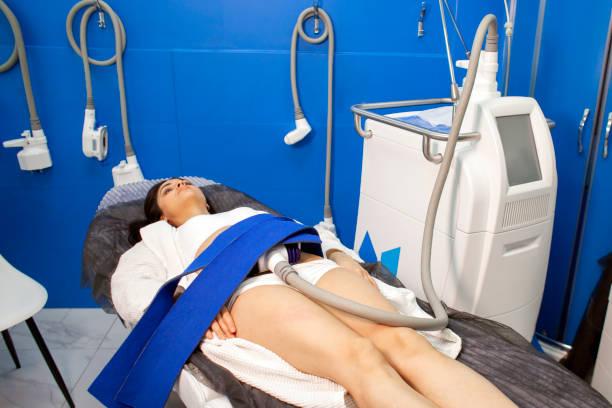
The medical concept behind fat freezing originated from clinical observations of cold-induced panniculitis—a phenomenon in which prolonged exposure to cold temperatures causes localized inflammation and selective reduction of subcutaneous fat without damaging the overlying skin. Harvard dermatologists Dr. Dieter Manstein and Dr. R. Rox Anderson translated this biological discovery into cryolipolysis, the foundational mechanism powering CoolSculpting fat freezing in Dubai.
By applying precise thermal control, cryolipolysis exploits a fundamental physical difference between lipid-rich fat cells and water-rich surrounding tissues.
Why Fat Cells Freeze Before Skin or Muscle
Different tissues in the human body have distinct freezing thresholds based on their composition:
-
Adipocytes (Fat Cells): Filled primarily with triglycerides and lipids, fat cells crystallize at warmer temperatures than water-based cells.
-
Epidermis, Dermis, Nerves, and Muscle: Composed largely of water, these tissues remain unfrozen and structurally unharmed at the calibrated temperatures used during treatment.
This thermal selectivity—often referred to as selective cryolysis—allows practitioners to target subcutaneous adipose tissue safely through intact skin.
The Four Biological Phases of Cryolipolysis
Once controlled cooling begins, a predictable cellular cascade unfolds over the following months:
-
Lipid Crystallization (During Treatment): Sustained cooling extracts heat from the targeted fat layer, causing intracellular lipids to solidify into needle-like crystals without rupturing the cell membrane immediately.
-
Apoptosis Induction (Days 1 to 3): Thermal stress signals the crystallized adipocytes to initiate apoptosis—a controlled, non-necrotic form of programmed cell death that avoids widespread tissue trauma.
-
Inflammatory Clearance (Weeks 2 to 4): The body's immune system recognizes the apoptotic fat cells as cellular waste. Macrophages and other phagocytic cells migrate to the treated zone to engulf and break down the lipid remnants.
-
Volume Reduction (Weeks 4 to 12+): As macrophages gradually clear the digested fat cells through the lymphatic system, the subcutaneous fat layer thins and compacts, producing measurable contour improvements.
Clinical Efficacy and Safety Parameters
Peer-reviewed clinical studies and FDA clearance data demonstrate consistent biological predictability when proper protocols are followed:
-
Fat Layer Reduction: Ultrasound and caliper measurements consistently show an average 10% to 25% reduction in subcutaneous fat thickness per treatment cycle.
-
Nerve and Skin Preservation: Histological biopsies confirm that while temporary sensory numbness can occur for several weeks due to transient cold sensitivity in superficial nerve fibers, permanent neural damage or pigmentary scarring does not occur under standard operating parameters.
-
Known Rare Risks: In rare cases (reported at under 1% of treatments), cold exposure can paradoxically stimulate adipocyte hypertrophy rather than apoptosis—a condition known as Paradoxical Adipose Hyperplasia (PAH) that requires surgical liposuction to resolve.
Frequently Asked Questions
Does cryolipolysis damage blood vessels or muscles beneath the fat?
No. Blood flow, high water content, and built-in temperature sensors in the applicators protect deeper muscles and vascular networks from thermal injury.
Why do results take up to three months to fully appear?
Because cryolipolysis relies on natural apoptosis and macrophage digestion rather than mechanical suction, your immune and lymphatic systems require several weeks to clear the crystallized cells.
Is cryolipolysis effective on all body types?
Cryolipolysis works best on localized, pinchable subcutaneous fat in patients with good skin elasticity and a BMI under 30. It does not penetrate beneath the abdominal muscle wall to reduce visceral fat.
Evidence-Based Body Sculpting at Tajmeels Clinic
Understanding the cellular science behind cryolipolysis clarifies why proper patient screening and calibrated applicator selection matter. At Tajmeels Clinic in Dubai, every treatment plan is grounded in clinical anatomy to ensure safe, predictable fat reduction.

 English
 French
 Spanish
 Portuguese
 Deutsch
 Turkish
 Dutch
 Italiano
 Russian
 Romaian
 Portuguese (Brazil)
 Greek