
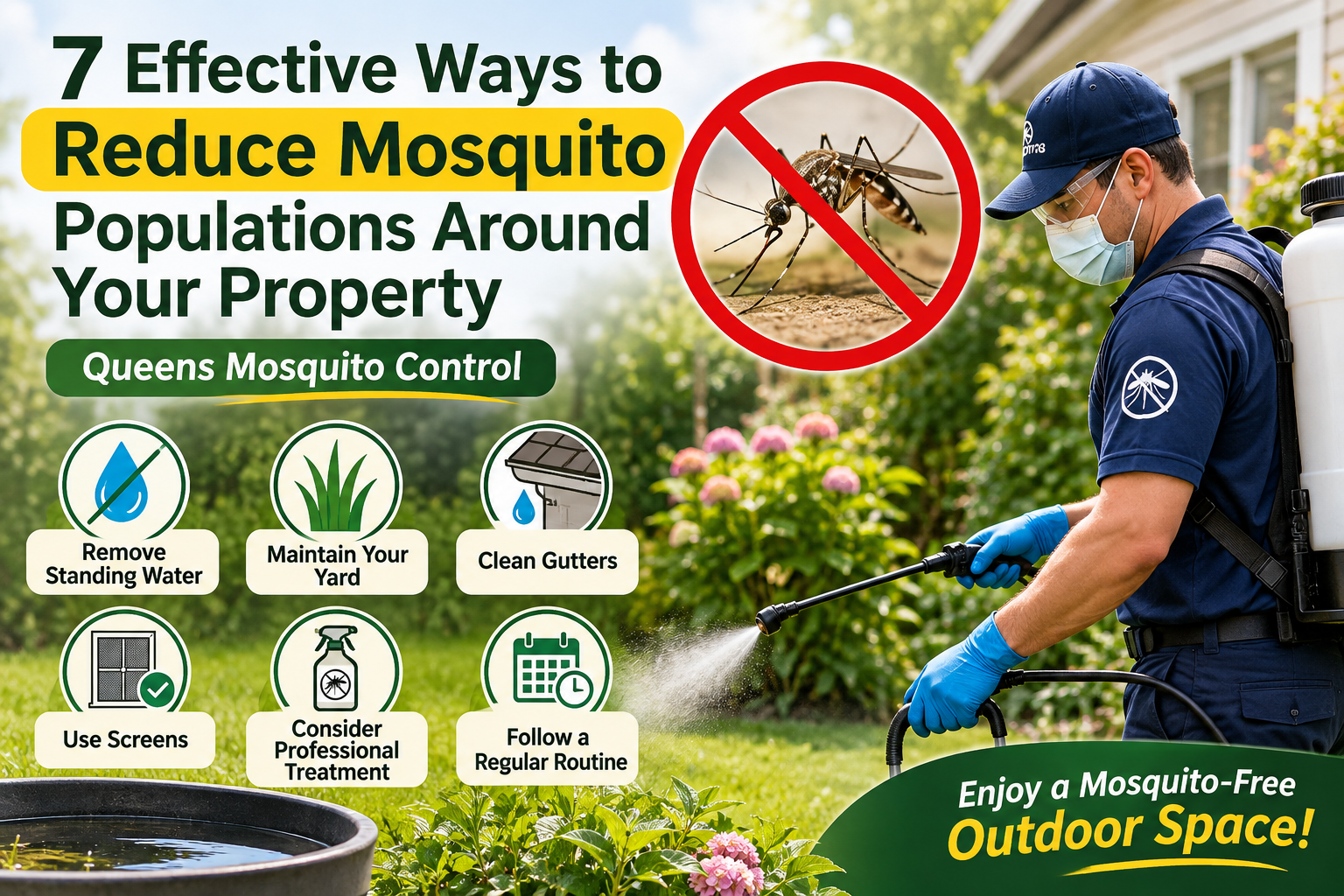
Mosquitoes can quickly turn a comfortable outdoor space into an unpleasant environment. From residential backyards to commercial properties, mosquito activity can affect outdoor comfort and increase exposure to mosquito-borne illnesses. Effective Queens mosquito control starts with understanding where mosquitoes breed, what attracts them, and how property owners can reduce their populations through consistent prevention and professional treatment.
Mosquitoes commonly develop in stagnant water found in containers, clogged gutters, unused pools, and poorly maintained outdoor spaces. Even small amounts of collected rainwater can create suitable breeding conditions. By combining regular property maintenance, practical prevention methods, and targeted pest management, homeowners and businesses can make their surroundings less attractive to mosquitoes.
Table of Contents
-
Understand Where Mosquitoes Breed
-
Eliminate Standing Water Around Your Property
-
Maintain Your Yard and Outdoor Spaces
-
Improve Drainage and Manage Moisture
-
Protect Your Home with Screens and Barriers
-
Use Professional Mosquito Control Services
-
Follow a Consistent Mosquito Prevention Routine
-
Frequently Asked Questions
1. Understand Where Mosquitoes Breed
Understanding mosquito breeding habits is the first step toward effective mosquito population reduction. Female mosquitoes lay eggs in or near water, depending on the species. When suitable conditions are available, mosquito larvae develop in water before emerging as adults.
Common mosquito breeding locations include:
-
Unused buckets and plastic containers
-
Old tires and discarded household items
-
Clogged rain gutters
-
Birdbaths and outdoor water features
-
Uncovered swimming pools
-
Plant saucers and flowerpots
-
Poorly drained areas and water-filled depressions
Property owners should inspect these locations regularly, especially after rainfall. Identifying breeding areas early makes mosquito prevention more manageable and reduces the chances of a growing infestation.
2. Eliminate Standing Water Around Your Property
Removing standing water is one of the most effective ways to reduce mosquito breeding opportunities. Mosquitoes do not require large ponds or lakes to reproduce. Small containers holding rainwater can also support mosquito development.
Consider these practical steps:
-
Empty buckets, cans, and other containers after rainfall.
-
Turn over unused outdoor equipment that collects water.
-
Clean birdbaths and replace their water regularly.
-
Remove water from plant saucers.
-
Keep swimming pools properly maintained.
-
Clear debris from drainage areas and gutters.
For water that cannot reasonably be drained, an appropriate larvicide containing Bti may help control mosquito larvae when used according to its label instructions.
Regular water removal is particularly important during warmer months when mosquito populations can increase quickly.
3. Maintain Your Yard and Outdoor Spaces
Mosquitoes often rest in shaded, humid areas during the day. Overgrown vegetation, dense shrubs, tall grass, and accumulated debris can provide suitable resting places.
Maintaining a clean outdoor environment can help make your property less attractive to mosquitoes.
Useful maintenance practices include:
-
Trim overgrown bushes and shrubs.
-
Cut grass regularly.
-
Remove piles of leaves and unwanted debris.
-
Keep outdoor storage areas organized.
-
Avoid excessive watering of lawns and gardens.
-
Maintain adequate space between dense vegetation and frequently used outdoor areas.
These measures support broader outdoor mosquito control efforts. Although landscaping alone cannot eliminate mosquitoes, it can reduce suitable resting areas and improve the effectiveness of other prevention methods.
4. Improve Drainage and Manage Moisture
Poor drainage is another factor that can contribute to mosquito problems. Water collecting around foundations, patios, driveways, and garden areas may create breeding opportunities.
To improve drainage around your property:
-
Inspect outdoor areas after heavy rainfall.
-
Identify low spots where water repeatedly collects.
-
Clean blocked drains and gutters.
-
Check that downspouts direct water away from the building.
-
Repair drainage problems that cause persistent pooling.
-
Remove unnecessary containers that collect rainwater.
Commercial properties should pay particular attention to parking areas, loading zones, landscaped sections, and outdoor equipment spaces.
Addressing drainage issues helps prevent recurring mosquito breeding conditions instead of simply responding to adult mosquito activity.
5. Protect Your Home with Screens and Barriers
Even when outdoor mosquito activity is controlled, mosquitoes can enter buildings through open doors, damaged window screens, and uncovered ventilation openings.
Physical barriers provide an additional layer of protection.
Homeowners should:
-
Install properly fitted window screens.
-
Repair holes and tears in existing screens.
-
Use door sweeps where gaps are present.
-
Keep doors closed when they are not in use.
-
Check window-mounted air conditioners for openings.
-
Consider mosquito netting for outdoor seating areas.
For patios and outdoor entertainment spaces, suitable screening systems can help reduce mosquito exposure while allowing people to enjoy fresh air.
These preventive measures are especially useful when combined with regular yard maintenance and breeding-site removal.
6. Use Professional Mosquito Control Services
Sometimes, routine cleaning and water removal are not enough to address persistent mosquito activity. Nearby breeding habitats, difficult-to-access areas, and recurring infestations may require professional attention.
Professional mosquito control services can help property owners identify problem areas and develop an appropriate treatment strategy.
A professional assessment may include:
-
Inspecting potential mosquito breeding locations.
-
Identifying areas where adult mosquitoes rest.
-
Evaluating drainage and moisture problems.
-
Recommending suitable treatment methods.
-
Applying targeted products where necessary.
-
Providing guidance on ongoing prevention.
For homeowners and businesses seeking additional support, professional mosquito control services can be considered as part of a broader pest management plan.
Treatment selection should depend on the property, mosquito species, infestation conditions, and environmental considerations. Any pesticide application should follow product-label directions and applicable regulations.
7. Follow a Consistent Mosquito Prevention Routine
Mosquito prevention works best when property maintenance becomes a regular habit rather than a one-time activity.
A simple inspection routine can help homeowners identify problems before mosquito populations increase.
| Frequency | Recommended Activity |
|---|---|
| Weekly | Empty containers and inspect standing water |
| Weekly | Check birdbaths and outdoor water features |
| Every 2 weeks | Trim vegetation and remove yard debris |
| Monthly | Inspect gutters, drains, and downspouts |
| After rainfall | Check for newly collected water |
| Seasonally | Review screens, drainage, and outdoor maintenance |
Consistency is particularly important during mosquito season. In New York City, mosquito activity is generally highest from April through October, although local conditions can influence activity.
Property owners should also take personal precautions when spending time outdoors. Wearing long sleeves and pants and using EPA-registered insect repellents according to label instructions can help reduce mosquito bites.
Conclusion
Reducing mosquito populations requires more than occasional spraying or removing a few containers of water. Effective prevention involves identifying breeding locations, eliminating standing water, maintaining outdoor spaces, improving drainage, and protecting indoor environments with suitable barriers.
For properties experiencing persistent mosquito activity, professional inspection and targeted treatment can provide additional support. By following a consistent prevention routine and addressing conditions that encourage mosquito breeding, Queens homeowners and businesses can create more comfortable outdoor environments and reduce mosquito-related concerns.
Frequently Asked Questions
1. What attracts mosquitoes to residential properties?
Mosquitoes are attracted to suitable breeding locations, moisture, and shaded resting areas. Standing water is particularly important because many mosquito species use it to reproduce.
2. How can I reduce mosquitoes in my backyard?
Remove standing water, clean gutters, trim overgrown vegetation, maintain outdoor water features, and use suitable protective barriers and repellents.
3. Can mosquitoes breed in small amounts of water?
Yes. Certain mosquito species can reproduce in surprisingly small amounts of collected water, including water inside buckets, plant saucers, and discarded containers.
4. When should I consider professional mosquito control?
Consider professional assistance when mosquito activity continues despite regular maintenance, when breeding areas are difficult to identify, or when the infestation affects the regular use of your property.
5. Does removing standing water completely eliminate mosquitoes?
Removing standing water significantly reduces breeding opportunities on your property, but it may not eliminate all mosquitoes because they can travel from nearby properties and other breeding habitats.

 English
 French
 Spanish
 Portuguese
 Deutsch
 Turkish
 Dutch
 Italiano
 Russian
 Romaian
 Portuguese (Brazil)
 Greek