
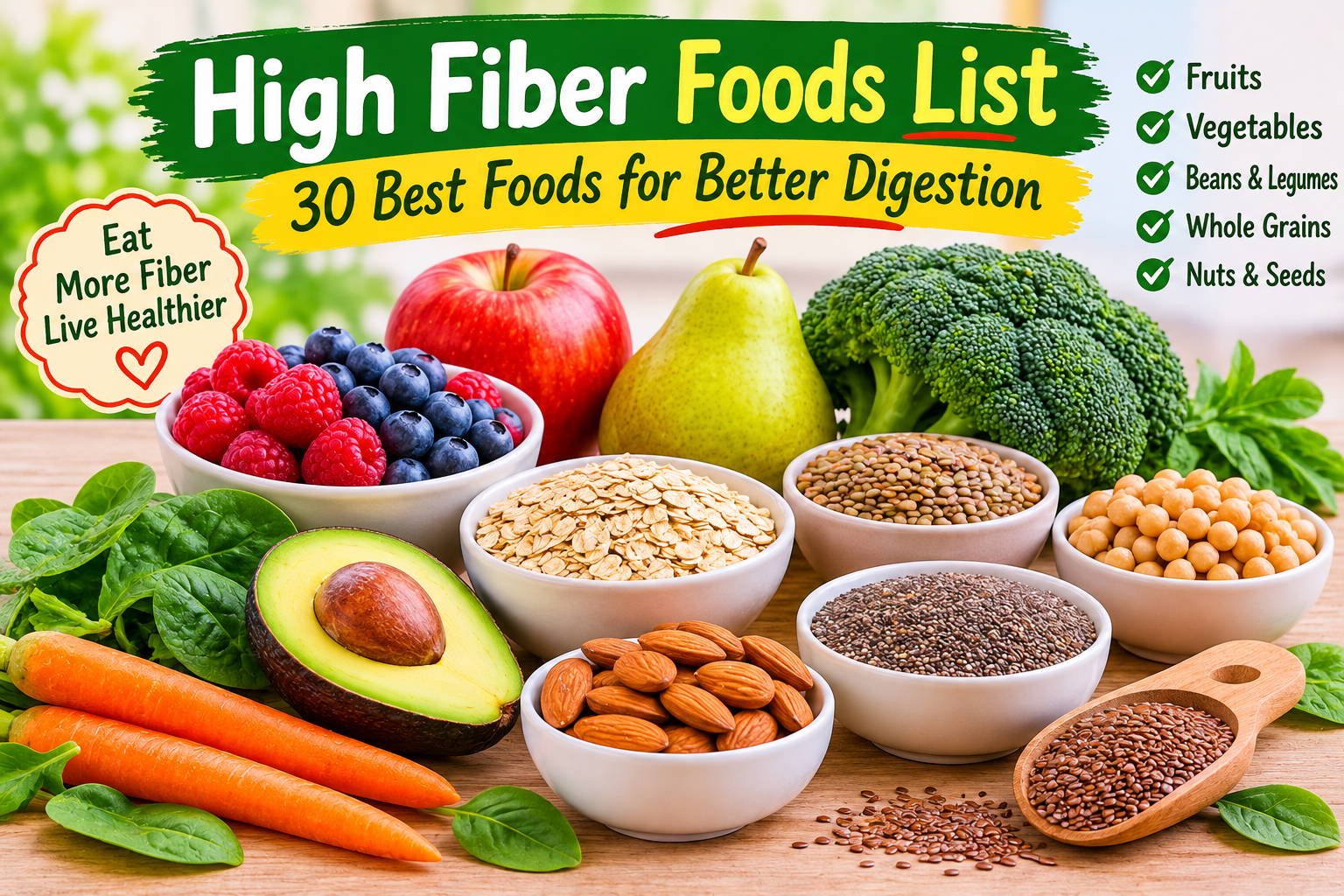
Adding more fiber to your daily diet is one of the simplest ways to support digestion, improve overall nutrition, and maintain healthy eating habits. Fiber-rich foods help keep you feeling satisfied, support regular bowel movements, and provide important nutrients your body needs. If you are looking for a practical high fiber foods list, there are plenty of delicious options, including fruits, vegetables, beans, whole grains, nuts, and seeds.
At FoodVLove.com, you can discover easy meal ideas and wholesome recipes that make everyday cooking simpler. Whether you want to improve digestion, prepare healthier breakfasts, or add more nutritious ingredients to family meals, choosing fiber-rich foods is a great place to start.
This guide covers 30 high-fiber foods, their benefits, and simple ways to include them in your daily routine.
Why Is Dietary Fiber Important?
Dietary fiber is a type of carbohydrate found in plant foods that the body does not fully digest. Instead of being broken down like other carbohydrates, fiber helps support several important functions.
Here are some reasons to include enough fiber in your diet:
-
Supports digestion: Fiber helps maintain regular bowel movements.
-
Promotes fullness: Fiber-rich meals can help you feel satisfied for longer.
-
Supports heart health: Certain types of soluble fiber can help manage LDL cholesterol.
-
Helps manage blood sugar: Fiber can slow the absorption of carbohydrates.
-
Supports gut health: Some fibers feed beneficial bacteria in the digestive system.
There are two main types of dietary fiber:
-
Soluble fiber: Dissolves in water and forms a gel-like substance. It is found in oats, beans, apples, and citrus fruits.
-
Insoluble fiber: Adds bulk to stool and supports regular bowel movements. It is found in whole grains, nuts, seeds, and many vegetables.
Most plant foods contain a combination of both types.
30 Best High Fiber Foods to Add to Your Diet
Fruits
Fruits are convenient sources of fiber and provide vitamins, minerals, and antioxidants. Eating whole fruits instead of drinking fruit juice is generally a better way to benefit from their fiber.
1. Raspberries
Raspberries are among the most fiber-rich common fruits. One cup contains approximately 8 grams of fiber.
How to enjoy them:
-
Add to oatmeal or Greek yogurt.
-
Blend into a smoothie.
-
Mix with other fresh berries.
-
Enjoy as a simple snack.
2. Pears
A medium pear with its skin provides approximately 5–6 grams of fiber. Pears also contain water and natural plant compounds.
How to enjoy them:
-
Eat fresh with the skin.
-
Slice into a fruit salad.
-
Add to overnight oats.
-
Pair with a small serving of nuts.
3. Apples
A medium apple with its skin contains approximately 4 grams of fiber. Apples are easy to carry and make a convenient snack.
How to enjoy them:
-
Eat whole between meals.
-
Chop into oatmeal.
-
Serve with peanut butter.
-
Add to homemade fruit salads.
4. Avocados
Avocados provide fiber along with healthy monounsaturated fats. Half a medium avocado can provide approximately 5 grams of fiber, depending on its size.
How to enjoy them:
-
Spread over whole-grain toast.
-
Add to vegetable salads.
-
Mix into sandwiches.
-
Serve with boiled eggs.
5. Oranges
A medium orange contains approximately 3 grams of fiber. It also provides vitamin C and water.
How to enjoy them:
-
Eat fresh as a snack.
-
Add orange segments to salads.
-
Mix into a fruit bowl.
-
Serve alongside breakfast.
6. Bananas
A medium banana provides approximately 3 grams of fiber. Slightly less-ripe bananas also contain resistant starch, a type of carbohydrate that can act like fiber.
How to enjoy them:
-
Slice over oatmeal.
-
Blend into smoothies.
-
Add to plain yogurt.
-
Use in homemade banana pancakes.
7. Strawberries
One cup of fresh strawberries provides approximately 3 grams of fiber. They are also rich in vitamin C.
How to enjoy them:
-
Add to breakfast bowls.
-
Mix with chia pudding.
-
Serve with unsweetened yogurt.
-
Prepare a fresh fruit salad.
8. Blackberries
One cup of blackberries provides approximately 7–8 grams of fiber, making them an excellent fruit choice.
How to enjoy them:
-
Add to oatmeal.
-
Blend into smoothies.
-
Mix with other berries.
-
Enjoy as a fresh snack.
Vegetables
Vegetables are essential for a balanced diet. Many provide fiber while also supplying vitamins, minerals, and protective plant compounds.
9. Broccoli
One cup of cooked broccoli contains approximately 5 grams of fiber.
How to enjoy it:
-
Steam as a side dish.
-
Roast with garlic.
-
Add to chicken stir-fries.
-
Mix into vegetable soups.
10. Brussels Sprouts
One cup of cooked Brussels sprouts provides approximately 4 grams of fiber.
How to enjoy them:
-
Roast with olive oil and black pepper.
-
Add to warm salads.
-
Serve with grilled chicken.
-
Mix into vegetable bowls.
11. Carrots
One cup of chopped raw carrots contains approximately 3.5–4 grams of fiber.
How to enjoy them:
-
Eat raw with hummus.
-
Add to soups.
-
Roast with herbs.
-
Mix grated carrots into salads.
12. Sweet Potatoes
One medium sweet potato with its skin can provide approximately 4 grams of fiber.
How to enjoy them:
-
Bake and serve with beans.
-
Roast with garlic and paprika.
-
Add to vegetable bowls.
-
Prepare homemade sweet potato wedges.
13. Green Peas
One cup of cooked green peas contains approximately 8–9 grams of fiber.
How to enjoy them:
-
Add to rice dishes.
-
Mix into vegetable soups.
-
Prepare a pea and mint salad.
-
Serve as a side with chicken or fish.
14. Artichokes
A medium cooked artichoke can provide approximately 7 grams of fiber or more, depending on its size.
How to enjoy them:
-
Steam and serve with lemon.
-
Add hearts to salads.
-
Mix into vegetable pasta.
-
Use in homemade dips.
15. Spinach
Cooked spinach provides more concentrated fiber by volume than raw spinach. One cup of cooked spinach contains approximately 4 grams.
How to enjoy it:
-
Add to omelets.
-
Mix into lentil soup.
-
Prepare spinach and chickpea curry.
-
Serve with whole-grain meals.
Beans and Legumes
Beans and legumes are excellent sources of fiber and plant-based protein. They are affordable, filling, and useful in many everyday recipes.
16. Black Beans
One cup of cooked black beans provides approximately 15 grams of fiber.
How to enjoy them:
-
Prepare black bean soup.
-
Add to salads.
-
Use in whole-grain wraps.
-
Make homemade bean patties.
17. Lentils
One cup of cooked lentils contains approximately 15–16 grams of fiber.
How to enjoy them:
-
Prepare lentil soup.
-
Make lentil curry.
-
Add to vegetable salads.
-
Use in homemade veggie burgers.
18. Chickpeas
One cup of cooked chickpeas provides approximately 12–13 grams of fiber.
How to enjoy them:
-
Prepare hummus.
-
Add to Mediterranean salads.
-
Make chickpea curry.
-
Roast with paprika for a crunchy snack.
19. Kidney Beans
One cup of cooked kidney beans contains approximately 11–13 grams of fiber.
How to enjoy them:
-
Prepare kidney bean curry.
-
Add to vegetable chili.
-
Mix into rice dishes.
-
Make a colorful bean salad.
20. Split Peas
One cup of cooked split peas provides approximately 16 grams of fiber.
How to enjoy them:
-
Prepare split pea soup.
-
Add to vegetable stews.
-
Cook with carrots and onions.
-
Use in hearty homemade curries.
Whole Grains
Whole grains retain more of their natural structure and nutrients than refined grains. They are useful sources of fiber and can make meals more satisfying.
21. Oats
One cup of cooked oatmeal contains approximately 4 grams of fiber. Oats also provide beta-glucan, a type of soluble fiber.
How to enjoy them:
-
Make overnight oats.
-
Prepare warm oatmeal with berries.
-
Add chia seeds.
-
Use in homemade breakfast muffins.
22. Barley
One cup of cooked barley provides approximately 6 grams of fiber.
How to enjoy it:
-
Add to vegetable soup.
-
Prepare barley salad.
-
Serve with lentil curry.
-
Use in hearty grain bowls.
23. Quinoa
One cup of cooked quinoa contains approximately 5 grams of fiber. It also provides plant-based protein.
How to enjoy it:
-
Prepare quinoa vegetable bowls.
-
Mix with chickpeas.
-
Serve with grilled chicken.
-
Add to fresh salads.
24. Whole-Wheat Bread
Whole-wheat bread can provide approximately 2–3 grams of fiber per slice, depending on the product.
How to enjoy it:
-
Make avocado toast.
-
Prepare chicken sandwiches.
-
Serve with eggs.
-
Use for homemade vegetable sandwiches.
Check the ingredient list to make sure whole wheat or whole grain is listed first.
25. Brown Rice
One cup of cooked brown rice provides approximately 3–4 grams of fiber.
How to enjoy it:
-
Serve with vegetable curry.
-
Prepare chicken rice bowls.
-
Add to bean dishes.
-
Mix with roasted vegetables.
Nuts and Seeds
Nuts and seeds provide fiber along with healthy fats, protein, and important minerals. Because they are energy-dense, moderate portions are useful.
26. Chia Seeds
Two tablespoons of chia seeds provide approximately 9–10 grams of fiber.
How to enjoy them:
-
Prepare chia pudding.
-
Add to oatmeal.
-
Mix into yogurt.
-
Sprinkle over smoothies.
27. Flaxseeds
Two tablespoons of ground flaxseeds provide approximately 4 grams of fiber.
How to enjoy them:
-
Mix into oatmeal.
-
Add to smoothies.
-
Sprinkle over yogurt.
-
Include in homemade whole-grain muffins.
Ground flaxseeds are easier to digest than whole flaxseeds.
28. Almonds
One ounce of almonds, about 23 nuts, provides approximately 3.5 grams of fiber.
How to enjoy them:
-
Eat as a snack.
-
Add chopped almonds to oatmeal.
-
Mix into yogurt.
-
Sprinkle over salads.
29. Pistachios
One ounce of pistachios provides approximately 3 grams of fiber.
How to enjoy them:
-
Enjoy a small handful.
-
Add to fruit bowls.
-
Sprinkle over salads.
-
Mix into homemade trail mix.
30. Pumpkin Seeds
One ounce of pumpkin seeds provides approximately 1–2 grams of fiber, depending on whether they are shelled or whole.
How to enjoy them:
-
Sprinkle over salads.
-
Add to oatmeal.
-
Mix into yogurt.
-
Use as a crunchy soup topping.
How Much Fiber Do You Need Each Day?
Fiber needs vary according to age, sex, and individual health requirements. General recommendations for adults are approximately:
| Group | Recommended daily fiber |
| Women aged 19–50 | 25 grams |
| Men aged 19–50 | 38 grams |
| Women aged 51 and older | 21 grams |
| Men aged 51 and older | 30 grams |
These are general guidelines. Individual requirements may differ, so follow personalized medical or nutrition advice when needed.
Simple Ways to Add More Fiber to Your Daily Meals
Increasing fiber intake does not require complicated recipes. Small changes can make a meaningful difference.
-
Start with a high-fiber breakfast: Choose oatmeal, berries, chia seeds, or whole-grain toast.
-
Add beans to meals: Mix chickpeas, lentils, or kidney beans into soups and salads.
-
Eat whole fruits: Choose fresh apples, pears, oranges, and berries instead of relying on juice.
-
Include vegetables at lunch and dinner: Add broccoli, spinach, carrots, and peas to everyday meals.
-
Choose whole grains: Replace some refined grains with brown rice, barley, and whole-wheat products.
-
Use nuts and seeds: Add moderate portions of almonds, chia seeds, or ground flaxseeds.
-
Drink enough water: Adequate fluids help fiber move through the digestive system.
Increase fiber gradually rather than making a sudden large change. This can help reduce gas, bloating, and digestive discomfort.
Frequently Asked Questions
1. What foods are highest in fiber?
Chia seeds, lentils, split peas, black beans, chickpeas, raspberries, blackberries, and green peas are among the foods with particularly high fiber content.
2. Which fruits are rich in fiber?
Raspberries, blackberries, pears, apples, avocados, and oranges are good sources of dietary fiber. Eating whole fruits with their edible skins generally provides more fiber than drinking juice.
3. Are eggs high in fiber?
No. Eggs provide protein, vitamins, and minerals but contain no dietary fiber. Pair them with vegetables, beans, or whole-grain toast for a higher-fiber meal.
4. Is oatmeal a good source of fiber?
Yes. Oatmeal contains soluble fiber, including beta-glucan. Adding berries, chia seeds, or ground flaxseeds can increase the total fiber content of breakfast.
5. Can fiber help with weight management?
Fiber-rich foods can help promote fullness and make balanced meals more satisfying. They may support weight management as part of an overall healthy eating pattern.
6. What are some high-fiber foods for breakfast?
Oatmeal, chia seeds, raspberries, pears, whole-grain toast, and ground flaxseeds are convenient breakfast options.
7. How can I increase fiber without feeling bloated?
Increase fiber gradually, drink enough water, and spread fiber-rich foods across your meals. If discomfort continues, seek advice from a healthcare professional.
8. Are beans and lentils good sources of fiber?
Yes. Beans and lentils provide substantial amounts of fiber and plant-based protein. They are excellent additions to soups, salads, curries, and grain bowls.
Final Thoughts
Eating more fiber-rich foods is a practical way to support digestion, improve meal quality, and maintain a balanced diet. Fruits such as raspberries and pears, vegetables such as broccoli and carrots, legumes such as lentils and chickpeas, and whole grains such as oats and barley all provide valuable fiber.
Start by adding a few of these foods to your regular meals and gradually increase your intake as your body adjusts. With simple ingredients and easy preparation methods, healthy eating can become part of your everyday routine.
For more nutritious meal inspiration, easy recipes, and practical cooking ideas, explore FoodVLove. Making small, consistent food choices can help you build healthier habits for the long term.

 English
 Arabic
 French
 Spanish
 Portuguese
 Turkish
 Dutch
 Italiano
 Russian
 Romaian
 Portuguese (Brazil)
 Greek