
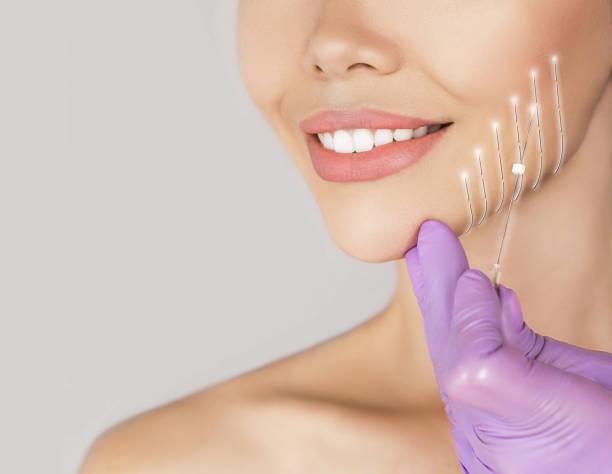
A softer jawline and the appearance of early jowls can develop gradually as facial support structures change with age. For people who notice mild lower-face sagging but are not ready to consider surgery, a Thread Lift in Dubai may offer a minimally invasive approach to repositioning selected facial tissues. The suitability of this treatment depends on skin quality, facial anatomy, the degree of laxity, and realistic expectations.
A thread lift is designed to provide support and elevation rather than remove excess fat or skin. Understanding what it can and cannot achieve helps patients make informed decisions about lower-face rejuvenation.
Why the Jawline Loses Its Definition
The jawline is influenced by several structures, including skin, connective tissue, facial fat compartments, muscles, and the underlying jawbone. Changes in these structures can gradually affect the transition between the cheeks, lower face, and neck.
Common contributing factors include:
-
Reduced skin elasticity: Collagen and elastin changes can make the skin less resilient.
-
Soft-tissue descent: Facial support structures may gradually shift downward.
-
Changes in facial fat: Fat distribution and volume can change with age.
-
Genetic factors: Some people naturally develop a softer jawline earlier.
-
Weight fluctuations: Significant changes in body weight can influence facial fullness and skin laxity.
Early jowls typically appear as small areas of fullness or sagging near the corners of the mouth and along the lower jaw. They may soften the natural contour without necessarily indicating severe skin laxity.
How a Thread Lift in Dubai Supports the Lower Face
A thread lift uses absorbable sutures to support and reposition selected areas of facial tissue. Silhouette Soft threads use bidirectional cones that engage tissue along the thread pathway, helping create a lifting effect when appropriately positioned.
The treatment is minimally invasive and generally performed through small entry points. The practitioner plans the direction of support according to the patient's facial structure and the location of tissue descent.
Mechanical Support and Tissue Repositioning
The primary lifting action comes from the thread's engagement with the surrounding tissue. Carefully planned placement may help elevate mild sagging and improve the appearance of the lower-face contour.
The result depends on several factors, including:
-
The location and degree of tissue laxity
-
Skin thickness and elasticity
-
The amount and distribution of facial fat
-
Thread direction and placement
-
The practitioner's anatomical assessment and technique
A thread lift does not reshape the jawbone, remove substantial fat deposits, or eliminate significant excess skin.
The Role of PLLA in Silhouette Soft Threads
Silhouette Soft threads are made using poly-L-lactic acid (PLLA), an absorbable material. As the material gradually breaks down, it may stimulate a collagen-related tissue response around the treated area.
This biological response is different from the immediate mechanical support created by the cones. Its extent and visible contribution vary between individuals, and it should not be considered a guaranteed or permanent tightening effect.
What Jawline Changes Can a Thread Lift Address
A thread lift may be considered when the main concern is mild soft-tissue descent rather than substantial skin excess or lower-face fullness.
Potential treatment goals include:
-
Supporting mild jowling along the jawline
-
Improving the transition between the cheek and lower face
-
Creating a more defined appearance along selected jawline areas
-
Addressing early tissue descent without a surgical incision
The degree of improvement varies. A subtle enhancement may be more appropriate than attempting to create an unusually sharp or dramatically altered jawline.
When a Thread Lift May Not Be Enough
Not every concern around the jawline is caused by sagging tissue. A fuller lower face may be related to fat distribution, muscle structure, or skeletal anatomy.
A thread lift may be less suitable when someone has:
-
Significant loose or excess skin
-
Pronounced jowls
-
Heavy lower-face tissue
-
Substantial submental fat
-
A jawline concern primarily related to bone structure
Depending on the cause, a practitioner may discuss other treatment approaches or recommend a surgical consultation.
Read More: DHI Direct Hair Implant in Dubai for Early Hair Loss
The Treatment Planning Process
A careful assessment is essential before deciding whether a thread lift is appropriate. The practitioner evaluates the face at rest and during movement, looking at the relationship between the cheeks, mouth, jawline, and neck.
The consultation may include:
-
Facial assessment: Identifying the location and extent of tissue descent.
-
Skin evaluation: Reviewing elasticity, thickness, and tissue quality.
-
Treatment mapping: Selecting suitable support directions based on anatomy.
-
Expectation setting: Discussing achievable improvements and limitations.
-
Risk review: Explaining potential complications and aftercare requirements.
The number and placement of threads should be determined individually rather than selected from a standard package.
Recovery and Aftercare
Mild swelling, bruising, tenderness, and tightness can occur after a thread lift. Some patients may also notice temporary dimpling, puckering, or unevenness as the tissues settle.
Aftercare instructions depend on the technique and the individual's recovery. Patients are generally advised to avoid unnecessary pressure or manipulation of the treated area during the initial healing period.
The practitioner may recommend:
-
Sleeping in a position that avoids pressure on the face
-
Avoiding vigorous facial massage until cleared
-
Limiting strenuous activity for the period advised
-
Following instructions about skincare and facial treatments
-
Attending follow-up appointments when recommended
Severe or worsening pain, increasing redness, fever, unusual discharge, or sudden changes in facial movement should be reported promptly to the treating clinic.
Clinic Note: Jawline rejuvenation should focus on facial balance rather than maximum tightness. A carefully selected treatment plan considers the patient's natural contours, skin quality, and the actual cause of lower-face changes.
Frequently Asked Questions
Can a thread lift remove early jowls?
It may improve the appearance of mild jowling by supporting and repositioning selected tissues. It does not remove excess fat or skin, and the degree of improvement varies.
Is a thread lift suitable for a poorly defined jawline?
It may be suitable when mild tissue descent contributes to the concern. If the jawline shape is mainly influenced by bone structure or fat distribution, another approach may be more appropriate.
Does the procedure involve surgical incisions?
Thread lifting generally uses small entry points rather than the longer incisions associated with a surgical facelift. However, it remains an invasive medical procedure with potential risks.
How long do jawline thread lift results last?
Results are temporary and vary according to the thread system, anatomy, tissue characteristics, and individual response. A practitioner can explain what is realistic for a particular case.
Can a thread lift replace a facelift?
No. A thread lift is not equivalent to surgery and is generally considered for selected cases of mild-to-moderate tissue laxity. Significant skin excess may require surgical evaluation.
Explore Lower-Face Rejuvenation at Tajmeels Clinic
A defined jawline is not simply about tightening the skin. It requires an understanding of facial proportions, tissue support, and the underlying reasons for changes in the lower face. Tajmeels Clinic offers consultations to assess individual aesthetic concerns and discuss suitable treatment options. A personalized evaluation can help determine whether a thread lift is an appropriate choice for improving early jowls and supporting natural-looking facial contours.

 English
 French
 Spanish
 Portuguese
 Deutsch
 Turkish
 Dutch
 Italiano
 Russian
 Romaian
 Portuguese (Brazil)
 Greek