
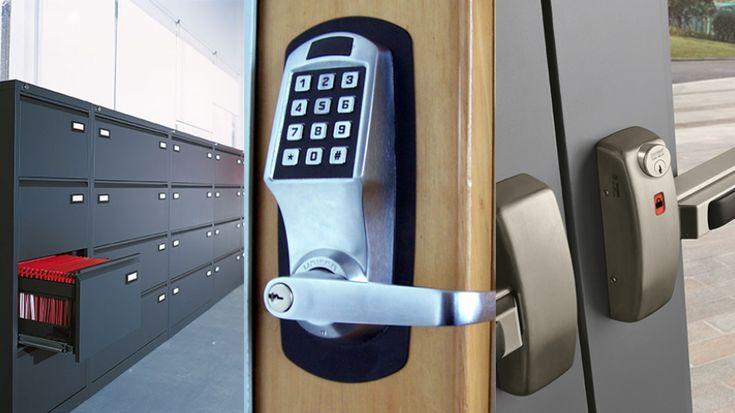
You've had the same lock for years, and it's worked fine. Mostly. Lately the key sticks, the bolt feels a bit loose, or you just realized you've no idea how many spare keys are floating around from the previous tenant. At some point every homeowner and renter wonders whether it's time for a lock replacement or whether a simple repair will do. The answer isn't always obvious, and guessing wrong costs money or security. This guide covers the signs worth watching, the difference between replacing and rekeying, what the process looks like, and a few mistakes to dodge.
Signs your lock is past its best
Locks rarely die overnight. They send hints first, and most of us ignore them.
-
The key needs force. If you're jiggling, lifting or pushing the door while turning, the internal pins are probably worn.
-
The bolt doesn't line up. A deadbolt that only goes in when you lean on the door often points to a worn latch or a shifted frame.
-
Visible damage. Scratches around the keyhole, a bent handle or loose screws can mean someone tried to force the lock.
-
Rust or corrosion. Especially common on balcony doors and gates exposed to humidity.
-
Age. Many residential locks wear out somewhere around the 10 to 15 year mark, depending on how much they're used.
One sign alone isn't a crisis. Two or three together usually are.
Replacing vs. rekeying: what's the difference?
People mix these up all the time, and it affects cost.
Rekeying changes the internal pins so a new key works and the old ones don't. The lock hardware stays where it is. It's a good fit when the lock is in good shape but you've lost a key, moved into a new place, or ended a relationship with someone who had access.
Replacing swaps the entire lock for a new one. That makes more sense when:
-
The lock is damaged, corroded or visibly worn
-
You want a higher security grade than the current one
-
The lock is outdated and parts are hard to find
-
You're upgrading to a smart or keypad lock
A rough rule: if the lock itself still works smoothly, rekey. If it's struggling, replace.
What the process usually looks like
Knowing the steps makes the whole thing less intimidating.
-
Check the lock type and door. Thickness, material and existing hole sizes decide what fits.
-
Pick a grade. Look for sturdy cylinders and a solid bolt rather than just a shiny finish.
-
Remove the old hardware. This takes minutes for a standard setup.
-
Fit the new lock and test it. The key should turn smoothly and the bolt should slide fully without resistance.
-
Keep every key accounted for. Count them at handover and note how many were issued.
A straightforward swap on a standard door tends to be quick. Heavier doors or multi-point systems take longer.
Choosing the right lock without overthinking it
You don't need the most expensive option. You need the right one for your door.
-
Front doors: a solid deadbolt plus a good strike plate secured with long screws.
-
Balcony and patio doors: corrosion-resistant hardware, since moisture wears things down fast.
-
Internal doors: simple latches are usually enough.
-
Smart locks: handy if you hand out access to guests or cleaners, but pick one with a mechanical key backup and check the batteries now and then.
A quick example: a family renting a villa found that three former tenants still had working keys. Changing the cylinders took less time than they'd feared and gave them real peace of mind.
Common mistakes people make
-
Buying a lock online without measuring the door first
-
Choosing purely on price and ignoring the security rating
-
Skipping the strike plate, even though a weak one undermines a strong lock
-
Forgetting to tell the landlord when renting, which can cause awkward questions later
-
Throwing away the receipt and warranty paperwork
A last practical note
Before you commit, ask for a clear price covering parts and labor, and confirm whether any warranty comes with the new hardware. If you're after a Dubai-based name to look at, keylockdubai.com is one to keep in your bookmarks for when the day comes.
FAQs
How long does a door lock usually last?
It varies, but many last roughly a decade or more. Heavy use, humidity and poor maintenance shorten that.
Do I need to replace the whole lock if I lose a key?
Not always. Rekeying often solves it for less.
Can I replace a lock myself?
Basic swaps are doable if you're handy, but fitting errors can leave the door less secure. When in doubt, get help.
Will a new lock fit my existing door?
Usually, if you match the size and type. Measure first.
Is a smart lock safer than a regular one?
Not automatically. Safety depends on build quality and how you set it up.

 English
 Arabic
 French
 Spanish
 Portuguese
 Deutsch
 Turkish
 Dutch
 Italiano
 Russian
 Portuguese (Brazil)
 Greek