
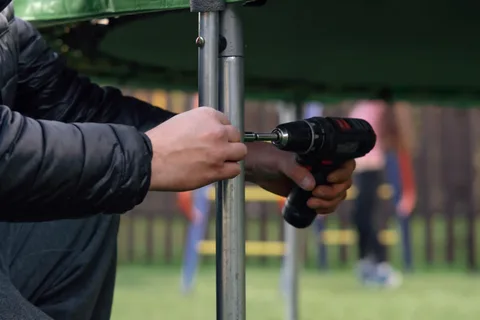
Be honest: when did anyone last look closely at your trampoline? Most of us set it up, watch the kids enjoy it for a season or two, and then it just becomes part of the garden. Meanwhile the sun, wind and dust are quietly wearing it down. Springs stretch, the mat frays, and the padding cracks long before anything looks obviously wrong. If you've started typing trampoline service near me into your phone, you're already thinking in the right direction. This guide covers what wears out first, a ten-minute check you can do yourself, signs that mean it's time for help, and how to make a trampoline last longer.
What wears out first (and why)
Trampolines live outdoors, so the weather does most of the damage. The parts that usually go first:
-
Springs. They stretch over time, especially if the trampoline gets heavy use or sits in the sun. Stretched springs bounce unevenly.
-
The mat. UV light weakens the fabric, and stitching near the spring attachment points starts to fray.
-
Frame padding. The foam under the cover compresses and the cover cracks, leaving hard metal exposed.
-
The safety net. Tears, loose poles and rusty connectors reduce its protection.
-
The frame itself. Rust and loose joints can weaken it, particularly in humid or coastal areas.
None of these fail all at once. They fade gradually, which is exactly why a regular look-over matters.
A ten-minute check you can do yourself
Pick a calm weekend morning and go through this list:
-
Walk around the frame. Look for rust, bent legs, wobbling or loose bolts.
-
Check every spring. Are any missing, stretched, rusted or unhooked?
-
Press along the mat. Look for thin patches, holes and frayed stitching, especially near the edges.
-
Inspect the padding. It should fully cover the springs and frame, with no gaps or tears.
-
Test the net. Pull gently on the poles and the mesh to see whether anything gives way.
-
Look at the ground. Make sure the trampoline sits level, with no tripping hazards nearby.
Write down anything that looks off. Small notes help you decide what you can fix and what needs a professional.
What's fine to fix at home
Some jobs are easy to handle:
-
Retightening bolts and connectors
-
Cleaning dirt and leaves off the mat
-
Replacing a single spring (with the right size and tool)
-
Re-securing net poles
-
Swapping out a worn padding cover
Just be careful. Springs hold a lot of tension, so use the proper spring tool and never improvise with pliers or your hands. If something feels awkward, leave it alone.
When it's time to get someone qualified
Call in a professional when you spot any of these:
-
Multiple springs are stretched or rusted
-
The mat has holes, deep fraying or damaged stitching
-
The frame is bent, cracked or heavily rusted
-
You're unsure whether replacement parts match your model
-
The trampoline has been through a storm and looks shifted or twisted
A quick example: a family noticed their trampoline had started to feel "dead" in the center. Several springs had stretched past their limit and the mat stitching was fraying at one edge. Replacing the springs and the mat was far cheaper than buying a whole new trampoline, and it felt just like new again.
Keep in mind that if the damage is mostly structural, replacing the whole thing may simply be the safer route.
Habits that make a trampoline last longer
Simple routines add years to its life:
-
One jumper at a time, and follow the weight limit on the label
-
Remove shoes, keys and sharp objects before jumping
-
Check the springs and padding every month or so
-
In strong winds or storms, anchor it or take it down
-
Cover it when it's not in use, or move it to shade
-
Keep it clear of trees, fences and washing lines
Where to look for help
If you'd like a Dubai-based name to keep on hand for repair and maintenance questions, you could check smartmobilelocksmith.com and bookmark it for later. It's easier to find the right person before a problem than during one.
FAQs
How often should I inspect my trampoline?
A quick check every month and a thorough one each season is a good routine.
How long does a trampoline usually last?
It depends on the quality and the climate, but many last several years with proper care.
Can I replace just one spring?
Yes, though mixing old and new springs can cause uneven bounce.
Is a trampoline with a small hole in the mat still safe?
Not really. Small holes tend to grow quickly, so repair or replace the mat.
Do I need a safety net?
It adds a real layer of protection, so most families find it worth having.

 English
 Arabic
 French
 Portuguese
 Deutsch
 Turkish
 Dutch
 Italiano
 Russian
 Romaian
 Portuguese (Brazil)
 Greek