
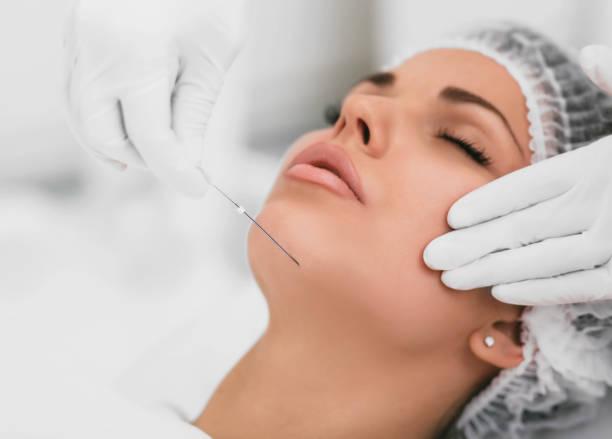
A successful Thread Lift in Dubai requires more than selecting an absorbable thread and placing it beneath the skin. The direction in which tissue is supported is equally important. This direction is known as the lifting vector, and it helps guide how a practitioner plans the treatment pathway for selected facial areas.
Facial tissues do not move in one uniform direction. The cheek, jawline, brow, and lower face have different anatomical structures and aesthetic requirements. A lifting plan must account for these differences to avoid an artificial appearance or excessive tension.
Understanding facial lifting vectors helps patients recognise why individual assessment is essential and why the same thread placement pattern may not be appropriate for everyone.
What Is a Lifting Vector in a Thread Lift in Dubai?
A lifting vector is the planned direction of force or tissue support during a lifting procedure. In a thread lift, it describes the direction in which the practitioner intends to support or reposition selected soft tissue.
The vector is determined by evaluating facial anatomy, tissue movement, skin laxity, and the desired contour improvement.
It is not simply a straight upward pull. The direction must be appropriate for the particular facial region and the patient's natural structure.
Why Facial Tissue Requires Directional Planning
The face contains different tissue layers, including skin, subcutaneous fat, connective tissue, and deeper supporting structures. These layers contribute to facial shape and movement.
As ageing progresses, changes in skin elasticity, fat distribution, and tissue support may alter facial contours. A practitioner considers these changes when determining whether a thread lift can provide a suitable degree of support.
A poorly selected vector may create uneven tension or an unnatural contour. Directional planning helps the practitioner work with the existing anatomy.
How Facial Anatomy Influences Thread Lift in Dubai Vectors
Every facial area has its own structural characteristics. The direction of support that may be suitable for one region may not be appropriate for another.
Midface and Cheek Vectors
The midface contributes significantly to facial balance. Changes in cheek tissue position can influence the appearance of the lower eyelid, nasolabial folds, and overall facial contour.
When a thread lift is considered for this region, the practitioner evaluates the position of the soft tissue and the desired degree of support.
The intended vector should respect natural cheek contours rather than create excessive elevation or an overly tight appearance.
Lower-Face and Jawline Vectors
The lower face is affected by changes in skin elasticity, tissue support, and fat distribution. These factors may contribute to early jowl formation and reduced jawline definition.
A treatment plan for this region may require a different direction from one designed for the midface. The practitioner considers how the tissue relates to the jawline and surrounding structures.
The aim is a balanced contour improvement, not simply pulling the skin towards the temples.
Brow and Upper-Face Vectors
The brow region has distinct anatomical considerations, including nearby nerves, vessels, and muscles. Any thread-based treatment in this area requires product-specific suitability and careful anatomical assessment.
The intended direction of support must account for natural brow shape and facial expression. An excessive or poorly planned lift may create an uneven appearance.
Why One Lifting Direction Does Not Suit Every Patient
Facial structure varies considerably. Two patients with similar concerns may have different skin thickness, fat distribution, tissue laxity, and facial proportions.
For this reason, a standardised vector cannot be assumed to provide the same result for everyone.
Differences in Skin Thickness
Skin thickness can influence how a thread interacts with the surrounding tissue and how visible irregularities may become.
Thinner skin may require particular attention to placement depth and thread selection. The practitioner must consider whether the proposed technique is appropriate for the patient's tissue characteristics.
Differences in Fat Distribution
Facial fat compartments contribute to contour and support. A patient with greater volume loss may have different treatment needs from someone whose main concern is tissue descent.
A thread lift does not replace lost volume. If volume deficiency is the primary concern, a practitioner may discuss other treatment options.
Differences in Existing Asymmetry
Natural facial asymmetry is common. One cheek may sit slightly differently from the other, or the jawline may have different contours on each side.
A treatment plan should account for these differences rather than assume both sides require identical placement.
Planning Facial Lifting Vectors for Different Concerns
The practitioner's objective is to identify which tissues may benefit from temporary support and whether the planned direction is appropriate.
Addressing Early Jowl Formation
Early jowl formation may be related to changes in tissue position and support along the lower face. A practitioner assesses the location and degree of laxity before considering a lifting vector.
The plan should avoid excessive tension near areas where tissue movement and facial expression are important.
Improving Selected Cheek Contours
Changes in cheek position can influence the transition between the midface and lower face. A suitable vector may support selected tissue when the patient's anatomy and degree of laxity make a thread lift appropriate.
The procedure cannot correct all causes of cheek flattening or volume loss.
Supporting the Jawline
Jawline definition depends on several factors, including bone structure, fat distribution, skin quality, and soft tissue position.
A lifting vector may be considered for selected patients with early tissue laxity. However, a thread lift cannot reshape the underlying jawbone or remove significant excess skin.
The Relationship Between Thread Design and Lifting Vectors
The thread's physical design affects how it interacts with the planned vector.
COG threads have barbs designed to engage tissue mechanically. Smooth mono threads do not have the same barbed structure and are generally used for subtle support and collagen-related applications.
COG Threads and Directional Engagement
The barbs on a COG thread are designed to engage surrounding tissue. The practitioner selects the insertion pathway and direction according to the product's design and treatment objective.
The vector must be planned with consideration for the tissue being supported and the thread's mechanical characteristics.
Mono Threads and Subtle Support
Mono threads are smooth and are not generally intended to create substantial tissue repositioning. Their use may be considered when the objective involves subtle support or collagen-related changes.
The treatment direction and placement still require anatomical planning, even when significant lifting is not the goal.
What Can Go Wrong With Poor Vector Planning?
Incorrect directional planning may contribute to an uneven or unnatural result. The risk depends on the patient's anatomy, thread design, and placement technique.
Potential problems include:
-
Uneven tension between facial sides
-
Visible contour irregularities
-
Temporary or persistent dimpling
-
Asymmetrical tissue positioning
-
Discomfort caused by inappropriate tension
-
An outcome that does not match the patient's expectations
A careful assessment before treatment can help identify anatomical limitations and establish realistic goals.
How Practitioners Assess Facial Lifting Vectors
A consultation should include an examination of the face at rest and during natural movement. The practitioner may assess skin quality, tissue mobility, facial proportions, and areas of laxity.
The assessment can also include a discussion of previous procedures, medical history, medication use, and the patient's expectations.
Important planning considerations include:
-
The location and degree of tissue laxity
-
Natural facial asymmetry
-
Skin thickness and tissue quality
-
The proposed thread material and configuration
-
The intended direction of support
-
The limitations and risks of the procedure
The practitioner should explain why a particular approach is being considered and whether another treatment may be more suitable.
Recovery and Changes After Vector-Based Thread Placement
Following a thread lift, patients may experience bruising, swelling, tenderness, and temporary tightness. The initial contour may change as the treated tissue settles.
Patients should follow the treating practitioner's instructions regarding facial movement, pressure on the treated area, exercise, and follow-up appointments.
Any worsening pain, increasing redness, unusual discharge, fever, or sudden changes in facial movement should be reported promptly to a medical professional.
Clinic Note
Lifting vectors are planned according to facial anatomy, not a universal direction. A balanced result depends on the relationship between tissue position, thread design, placement depth, and the patient's natural facial proportions.
Frequently Asked Questions
What does a lifting vector mean in a Thread Lift in Dubai?
It refers to the planned direction in which selected facial tissue is supported or repositioned during the procedure.
Are lifting vectors the same for both sides of the face?
Not necessarily. Natural asymmetry and differences in tissue structure may require individual planning for each side.
Can the wrong lifting vector affect the result?
Yes. Inappropriate direction or tension may contribute to uneven contours, dimpling, or an unnatural appearance.
Do mono threads use lifting vectors?
Placement direction still matters for mono threads, but they are generally used for subtle support and collagen-related applications rather than substantial mechanical lifting.
Can a thread lift correct facial asymmetry?
It may improve selected differences in tissue position in suitable patients, but it cannot correct every cause of facial asymmetry. Expectations should be discussed during consultation.
Plan Facial Rejuvenation With Tajmeels Clinic
Facial lifting vectors help determine how a thread lift is planned around individual anatomy. The appropriate direction of support depends on the treatment area, tissue characteristics, thread design, and the degree of laxity.
At Tajmeels Clinic, patients can discuss their facial concerns and explore suitable rejuvenation options through an individual assessment. A personalised treatment plan should prioritise natural proportions, realistic expectations, and procedural safety.

 English
 Arabic
 French
 Spanish
 Portuguese
 Deutsch
 Turkish
 Italiano
 Russian
 Romaian
 Portuguese (Brazil)
 Greek