
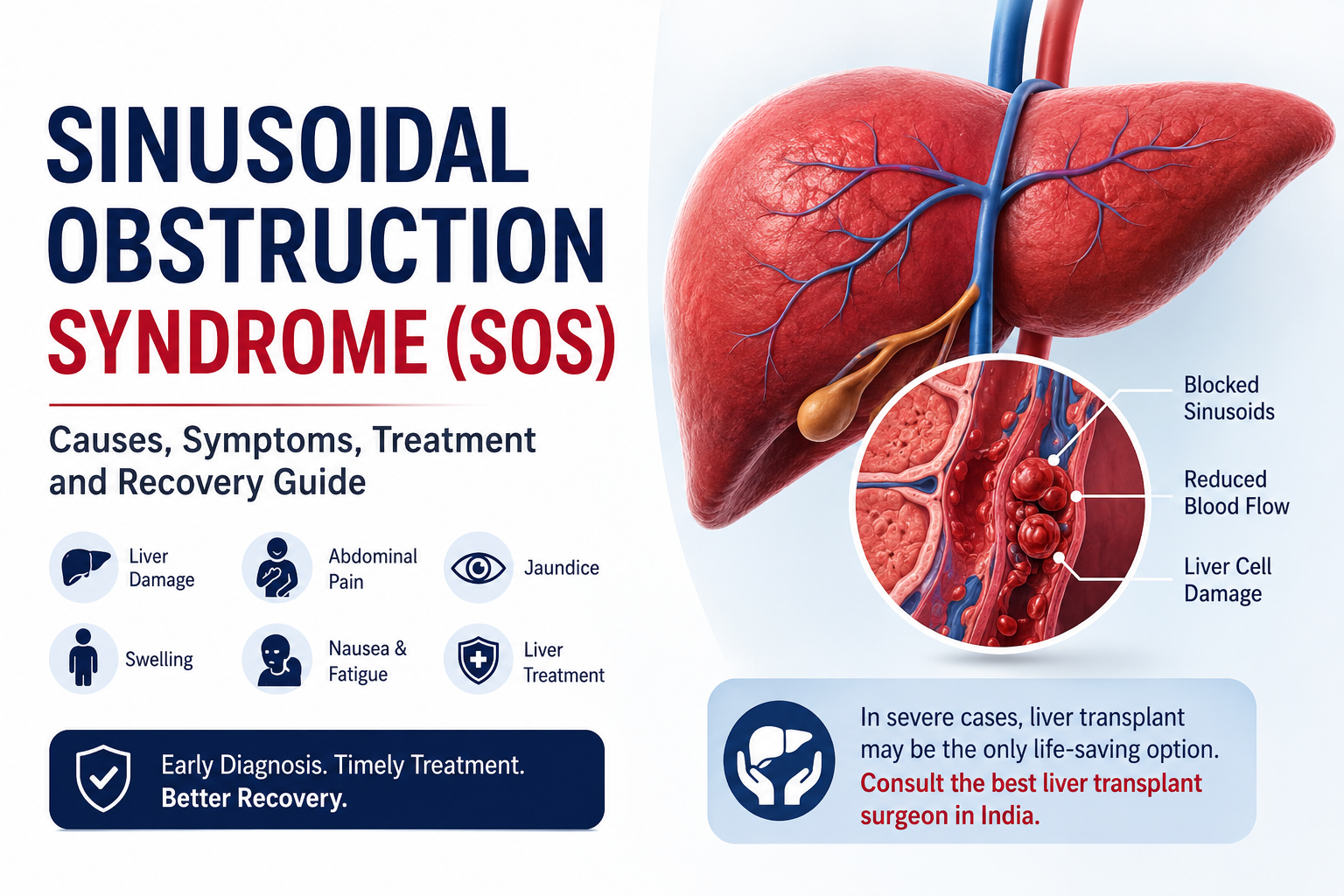
The liver is one of the hardest-working organs in your body. It filters toxins, processes nutrients, stores energy, and helps digest food. But what happens when the tiny blood vessels inside the liver become damaged and blocked?
This condition is known as Sinusoidal Obstruction Syndrome (SOS), also called Veno-Occlusive Disease (VOD). Although it is uncommon, it can become a serious medical emergency if not recognized and treated early.
Think of your liver as a busy city filled with roads carrying supplies. If those roads suddenly become blocked, traffic comes to a halt, and the city struggles to function. In the same way, when the liver's tiny blood vessels become blocked, blood cannot flow properly, causing swelling, liver damage, and fluid buildup.
The good news is that early diagnosis and prompt treatment significantly improve outcomes. In severe cases where the liver suffers irreversible damage, consultation with the best liver transplant surgeon in india may become necessary.
1. What Is Sinusoidal Obstruction Syndrome (SOS)?
Sinusoidal Obstruction Syndrome (SOS) is a condition in which the tiny blood vessels (sinusoids) inside the liver become damaged and blocked.
Under normal circumstances, blood flows freely through these small vessels. However, when they become obstructed, blood backs up inside the liver, increasing pressure and reducing the liver's ability to function properly.
This can lead to:
-
Enlarged liver (hepatomegaly)
-
Fluid retention (edema and ascites)
-
Jaundice (yellowing of the skin and eyes)
-
Pain in the upper right side of the abdomen
-
Reduced liver function
SOS most commonly develops after:
-
Bone marrow transplantation
-
Stem cell transplantation
-
High-dose chemotherapy
-
Certain medications
-
Exposure to toxic plant substances
If left untreated, severe SOS can progress to acute liver failure and become life-threatening.
2. How the Liver Normally Works
To understand SOS, it's helpful to know how a healthy liver functions.
Blood from the digestive system enters the liver through tiny channels called sinusoids. These small blood vessels allow the liver to perform several important tasks, including:
-
Filtering toxins from the blood
-
Processing nutrients
-
Producing essential proteins
-
Storing vitamins and minerals
-
Removing waste products
When the sinusoids are healthy, blood flows smoothly through the liver.
When these vessels become damaged or blocked, blood flow slows down, making it difficult for the liver to carry out its normal functions.
3. What Happens During Sinusoidal Obstruction Syndrome?
In SOS, the inner lining of the liver's tiny blood vessels becomes injured.
This damage causes:
-
Swelling of the blood vessel walls
-
Formation of blood clots
-
Narrowing of the blood vessels
-
Blocked blood circulation within the liver
As pressure builds inside the liver:
-
The liver becomes enlarged.
-
Fluid leaks into the abdomen (ascites).
-
The liver cannot filter blood efficiently.
-
Liver cells begin to suffer damage.
Without timely treatment, the condition may affect multiple organs, including the kidneys and lungs.
4. Causes of Sinusoidal Obstruction Syndrome
Several conditions and treatments can damage the liver's small blood vessels.
High-Dose Chemotherapy
High-dose chemotherapy drugs used to treat cancer can injure the delicate blood vessels inside the liver.
Bone Marrow and Stem Cell Transplantation
Patients undergoing bone marrow or stem cell transplantation are at increased risk because they often receive intensive chemotherapy and radiation before the transplant.
Radiation Therapy
Radiation directed at or near the liver may damage liver tissue and increase the risk of SOS.
Certain Medications
Some medications, including chemotherapy drugs and immunosuppressants, may contribute to the development of SOS.
Herbal Toxins
Certain herbal products contain pyrrolizidine alkaloids, natural toxins that can seriously damage the liver.
5. Risk Factors
Some people are more likely to develop SOS than others.
Common risk factors include:
-
Previous liver disease
-
Hepatitis infection
-
Older age
-
History of childhood cancer treatment
-
High-dose chemotherapy
-
Obesity
-
Alcohol-related liver disease
-
Liver cirrhosis
People with these risk factors should be closely monitored during treatment.
6. Symptoms and Warning Signs
Symptoms usually appear within a few days to several weeks after chemotherapy or transplantation.
Common symptoms include:
Pain in the Upper Right Abdomen
An enlarged liver may cause pain or tenderness beneath the ribs.
Rapid Weight Gain
Fluid retention can cause sudden weight gain over a short period.
Abdominal Swelling
Fluid buildup inside the abdomen (ascites) causes noticeable swelling.
Jaundice
The skin and eyes may turn yellow because of increased bilirubin levels.
Enlarged Liver
Doctors may detect an enlarged liver during a physical examination.
Swelling of the Legs
Fluid accumulation can also cause swelling in the feet and legs.
Fatigue
Reduced liver function often leads to weakness and tiredness.
Reduced Urine Output
Poor circulation and fluid imbalance may decrease urine production.
7. How Doctors Diagnose SOS
Doctors diagnose SOS based on medical history, symptoms, physical examination, and diagnostic tests.
Physical Examination
The doctor checks for:
-
Enlarged liver
-
Abdominal swelling
-
Jaundice
-
Sudden weight gain
Blood Tests
Blood tests help evaluate:
-
Liver enzymes
-
Bilirubin levels
-
Blood clotting
-
Kidney function
Ultrasound
An ultrasound helps assess:
-
Liver size
-
Blood flow within the liver
-
Fluid accumulation in the abdomen
CT Scan or MRI
If additional information is needed, CT or MRI scans provide detailed images of the liver.
Liver Biopsy
In selected cases, a liver biopsy may be performed to confirm the diagnosis.
8. Stages and Severity
SOS is classified according to its severity.
Mild SOS
Symptoms improve with supportive treatment and careful monitoring.
Moderate SOS
Patients require medication, close observation, and hospital care.
Severe SOS
Severe cases may lead to:
-
Liver failure
-
Kidney failure
-
Breathing problems
-
Multiple organ failure
Some patients may require intensive care and advanced liver support.
9. Treatment Options
Treatment depends on how severe the condition is.
Supportive Care
Doctors carefully manage:
-
Fluid balance
-
Blood pressure
-
Nutrition
-
Pain control
Medications
Defibrotide is the primary medication used to treat severe SOS and helps protect damaged blood vessels.
Other treatments may include:
-
Diuretics
-
Blood transfusions or blood products
-
Oxygen therapy
Managing Complications
Doctors also treat complications such as:
-
Infections
-
Bleeding
-
Fluid overload
-
Kidney dysfunction
Early treatment greatly improves recovery.
10. Liver Transplant in Severe Cases
Most patients recover without surgery.
However, if SOS causes irreversible liver failure, a liver transplant may become the only life-saving treatment.
Patients should seek care at a specialized transplant center where experienced liver transplant surgeons can evaluate their condition and provide comprehensive treatment using a multidisciplinary approach.
11. Recovery and Long-Term Outlook
Recovery depends on several factors, including:
-
Severity of the disease
-
Patient's age
-
Underlying medical conditions
-
Speed of diagnosis
-
Response to treatment
Many patients recover within a few weeks, while others require several months of follow-up.
Regular follow-up may include:
-
Liver function tests
-
Ultrasound scans
-
Nutritional assessment
-
Medication review
Early diagnosis and treatment significantly improve long-term outcomes.
12. Possible Complications
Without prompt treatment, SOS can lead to serious complications, including:
-
Liver failure
-
Ascites
-
Portal hypertension
-
Kidney injury
-
Lung complications
-
Bleeding disorders
-
Multiple organ failure
Early diagnosis greatly reduces the risk of these complications.
13. Can Sinusoidal Obstruction Syndrome Be Prevented?
Although not every case can be prevented, the risk can be reduced by:
-
Careful planning of chemotherapy
-
Regular liver function monitoring
-
Avoiding harmful herbal supplements
-
Treating existing liver disease
-
Limiting alcohol consumption
-
Maintaining a healthy weight
-
Following transplant care instructions
-
Reporting new symptoms immediately
Patients undergoing stem cell transplantation should remain under close medical supervision.
14. When Should You See a Liver Specialist?
Seek immediate medical attention if you experience:
-
Persistent abdominal pain
-
Yellowing of the skin or eyes
-
Sudden weight gain
-
Swollen abdomen
-
Severe fatigue
-
Reduced urine output
-
Swelling in the legs
-
Confusion or changes in mental status
These symptoms may indicate worsening liver function and require urgent evaluation.
15. Conclusion
Sinusoidal Obstruction Syndrome (SOS) is a rare but potentially life-threatening liver condition caused by damage to the liver's tiny blood vessels. It most commonly develops after high-dose chemotherapy or stem cell transplantation.
Recognizing the early warning signs—such as abdominal pain, rapid weight gain, jaundice, and fluid buildup—can lead to earlier diagnosis and more effective treatment. Thanks to advances in supportive care and medications like defibrotide, many patients recover successfully.
However, severe cases may progress to liver failure, making evaluation at a specialized liver transplant center essential. Regular follow-up, careful monitoring, and early medical intervention remain the best ways to improve recovery and protect long-term liver health.
Frequently Asked Questions (FAQs)
1. What causes Sinusoidal Obstruction Syndrome?
SOS is most commonly caused by high-dose chemotherapy, stem cell or bone marrow transplantation, radiation therapy, and exposure to certain toxic herbal substances that damage the liver's small blood vessels.
2. Is Sinusoidal Obstruction Syndrome serious?
Yes. Mild cases often recover with treatment, but severe SOS can progress to liver failure, kidney failure, and multiple organ failure if not treated promptly.
3. Can Sinusoidal Obstruction Syndrome be cured?
Many patients recover completely with early diagnosis, supportive care, and appropriate medications. Severe cases may require advanced treatment, including liver transplantation.
4. Who is most at risk of developing Sinusoidal Obstruction Syndrome?
People undergoing high-dose chemotherapy, bone marrow or stem cell transplantation, and those with pre-existing liver disease are at the highest risk.
5. When is a liver transplant needed for Sinusoidal Obstruction Syndrome?
A liver transplant may be recommended when SOS causes irreversible liver damage or acute liver failure and other treatments are no longer effective. A liver transplant specialist can determine whether transplantation is the best treatment option.

 English
 Arabic
 French
 Spanish
 Portuguese
 Deutsch
 Turkish
 Dutch
Dutch
 Italiano
 Romaian
 Portuguese (Brazil)
 Greek
Greek